
Oakland ADU Architect
ADU design & permits
for Oakland and the East Bay.
YCD Studio is an Oakland ADU architect designing detached, attached, and garage-conversion accessory dwelling units across Oakland, Berkeley, Moraga, Walnut Creek, and the greater East Bay. Oakland has one of the fastest ADU permit processes in California — we know it well.
Why Oakland
Oakland is California's most ADU-friendly city.
California's state-level ADU laws apply everywhere, but Oakland's local policies make it dramatically more productive than most Bay Area cities for accessory housing.
Fee-waived impact fees
Oakland waives impact fees on all ADUs under 750 square feet — saving $15,000 to $25,000 compared to jurisdictions that charge full fees. Even over 750 sq ft, Oakland's fee structure is lower than San Francisco's. This alone can make the difference between a project that pencils and one that doesn't.
Pre-approved plan program
Oakland publishes a library of pre-approved ADU plan sets. Building from a pre-approved plan can cut your permit review timeline from 6–8 weeks to 2–3 weeks. We work with both the pre-approved library and fully custom designs — and help clients evaluate which path fits their site and budget.
Streamlined review for small commercial
Oakland Building's staff has historically been among the most responsive in the Bay Area for ADU-scale projects. Simple ADU applications with complete drawings are typically reviewed in 4–6 weeks versus 8–12 weeks in San Francisco. Faster review = lower carrying costs = higher project ROI.
No owner-occupancy requirement (in most cases)
Unlike some Bay Area cities, Oakland does not require owner-occupancy for detached ADUs on most parcels. This flexibility means an Oakland ADU can be a pure rental income asset without restricting how you use the primary dwelling.
ADU Types
Four ADU pathways in Oakland.
Each type has a different cost, timeline, and permit pathway. We help clients choose the right one based on site, budget, and long-term goals.
Detached ADU
A fully independent unit built separately from the primary residence — up to 1,200 square feet under California's state preemption (AB 2221 / SB 897). Most private, most flexible, typically the highest market rent. Oakland's streamlined review process clears detached ADU permits faster than most Bay Area jurisdictions.
- Up to 1,200 sq ft (state-protected size)
- Full kitchen, bathroom, private entry
- Independent utilities and address
- Strongest rental income potential
Attached ADU
A second unit built onto the main house, sharing a wall or connected by breezeway. Good option when lot size is constrained or when zoning setbacks limit where a detached unit can sit. Construction cost is typically lower than detached because foundation and some framing are shared.
- Up to 1,200 sq ft attached to primary dwelling
- Lower foundation cost than detached
- Shared utility meters or sub-metering
- Good for smaller lots
Garage Conversion
Converting an existing garage (attached or detached) into a living unit. The fastest and cheapest ADU pathway because the foundation, walls, and roof already exist. California state law protects garage conversions — local jurisdictions cannot prohibit them on eligible parcels.
- Uses existing foundation and structure
- Fastest permit pathway
- Up to 1,200 sq ft if the garage is that large
- Loss of dedicated parking (but typically not required)
JADU (Junior ADU)
A smaller unit carved out of the existing primary dwelling, capped at 500 square feet. Must share a bathroom or kitchen with the main house. The lowest-cost path to adding a rental unit — no foundation work, limited plumbing changes, and minimal permitting friction.
- Up to 500 sq ft within primary dwelling
- Shared bathroom or kitchen required
- Owner-occupancy typically required
- Least invasive construction
Investment
Oakland ADU cost ranges, 2026.
2026 Oakland construction costs. Ranges cover hard construction; soft costs (design, engineering, permits) typically add 12–18% on top. Oakland's fee waiver on units under 750 sq ft saves $15K–$25K relative to cities that charge full impact fees.
Foundation reinforcement (as needed), insulation, full MEP rough-in, fixtures, finishes, Title 24 compliance. Oakland fee waiver for units under 750 sq ft typically saves $15K–$25K.
Foundation for addition (often leveraging existing), framing, MEP, kitchen, bathroom, finishes, exterior integration with main house. Plus soft costs (architecture, engineering, permits): ~12–18% on top.
New foundation, full framing, roof, siding, windows, doors, full MEP, kitchen, bathroom, finishes, exterior site work. Oakland fee waiver saves $15K–$25K on units under 750 sq ft.
Interior modification within the existing primary dwelling, limited new plumbing, kitchenette or shared kitchen, separate entry. Lowest-cost ADU pathway.
Ranges reflect 2026 Oakland construction costs for standard site conditions. Hillside lots, WUI zones, or historic districts can push costs higher. We provide project-specific cost guidance in the free 30-minute consultation.
Process
Six phases from first call to move-in.
A deliberate workflow with clear handoffs. You always know what's next, what we're responsible for, and what needs to be decided together.
Free 30-minute feasibility call
30 minBefore any fees, we review your lot on the phone — size, zoning, setbacks, existing structures, likely ADU size, rough budget range, and permit pathway (state preemption vs. local ordinance). You leave the call knowing whether the project is viable, what it will cost, and how long it will take.
Site visit & zoning analysis
1–2 weeksOn-site walkthrough with measurements, photography, and utility locations. We pull zoning data from Oakland's GIS portal, identify setback envelopes, check tree ordinance implications, and confirm whether the project falls under state preemption or local rules. Deliverable: feasibility memo with site plan and ADU siting options.
Schematic design
2–4 weeksFloor plans, sections, and 3D massing for 2–3 design directions. We optimize for your program (how many bedrooms, separate office, accessibility), site constraints (solar, privacy from main house), and budget. You pick a direction; we refine.
Construction documents & Title 24
4–6 weeksFull permit-ready drawing set with structural engineering, Title 24 energy modeling, Cal Green compliance, and MEP coordination. Every Oakland ADU must meet current California energy code — we integrate compliance from schematic design so there are no surprises at plan check.
Permit submittal & approval
4–8 weeks (Oakland)We submit to Oakland Building, respond to plan-check comments within one week, and track the application to permit issuance. Standard Oakland ADUs clear in 4–6 weeks; pre-approved plans can clear in 2–3 weeks. We manage the full review cycle.
Construction administration
Through completionSite visits, RFI responses, submittal reviews, and final inspection coordination. We stay involved from groundbreaking through certificate of occupancy so the built result matches the permit drawings and the design intent.
Case Study
Moraga ADU: 640 SF detached dwelling.
A recent ADU project that shows our approach — clean modern design, state preemption pathway, setback optimization on a small lot.
Moraga ADU
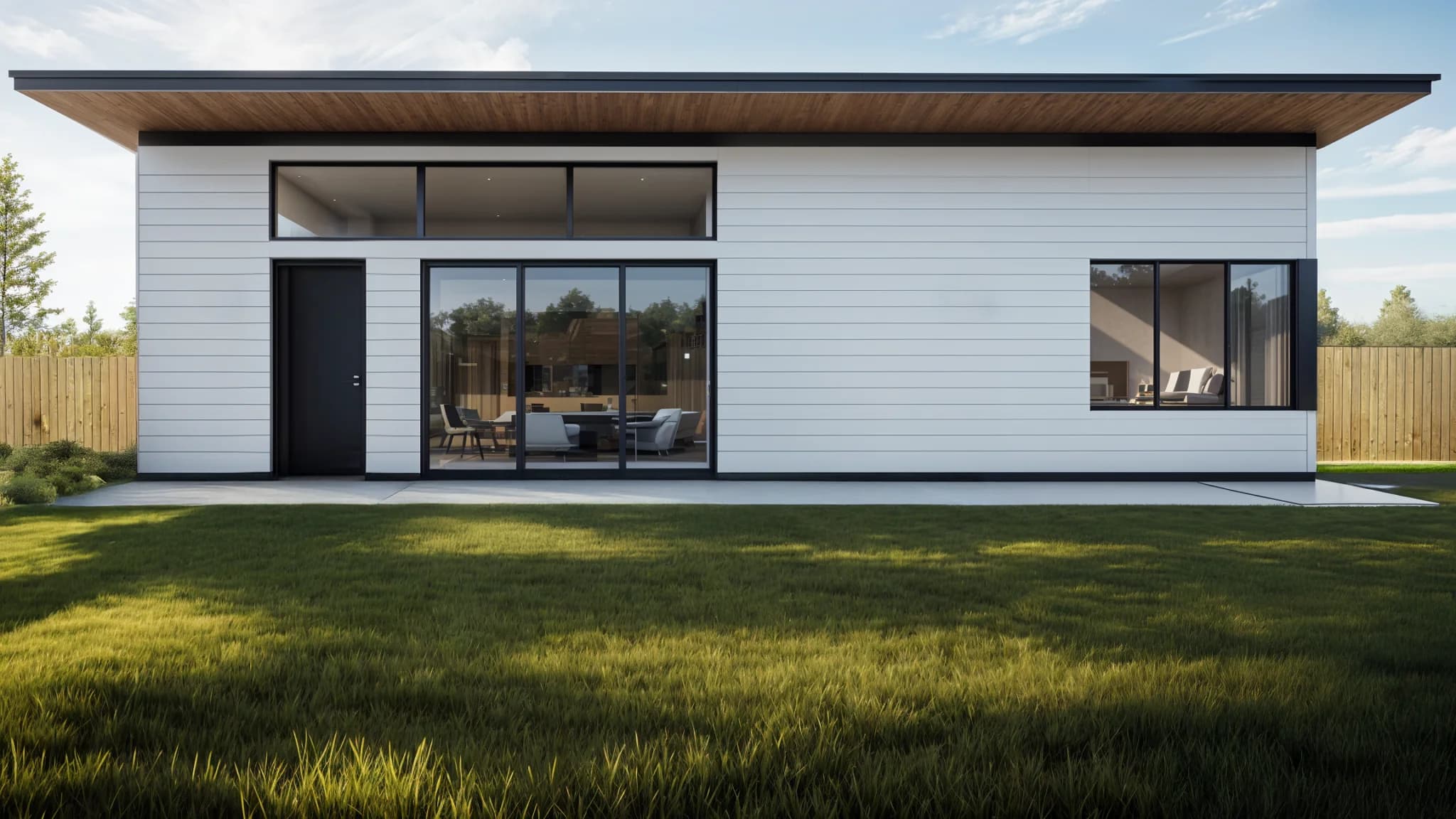
A compact modern accessory dwelling unit on a Contra Costa County residential lot. Zoning analysis identified the optimal setback envelope; the final design maximizes livable area within state-preemption size limits while preserving the existing backyard. Clerestory windows and an open-plan layout keep the interior light-filled despite the compact footprint.
- Detached ADU under AB 2221 / SB 897 (state preemption)
- Zoning analysis and setback optimization
- Open-plan living with clerestory light
- Utility separation and sub-meter coordination
FAQ
Common questions about Oakland ADUs.
What to expect before, during, and after an Oakland ADU project.
For any ADU over 500 square feet, or any project with structural modifications, yes — California requires stamped drawings by a licensed architect or engineer. Even for smaller projects, working with an architect helps you navigate Oakland's zoning rules, utility separation, Title 24 compliance, and Oakland-specific permit process. YCD Studio is an Oakland ADU architect serving Oakland, Berkeley, Moraga, Walnut Creek, and the greater East Bay.
A typical detached ADU takes 10–14 months from first meeting to move-in: design (2–3 months), construction documents (1–2 months), permitting (4–8 weeks in Oakland), and construction (4–7 months). Garage conversions and JADUs can move faster (6–10 months total). Pre-approved plans through Oakland's library can shave 4–6 weeks off the permit phase.
Oakland ADU construction costs in 2026 typically run $200–$400 per square foot. A garage conversion averages $80K–$180K. An attached ADU averages $200K–$450K. A new detached ADU averages $250K–$500K. Soft costs (architecture, engineering, permits) add 12–18% on top of hard construction. Oakland's fee waiver on units under 750 sq ft saves $15K–$25K relative to cities that charge full impact fees.
Yes. Oakland publishes a library of pre-approved ADU plans that can move through building review in 2–3 weeks versus 6–8 weeks for custom designs. We help clients evaluate whether a pre-approved plan fits their lot and program, or whether a custom design is worth the additional permit time. Pre-approved plans work best on level lots with standard setbacks; hillside or unusual lots typically need custom design.
Oakland's short-term rental rules apply to ADUs the same as any other dwelling unit — generally, hosts must register with the city and comply with Oakland's short-term rental ordinance. Many Oakland ADU owners use theirs as long-term rentals (which have no special registration) or as multigenerational housing for family members. We can walk you through the short-term rental compliance question during the feasibility call.
Hillside ADUs are more complex but very doable. Key factors: Wildfire Urban Interface (WUI) requirements (Class A roofs, ember-resistant vents, tempered glass), geotechnical report for slope stability, and sometimes grading permits for cut-and-fill. Hillside projects add $30K–$80K in soft costs (geotech, structural engineering) and 2–3 months of timeline, but open up options for elevated ADUs with better views than a flat-lot equivalent.
Yes. We design ADUs across the East Bay — Berkeley, Moraga, Walnut Creek, Concord, Lafayette, Orinda, Albany, El Cerrito, Richmond, and Contra Costa County unincorporated areas. Each jurisdiction has its own permit timelines and fee structures; we've worked with most of them and know which are fastest. Contra Costa County's review cycles are among the fastest in the region — often 3–4 weeks for complete ADU applications.
Possibly. SB 9 (2022) lets owners of single-family lots split the lot and build up to 4 total units where zoning previously allowed only 1. Eligibility requires the lot to not be in a high-fire-risk area, environmentally sensitive zone, or historic district. If your lot qualifies, SB 9 is often a better financial outcome than a single ADU. We run SB 9 feasibility as part of the free consultation.
Start your Oakland ADU project.
Book a free 30-minute feasibility call. We review your lot, discuss goals and budget, and tell you whether the project pencils — all before you commit to anything. We respond within 24 hours.