An ADU in the Bay Area in 2026 costs $50,000 to $400,000+, depending on type. JADUs (Junior ADUs carved from the existing house) are the cheapest at $40K–$120K. Garage conversions run $100K–$200K. Attached ADUs cost $200K–$300K, and detached ADUs typically cost $250K–$400K. On top of construction, expect 12–18% in soft costs (design fees, structural and energy engineering, surveys, permits) plus separate $1,000–$3,500 in city fees — and significantly higher in San Francisco and Berkeley. This guide breaks all of that down by ADU type, by city, and by line item so you can build a realistic budget before you start.
The single most common first question a homeowner asks us about building an ADU is "What is this going to cost?" It's the right question to lead with, and it's also the hardest one to answer cleanly — because the honest answer depends on your jurisdiction, your site, the unit type, finish level, and a half-dozen other variables that are easy to underestimate.
This guide walks through realistic 2026 Bay Area ADU cost ranges by unit type and by city, the soft costs most cost estimators quietly omit, and the specific line items that tend to surprise homeowners mid-project. By the end you should have enough context to set a realistic budget, know what questions to ask, and avoid the painful conversation where the estimate you were given in month one doesn't match the invoices showing up in month eight.
The short answer: expect $200 to $400 per square foot for construction, plus 12-18% in soft costs
For a detached ADU in the Bay Area in 2026, hard construction costs range from roughly $300 to $400 per square foot. Attached ADUs and garage conversions run 15-30% lower because they reuse existing structure. JADUs (Junior ADUs, carved out of the primary dwelling) are the lowest-cost path, typically $200-$280 per square foot.
On top of hard costs, soft costs (architectural design, structural and Title 24 engineering, permit fees, surveys, geotechnical reports if needed) add another 12-18%. A $350,000 hard construction budget for a detached ADU typically means a total all-in project cost around $400,000 to $415,000.
That said, these are broad averages. Actual cost varies meaningfully by city — Oakland's impact-fee waivers and streamlined review can save $20,000-$30,000 relative to San Francisco on the same project. Let's look at the specifics.
Cost by ADU type
1. Detached ADU: $250,000 - $500,000 all-in
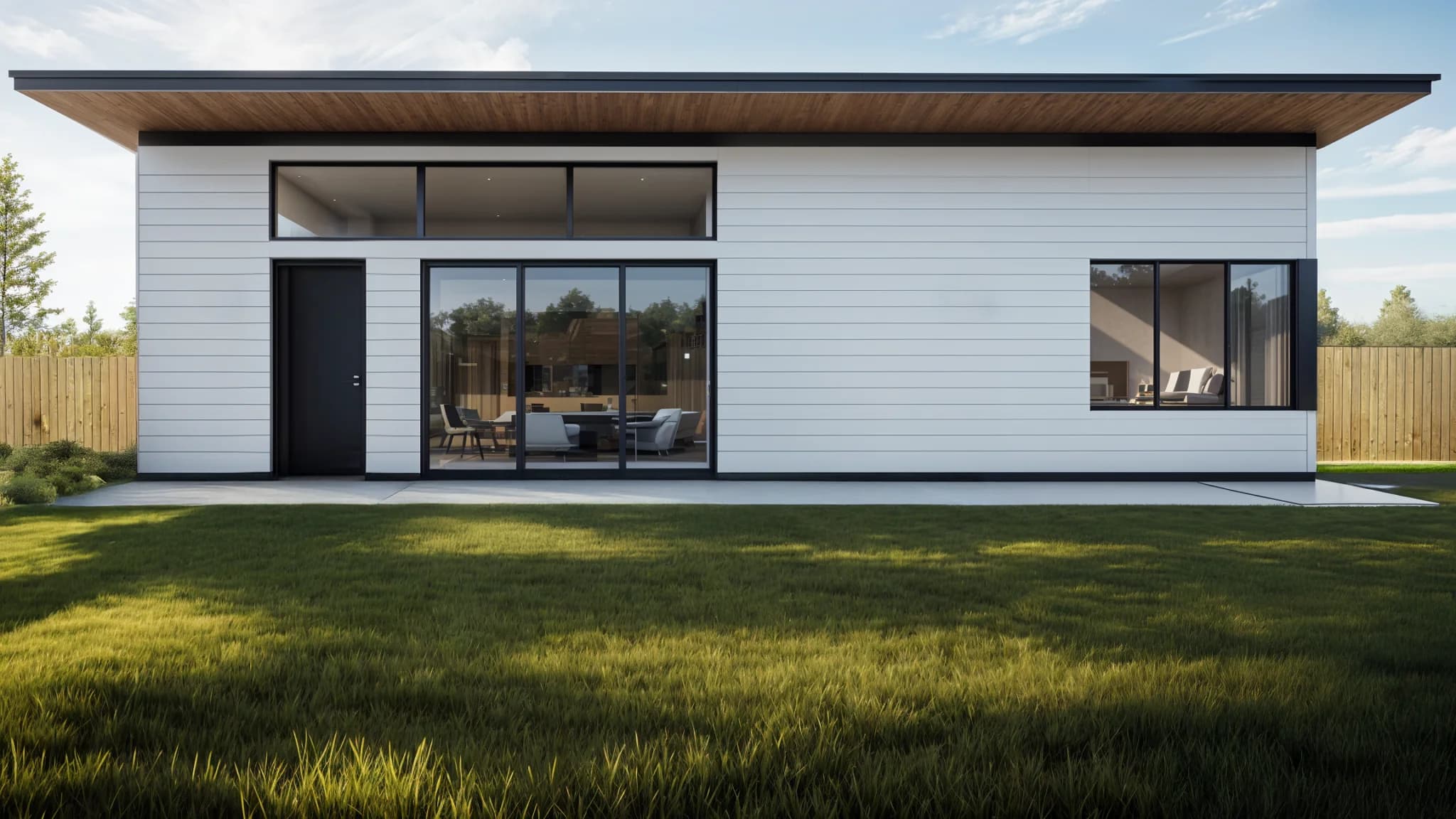
A new detached accessory dwelling unit built from the ground up, separated from the main house, is the most common ADU we design in the Bay Area. Size is typically 600-1,200 square feet under California's state preemption (AB 2221 / SB 897). Construction cost in 2026 runs $300-$400 per square foot depending on site conditions, finish level, and energy code compliance requirements.
A typical 700-square-foot detached ADU on a flat East Bay lot runs about $210,000 to $280,000 in hard construction. Add roughly $30,000 to $45,000 in soft costs (design, engineering, Title 24, permits) and you're looking at a total project cost of $240,000 to $325,000 all-in. In San Francisco, the same project typically runs $275,000 to $375,000 because of higher construction labor rates and city-specific permit fees.
Hillside ADUs, WUI (Wildfire Urban Interface) zone ADUs, and ADUs on lots requiring geotechnical analysis add $30,000-$80,000 to the total. If you're on a hillside in Oakland, Berkeley, Moraga, or anywhere in the Oakland hills, plan for this.
2. Attached ADU: $200,000 - $450,000 all-in
An attached ADU is built as an addition to the primary dwelling — sharing at least one wall, possibly sharing the roof. Construction cost typically runs $250-$375 per square foot, lower than detached because the foundation extension is shorter and some framing is integrated with the existing house.
A 600-square-foot attached ADU in Oakland runs about $150,000 to $225,000 in hard construction. Total all-in with soft costs: $170,000 to $260,000. The tradeoff versus detached: slightly less privacy between units, and the construction is more disruptive to the main house since crews are working on shared walls and utility tie-ins.
One item we commonly see underestimated: integrating the new addition with the existing home's exterior (siding match, roof tie-in, window alignment) can add $10,000-$25,000 depending on how visible the addition is from the street and how particular you are about aesthetic continuity.
3. Garage conversion: $80,000 - $180,000 all-in
Converting an existing garage into a living unit is the fastest and cheapest path to an ADU. The foundation, walls, and roof already exist. Construction cost typically runs $200-$300 per square foot, and soft costs are lower because the permit process is simpler (no new foundation, no major structural engineering).
A 400-square-foot garage conversion in the East Bay typically runs $80,000 to $120,000 in hard construction, plus $10,000-$15,000 in soft costs. Total: $90,000 to $140,000. San Francisco is slightly higher — $110,000 to $180,000 all-in on the same scope.
Key cost drivers that vary widely: whether the existing garage needs a new slab (rare but expensive, roughly $15,000), whether the electrical panel has capacity for a second full living unit (often needs upgrade, $4,000-$8,000), and how much insulation and weatherproofing is required to convert an uninsulated structure into a conditioned living space (typically $8,000-$15,000 across walls, ceiling, and floor).
4. JADU (Junior ADU): $50,000 - $140,000 all-in
A JADU is carved out of the existing primary dwelling — capped at 500 square feet, must share a bathroom or kitchen with the main house. Because it's a conversion of existing conditioned space, construction cost is the lowest of any ADU type, typically $200-$280 per square foot.
A 400-square-foot JADU — say, converting a spare bedroom plus adding a kitchenette and separate entry — typically runs $60,000 to $100,000 all-in. The limiting factor is usually plumbing: if you're adding a new wet room in a location without existing plumbing, running new supply and drain lines adds $8,000-$20,000 depending on the routing.
JADUs have an owner-occupancy requirement in most California jurisdictions — the owner must occupy either the primary dwelling or the JADU. This rules out JADUs for pure-rental investor strategies, but they're excellent for multi-generational housing (aging parents, adult children, caregivers) or partial rental income from a spare room converted to a proper unit.
Cost by city: Bay Area 2026 snapshot
Same project can vary 20-30% in total cost depending on which Bay Area city you're in, driven by impact fees, plan check fees, permit fees, and local labor markets.
Oakland and East Bay (most cost-effective)
Oakland is California's most ADU-friendly city in 2026. Impact fees are waived on all ADUs under 750 square feet — saving $15,000-$25,000 compared to jurisdictions that charge full fees. Oakland also publishes a pre-approved ADU plan library; building from a pre-approved plan shaves 4-6 weeks off permit review, reducing carrying costs on construction financing.
Contra Costa County unincorporated areas, Berkeley, Walnut Creek, and Moraga are all in the same cost-effective tier. Review timelines are among the fastest in the region (often 3-4 weeks for complete applications in Contra Costa County, 4-6 weeks in Oakland). For a full breakdown of Oakland ADU-specific pricing and process, see our dedicated Oakland ADU architect page; for Moraga and the Lamorinda foothills specifically (different fire district, sewer authority, and hillside considerations), see the Moraga ADU page.
San Francisco (highest cost Bay Area jurisdiction)
San Francisco ADUs are 15-25% more expensive than Oakland equivalents, driven by three factors: higher construction labor rates inside city limits, San Francisco Department of Building Inspection (DBI) permit fees, and longer permit review timelines (typically 8-12 weeks versus 4-6 in Oakland). San Francisco does have its own pre-approved ADU plan program and a dedicated ADU track at DBI, which helps somewhat.
The specific line items that push SF ADUs higher: Section 311 neighbor notification fees ($1,200-$3,000 depending on project scope), longer carrying costs on construction loans due to slower permits, and labor markups of 10-15% versus the East Bay for the same skilled trades.
Peninsula and South Bay (variable by jurisdiction)
San Jose's Express Plan Check can clear a compliant ADU permit in 3-4 weeks — among the fastest in California, lower than both Oakland and San Francisco. Palo Alto is at the other extreme: individual review requirements and design-review-board scrutiny add months to timelines and $5,000-$15,000 to soft costs. Mountain View, Sunnyvale, and Redwood City fall between these extremes.
Peninsula labor costs are generally comparable to Oakland, so the main variable is how long your permit review takes and whether the city requires additional professional services (story pole studies, shadow studies, arborist reports on protected trees).
North Bay (Sonoma, Marin, Napa)
Sonoma and Napa ADUs often have lower labor costs than the urban Bay Area but higher soft costs because of agricultural-overlay review, viewshed protection, and often a septic/well engineering requirement (most North Bay lots aren't on city sewer). For rural Sonoma or Napa ADUs, add $15,000-$40,000 for site-specific engineering not typically needed in urban infill projects.
Marin enforces some of the strictest hillside design standards in California. If your Marin lot is on a slope, expect geotechnical reports ($8,000-$20,000), structural complexity premiums, and potentially design review board hearings that add 3-6 months to the timeline.
Soft costs: the 12-18% most estimates leave out
When we quote hard construction costs per square foot, we're talking about what the general contractor charges to build the structure. Everything else — design, engineering, permits, testing — is a soft cost. On a typical Bay Area ADU, soft costs add 12-18% on top of hard construction.
Here's the breakdown we see most often on an average ADU project:
- Architectural design and construction documents: 6-10% of total project cost
- Structural engineering: 1.5-3% (higher on hillside or complex sites)
- Title 24 energy modeling and Cal Green: 0.5-1%
- Mechanical, electrical, and plumbing engineering (if required): 1-2%
- Building permit fees: $4,000-$15,000 depending on jurisdiction and unit size
- Planning application fees (if discretionary review is triggered): $1,500-$8,000
- Site survey (for property line and topo): $2,500-$6,000
- Geotechnical report (for hillside or questionable soil): $5,000-$15,000
- Arborist report (for protected trees on or near construction): $1,500-$3,500
The two soft costs most homeowners don't expect: geotechnical and arborist reports. Neither is always required — but if your lot is on any slope or has mature trees within 25 feet of the proposed ADU location, plan on both being required and budget accordingly.
Line items that commonly cause cost surprises
Aside from the soft costs above, the following hard-cost items surprise homeowners most often mid-project:
Electrical panel upgrade
Adding an ADU often requires upgrading the main electrical panel from 100A to 200A (or rarely, 400A) because the existing panel doesn't have capacity for a second independent living unit with its own HVAC, appliances, and sub-panel. Cost: $4,000-$9,000 plus PG&E coordination time (1-4 months if an exterior service upgrade is needed). This is not optional on most projects — your electrician will flag it during schematic design.
Sewer lateral replacement
Bay Area cities inspect the existing sewer lateral (the pipe from your house to the city main) when you pull an ADU permit. If the lateral is old clay pipe or has tree root intrusion, many cities require replacement before issuing an ADU certificate of occupancy. Cost: $6,000-$20,000 depending on length, depth, and whether trenchless replacement is viable. This catches homeowners with older pre-1960s homes particularly often.
Water meter or sub-meter separation
Detached ADUs often require either a separate water meter (for billing) or a sub-meter to allocate water usage between units. Water meter installation in SF or Oakland typically runs $3,000-$8,000 plus a 6-12 week wait for the utility to coordinate the installation. Many homeowners find out about this requirement after starting construction, which is painful to backfill.
Title 24 compliance extras
Every California ADU must meet current Title 24 energy code. For 2026 that typically means high-performance windows (U-factor 0.30 or better), mandatory heat pump HVAC (not gas furnace), mandatory heat pump water heater (not gas), a solar-ready electrical panel, and R-21 wall insulation minimum. These requirements push hard construction costs up 8-12% versus what a homeowner might expect based on pre-2020 construction pricing.
The heat pump requirement alone adds $3,000-$7,000 versus the equivalent gas appliance — but it's now mandatory for new construction on most California residential projects, including ADUs.
Financing considerations
Most Bay Area ADU projects are financed through one of four paths: cash, HELOC against the primary residence, a construction loan specifically for the ADU, or a cash-out refinance. Each has cost implications:
HELOC rates in 2026 are typically 8-10% variable. Interest-only during construction; full amortization on draw. Main limitation: your HELOC line has to be large enough to cover the full project, which depends on your current home equity.
ADU-specific construction loans: some credit unions (most notably Freddie Mac's ADU-specific programs) and local lenders offer construction-to-permanent loans for ADUs with 20-25% down of the total project cost. Rates are usually 0.5-1% higher than a conventional mortgage but lock in long-term amortization once construction is complete.
Cash-out refinance: works if you have significant equity and can accept resetting your primary mortgage to current rates (which, in 2026, may be higher than your existing rate — a real consideration). The advantage is a single lower-rate loan covering both your home and the ADU.
How to set a realistic ADU budget
Here's a simple framework we use with clients during the free 30-minute feasibility call:
- Start with your desired ADU size (e.g., 700 square feet detached).
- Multiply by the midpoint of the per-square-foot range for your unit type and city (e.g., $350/sf × 700 = $245,000 hard construction).
- Add 15% for soft costs ($245,000 × 1.15 = $282,000 total base estimate).
- Add $15,000-$40,000 contingency for site-specific items (hillside, electrical upgrade, sewer lateral, tree impacts).
- Round up 10% for cost inflation between design and construction completion.
For a standard 700-sf detached East Bay ADU in 2026, this framework produces a realistic total budget of $320,000-$355,000. If your mental number is dramatically lower than that, something about the scope, site, or finish level needs to adjust to match reality.
What we offer: free 30-minute ADU feasibility call
Before you spend money on design, engineering, or contractor estimates, we offer a free 30-minute feasibility call. We review your lot, your goals, and your budget, and tell you honestly whether the project is viable, what it will realistically cost, and what the permit path looks like in your specific jurisdiction. If we're not the right fit — or if the numbers don't pencil — we tell you that too.
About a third of the feasibility calls we take end with us referring the homeowner to a different architect, a general contractor, or a different project type entirely. That's the right outcome when it is the right outcome.
Important disclaimer
Sources and authoritative references
California state agencies, code commissions, and reference data underlying the cost ranges above: