
Hospitality Architecture
Restaurants, hotels, and
gathering places.
We design hospitality spaces across the San Francisco Bay Area — restaurants, cafes, hotels, bars, and food halls. Kitchen engineering, health department permits, ABC compliance, fire and life safety, and guest-flow planning, handled as one integrated project from concept through opening day.
What We Design
Hospitality spaces that work as hard as you do.
Every hospitality typology has its own code requirements, operational workflows, and design challenges. Here is how we approach each one.
Restaurants & Cafes
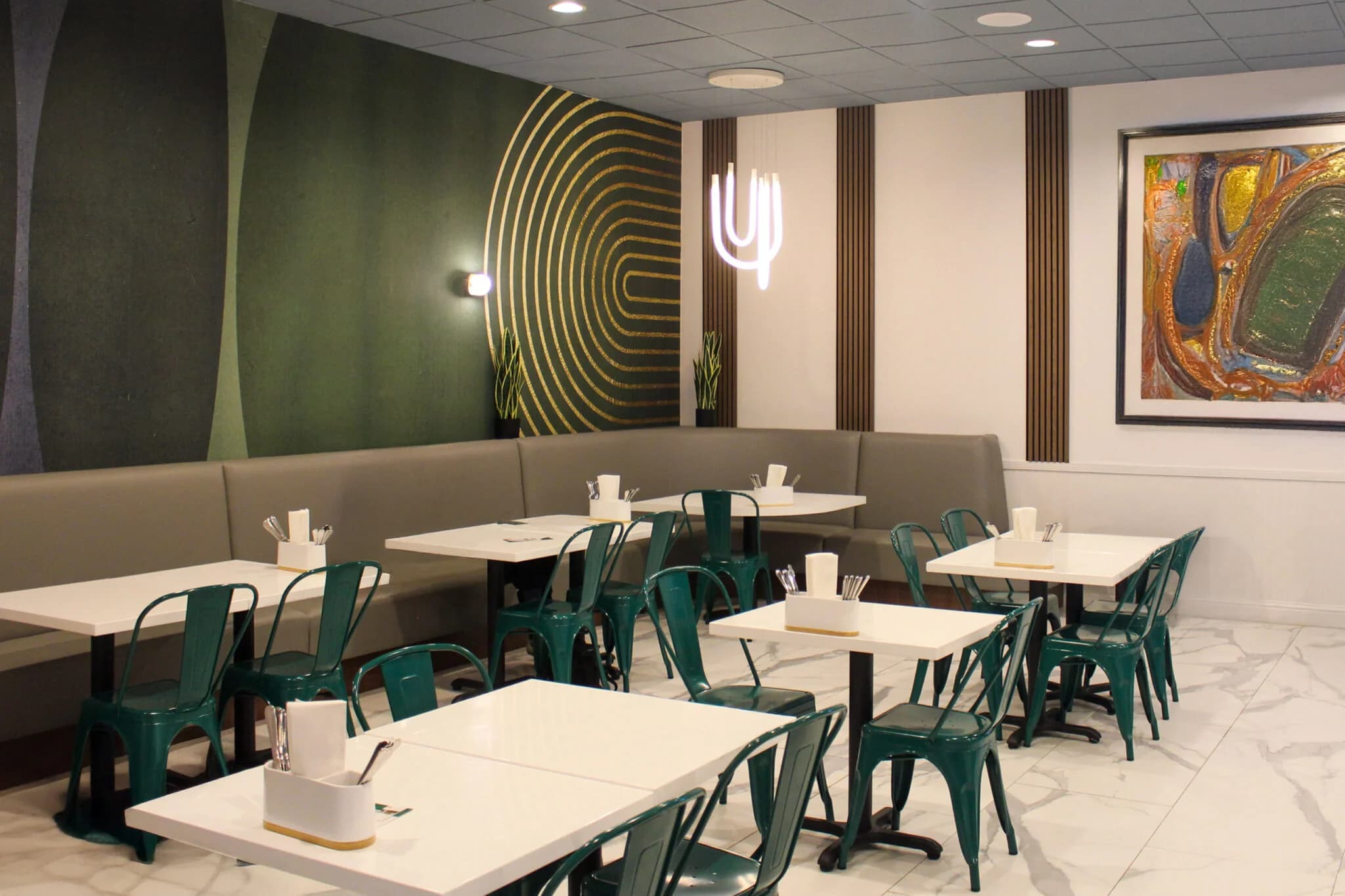
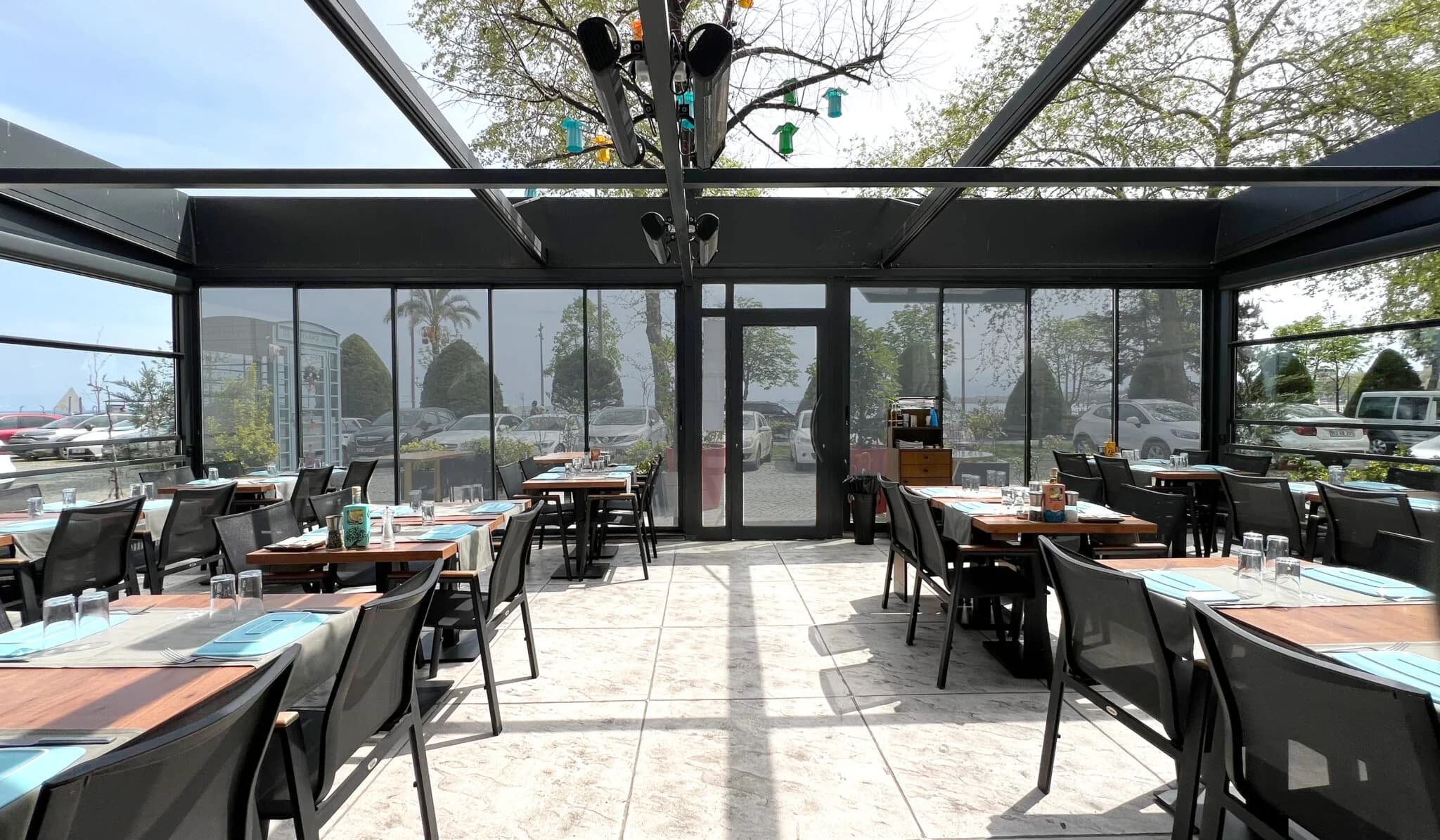
Full-service dining, fast-casual concepts, coffee shops, and bakery cafes. We design every layer — kitchen workflow, exhaust systems, health department-compliant layouts, front-of-house atmosphere, and outdoor dining. Bay Area restaurant permitting involves the building department, environmental health, fire marshal, and often ABC — we coordinate all of them.
- Full-service, fast-casual, and counter-service layouts
- Commercial kitchen design with Type I and Type II hoods
- Health department plan review and CalCode compliance
- Outdoor dining patios and parklet design
- Food hall stall and shared-kitchen configurations
Hotels & Boutique Stays
Boutique hotels, bed-and-breakfasts, and short-term hospitality spaces. Hotel architecture layers guest room planning, corridor egress, ADA room ratios, fire-rated assemblies, and MEP distribution in ways that differ fundamentally from residential or office work. In the Bay Area, hotel projects also trigger planning commission review, parking studies, and sometimes CEQA.
- Guest room layout and furniture planning
- ADA-accessible room count per California Building Code
- Fire-rated corridor and stairwell design
- Lobby, reception, and back-of-house service areas
- Laundry, housekeeping, and mechanical room planning
Bars, Lounges & Event Spaces
Cocktail bars, wine bars, taprooms, lounges, and private event venues. Bar-forward spaces have unique code requirements — ABC license types dictate sight lines, separation from dining, and food-service minimums. Occupancy loads are typically high, which triggers more stringent fire exiting, sprinkler, and ventilation requirements.
- Bar well, speed rail, and under-bar equipment layout
- Draft beer and wine system rough-in coordination
- ABC Type 47 and Type 48 license layout compliance
- High-occupancy exiting and fire sprinkler design
- Sound isolation and acoustic treatment
Why Hospitality Is Different
The regulatory complexity most firms underestimate.
Hospitality projects involve more agencies, more code sections, and more coordination than any other building type. These are the areas where experience saves you time and money.
Health Department Compliance
Bay Area counties enforce the California Retail Food Code (CalCode) independently from building department plan check. Environmental health reviewers evaluate food flow diagrams, handwash sink placement, surface materials, ventilation, pest control, and employee facilities. In San Francisco, the Department of Public Health can take 4-8 weeks for plan review alone. We submit health department plans in parallel with building permits and design to CalCode from day one — eliminating the back-and-forth that delays most restaurant projects by months.
Kitchen Exhaust & Ventilation
Commercial kitchens require Type I hoods over grease-producing equipment and Type II hoods over dishwashers and ovens. A single hood system can exhaust 3,000-6,000 CFM, requiring a rooftop fan, dedicated ductwork through the building, and a makeup air unit to replace the displaced air. In multi-tenant Bay Area buildings, routing exhaust to the roof often means negotiating chase space with the landlord, coordinating structural penetrations, and meeting wind-load requirements for rooftop equipment. Getting this wrong costs $40K-$100K to fix after the fact.
Accessibility & Guest Flow
California accessibility requirements (CBC Title 24 Chapter 11B) exceed federal ADA standards in several critical areas. Hospitality spaces must provide accessible entries, dining surfaces, bar counters with lowered sections, restrooms, and path-of-travel to all public areas. For hotels, a minimum percentage of guest rooms must be fully accessible with roll-in showers, visual alarms, and communication features. We design accessibility into the concept from the start — not as an afterthought that compromises the guest experience.
Alcohol License & ABC Requirements
The California Department of Alcoholic Beverage Control (ABC) issues licenses based partly on your floor plan. A Type 47 (on-sale general, eating place) requires that you serve meals and maintain a bona fide eating area. A Type 48 (on-sale general, public premises) allows bar-only operation but has different rules. Your architectural layout — bar location, dining-to-bar ratio, sight lines, and outdoor service areas — directly affects which license you qualify for and whether ABC will approve your application. We design with your target license type in mind so the floor plan supports your ABC filing.
Our Process
From feasibility to certificate of occupancy.
A realistic timeline for hospitality projects in the Bay Area. Restaurant and cafe projects can move faster; hotel projects typically require more time for planning entitlements.
Pre-Lease Feasibility
1-2 weeksSite visit, existing condition assessment, exhaust routing evaluation, utility capacity check, and preliminary code review. We tell you what the space can and cannot support before you sign a lease or purchase agreement.
Concept & Space Planning
3-4 weeksFloor plan development, kitchen layout, seating plan, bar design, and material palette. For hotels: guest room mix, corridor layout, and amenity space planning. We present options with realistic cost implications for each.
Construction Documents
4-8 weeksFull permit-ready drawing set: architectural plans, reflected ceiling plan, finish schedule, equipment plan, and details. Coordinated with MEP engineers, structural consultant, kitchen equipment vendor, and fire protection contractor.
Multi-Agency Permitting
6-16 weeksBuilding department plan check, health department review, fire marshal review, and any planning or ABC submittals. San Francisco averages 10-16 weeks; Oakland and Peninsula cities 6-10 weeks. We push for parallel review and respond to corrections within one week.
Construction & Opening
Through COConstruction administration, site visits, RFI responses, submittal reviews, and inspection coordination. We sequence final inspections — building, fire, health — so one agency is not waiting on another. The goal is certificate of occupancy on your target date.
Cost Guide
What hospitality projects cost in the Bay Area.
All-in ranges including design, engineering, permits, construction, and equipment. Actual costs depend on building condition, city, concept complexity, and finish level.
Basic cook line or espresso bar, Type I or Type II hood, point-of-sale counter, standard finishes, ADA restroom. Typically 600-1,500 SF. Lease-to-open in 4-7 months.
Full cook line, Type I and Type II hoods, walk-in cooler/freezer, bar with draft system, custom finishes, multiple ADA restrooms. Typically 1,500-4,000 SF. Lease-to-open in 6-12 months.
Guest room fit-out, fire-rated corridors, ADA rooms, lobby and reception, laundry and housekeeping, MEP distribution, elevator coordination. Project size varies widely. Timeline depends heavily on planning entitlements and structural scope.
Ranges reflect Bay Area construction costs as of 2025. Hotel and boutique stay costs vary significantly based on structural scope, number of guest rooms, and level of finish. We provide project-specific cost guidance during the concept and space planning phase.
Featured Projects
Hospitality spaces we have designed.
A selection of restaurant and hospitality projects across the Bay Area.
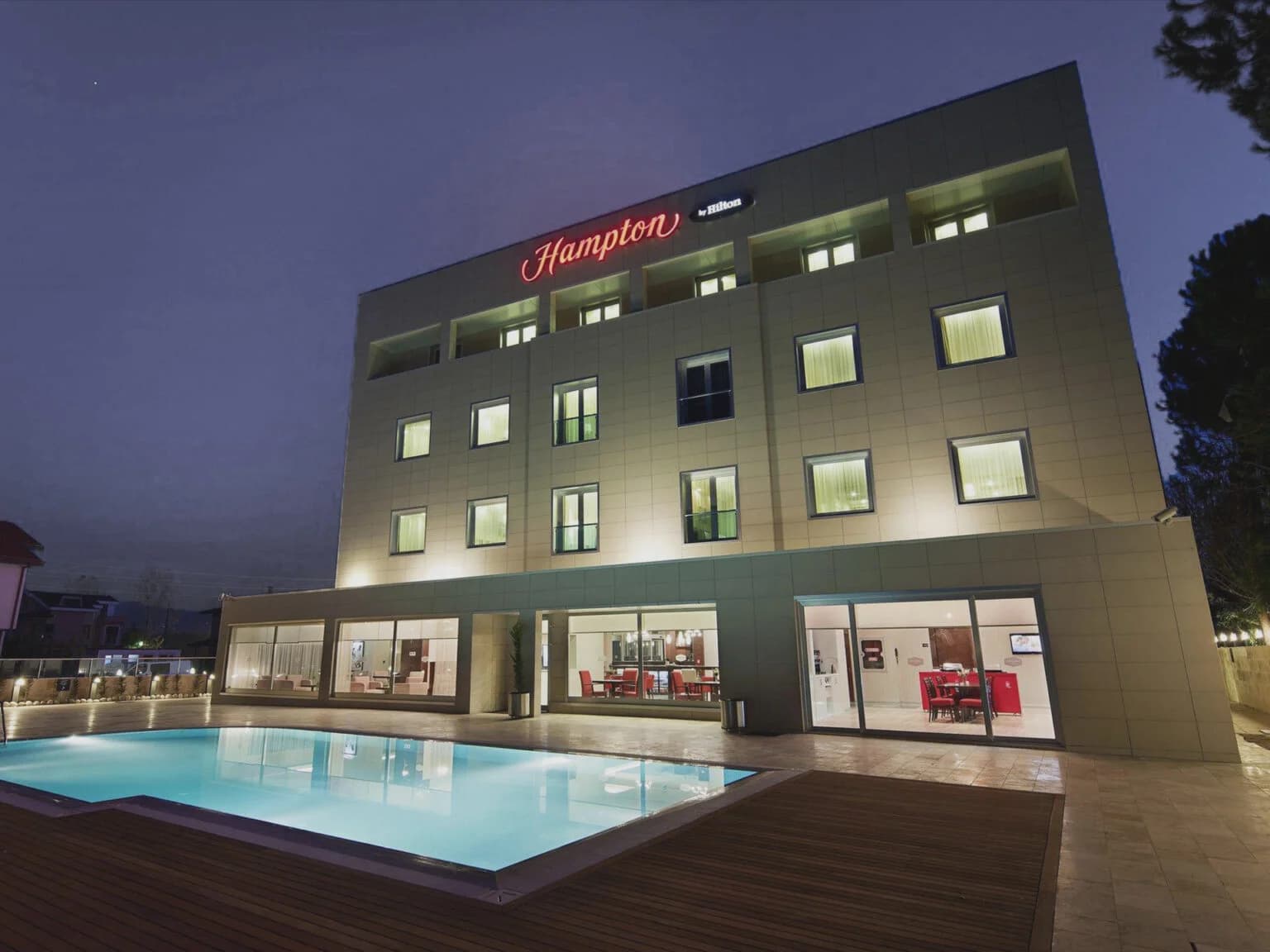
Hampton by Hilton Ordu
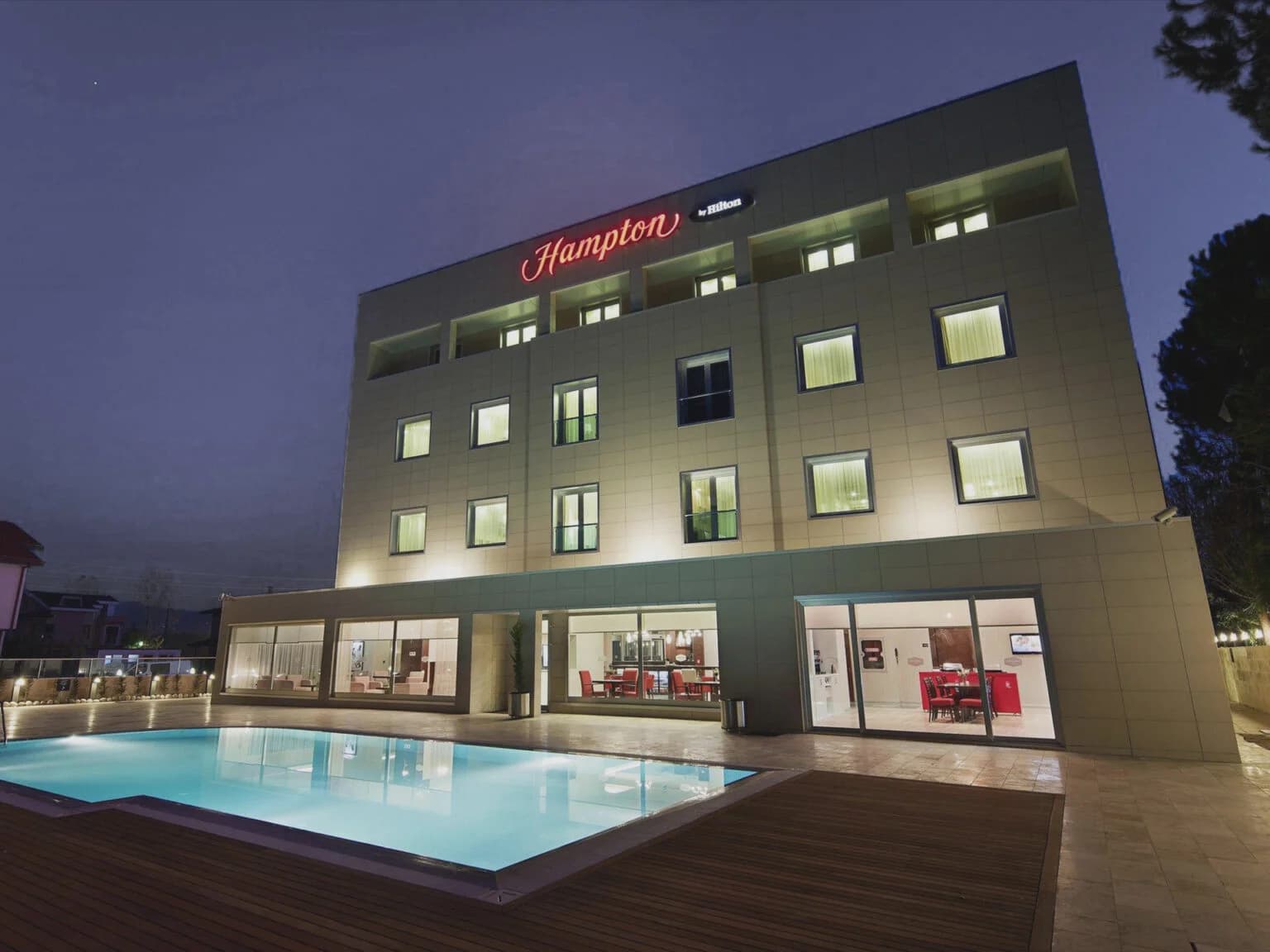
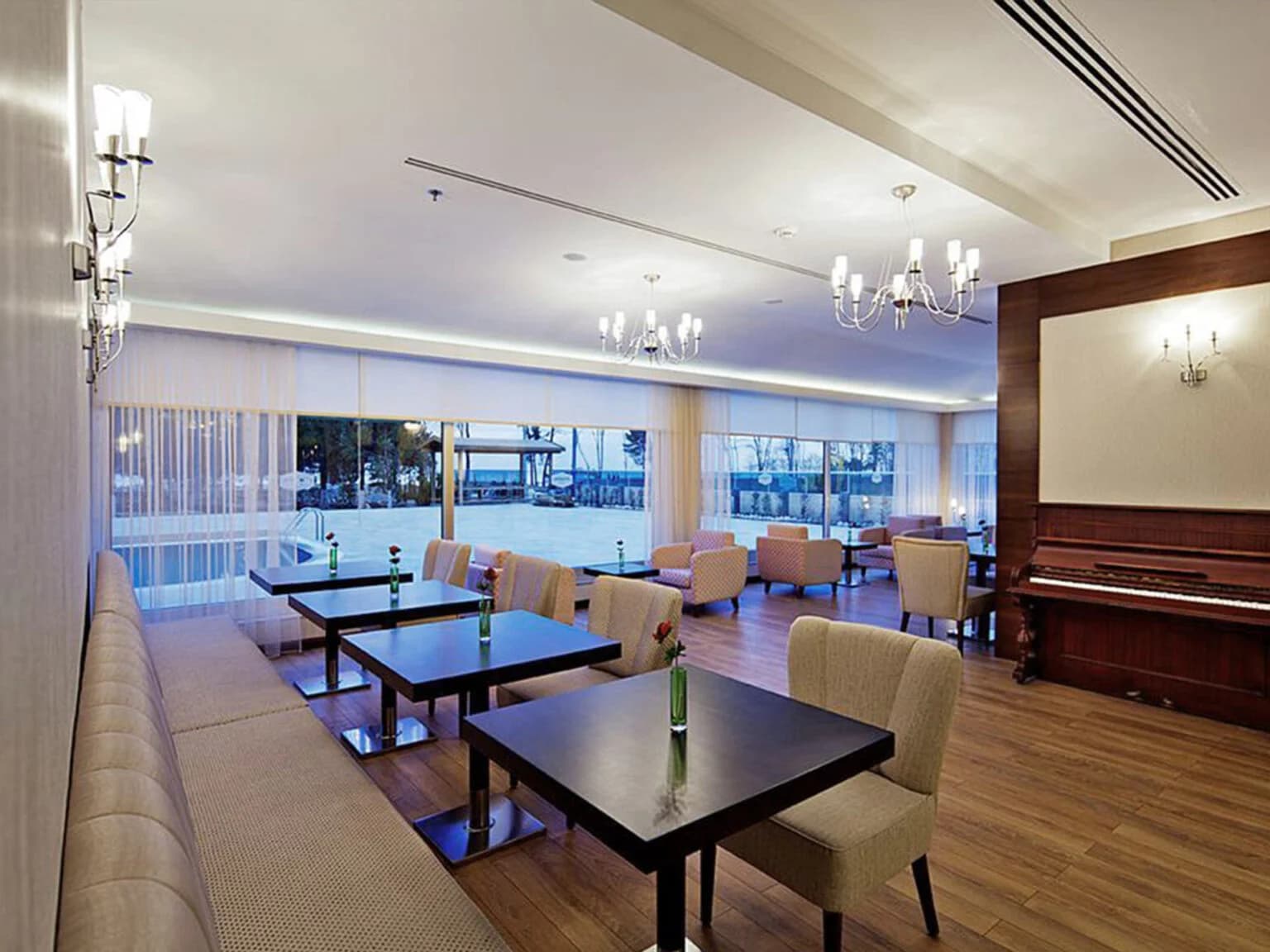
A 35,000 sq ft Hampton by Hilton hotel on the Black Sea coast — designed within Hilton's brand framework while introducing local material and spatial character. Guest rooms, ground-floor restaurant, outdoor pool, lobby lounge, and bar coordinated as one cohesive guest experience from arrival to departure.
- Branded hotel meeting Hilton design standards
- Guest rooms, lobby, restaurant, lounge, and bar
- Outdoor pool integrated with dining and lounge
- Coastal context with regional material identity
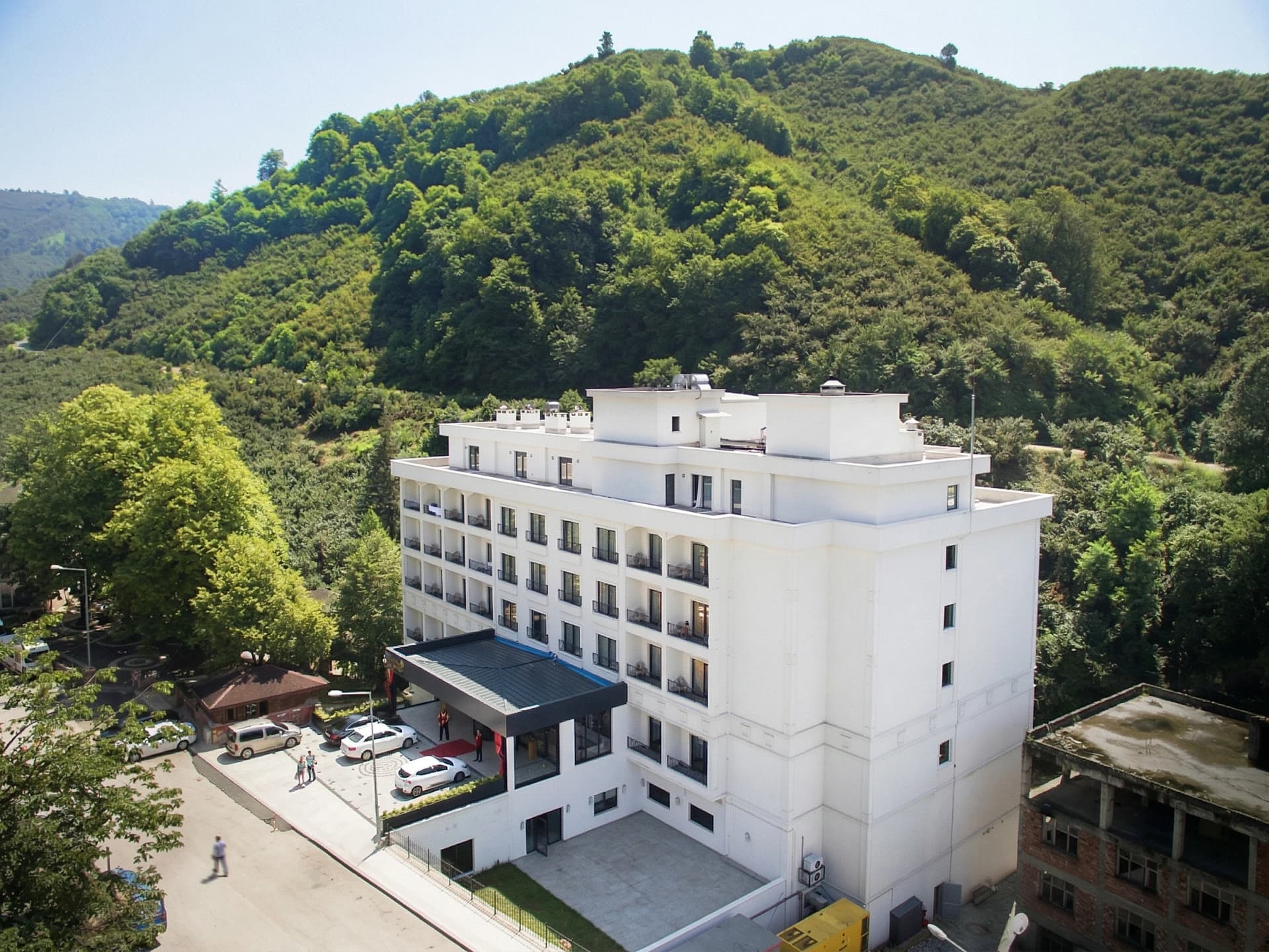
Fatsa Ilica Hotel
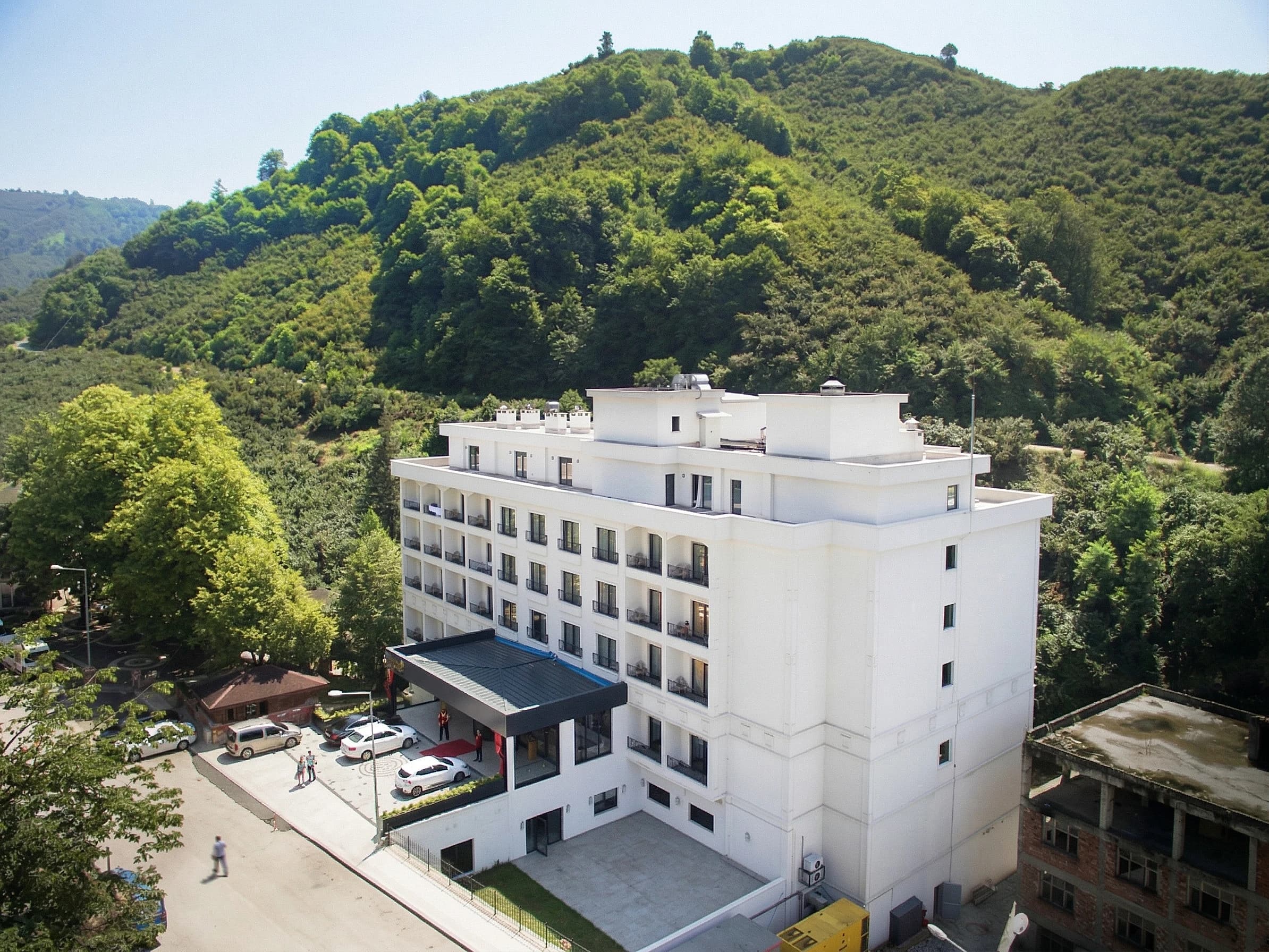
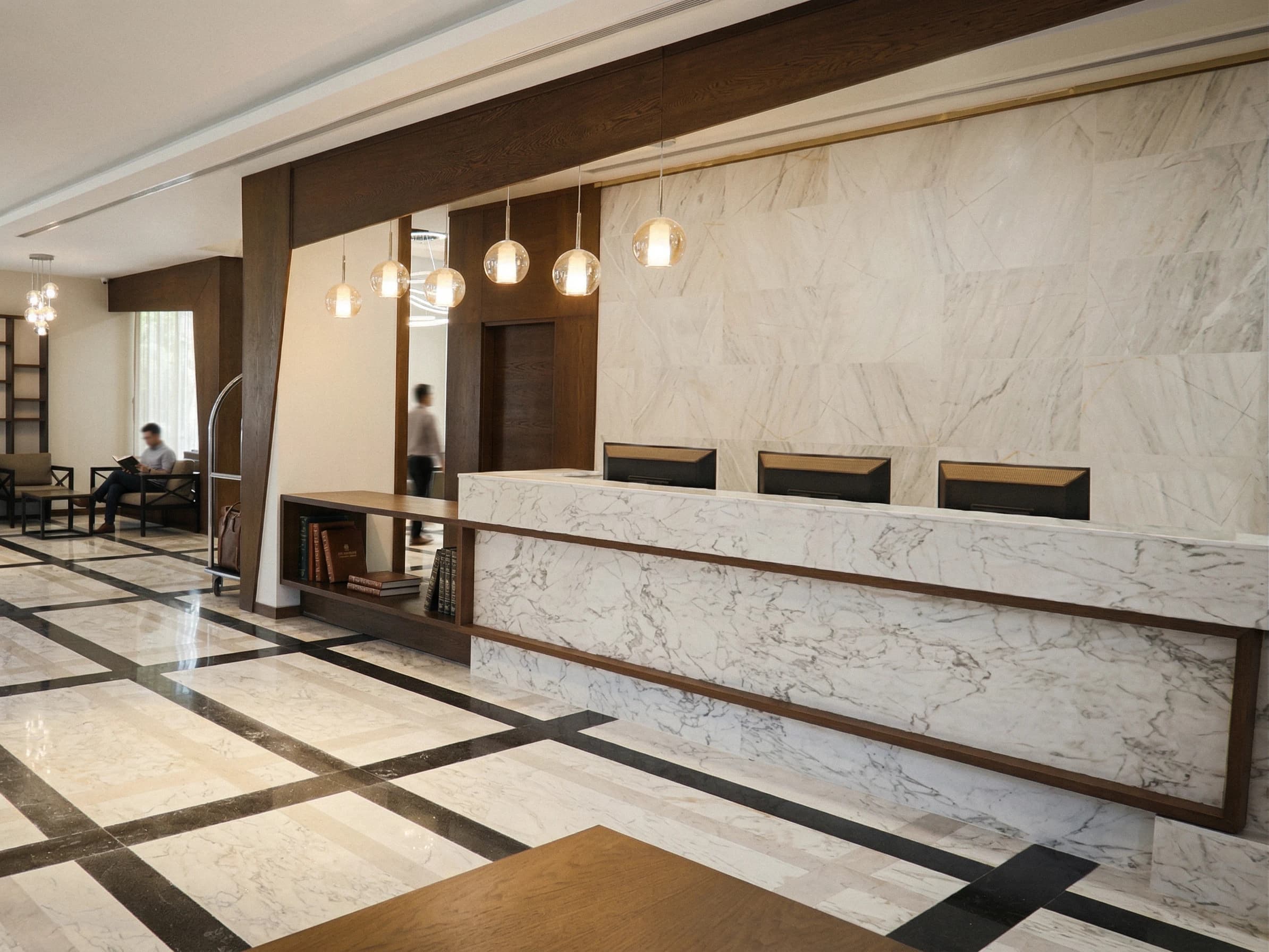
A 28,000 sq ft mountain valley hotel with marble reception, warm guest rooms, and a deep connection to its forested riverside setting. Lobby, lounge, and dining spaces are designed as extensions of the landscape, with natural materials and generous glazing throughout.
- Boutique hotel in dramatic valley setting
- Marble reception with geometric inlay
- Guest rooms framing the forested landscape
- Public spaces designed as landscape extensions
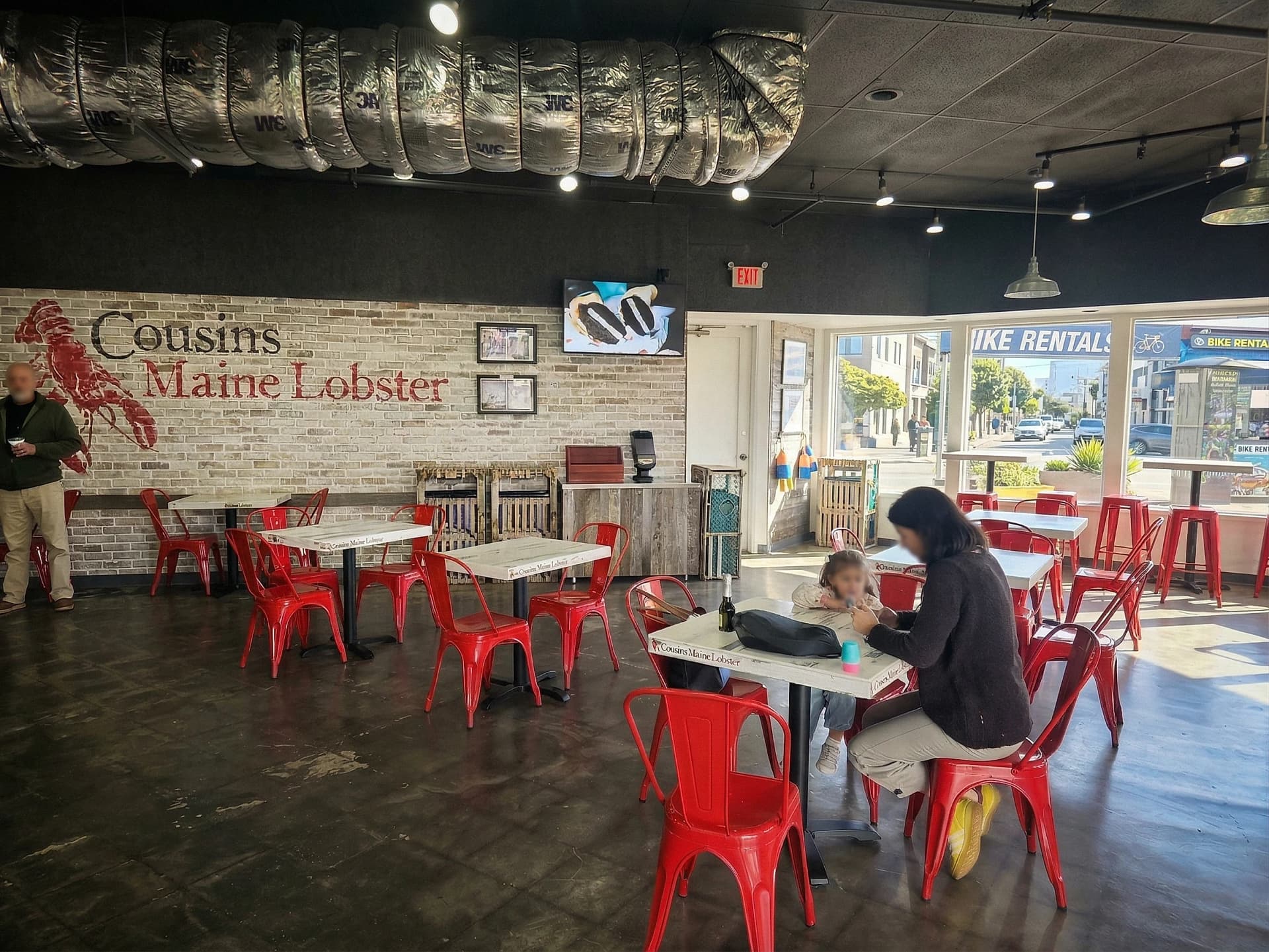
Cousins Maine Lobster — Pier 41, San Francisco
YCD Studio provided design and project delivery services for Cousins Maine Lobster's San Francisco location at Pier 41, Fisherman's Wharf. We developed the tenant improvement design and coordinated permitting with the Port of San Francisco, SF Building Department, Fire Department, and Environmental Health — implementing the franchise's brand and design standards on a waterfront pier-level site. Permit drawings were stamped by the project's licensed architect of record.
- Cousins Maine Lobster SF location
- Port of SF + multi-agency coordination
- Franchise brand-standards execution
- Fisherman's Wharf high-traffic site
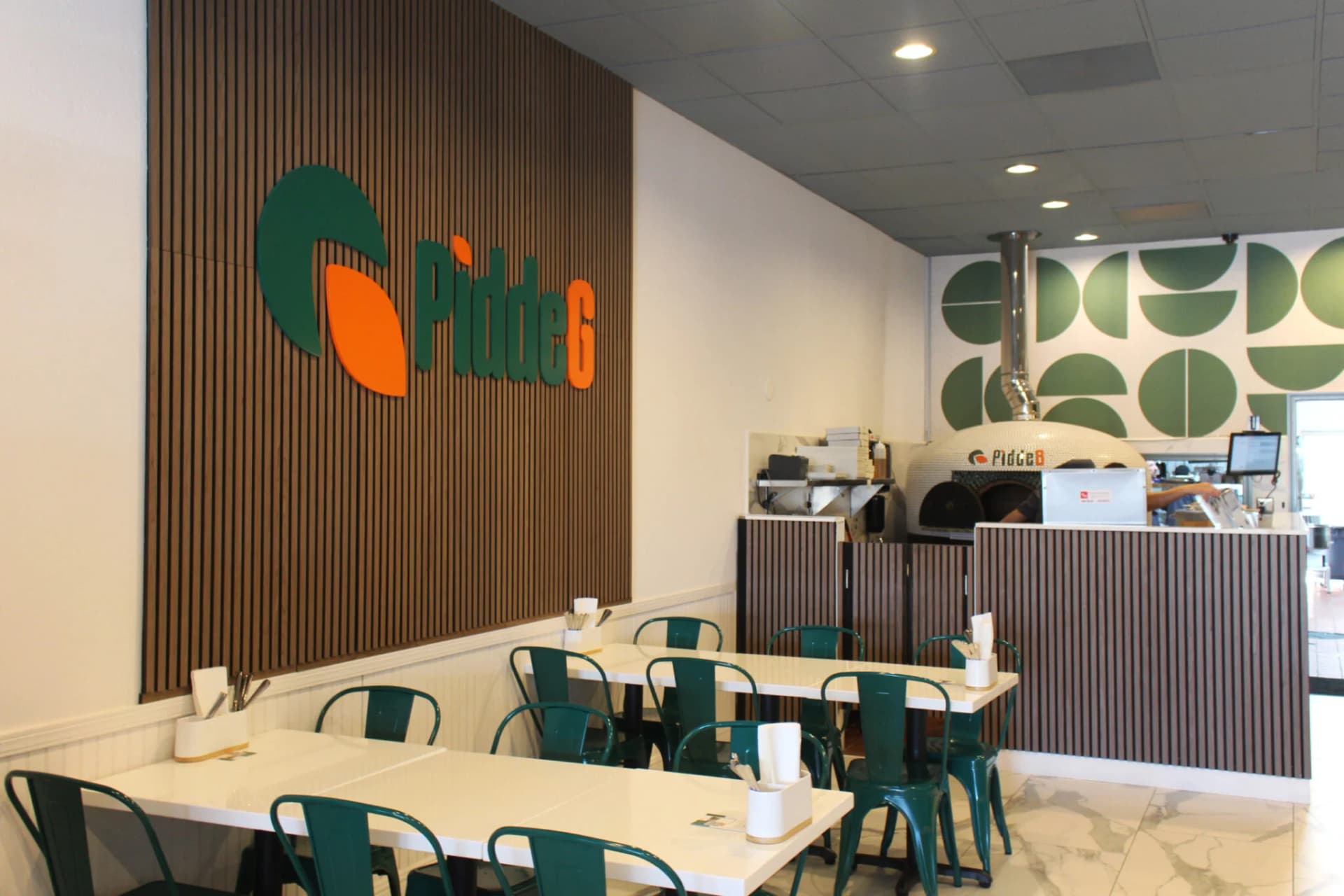
PiddeG Mediterranean Eatery — Walnut Creek
YCD Studio designed PiddeG Mediterranean Eatery at Walnut Creek's Encina Grande center. A Turkish-Mediterranean pide concept centered on a custom pide oven as the focal point, with an efficient open kitchen visible to guests and a warm material palette. Designed and permitted in under 6 weeks. Since opening, the restaurant has earned a 4.8-star rating across 160+ Google reviews.
- Walnut Creek Mediterranean destination
- 4.8 stars / 160+ Google reviews post-opening
- Pide oven as design centerpiece
- 6-week design-to-permit timeline
FAQ
Common questions about restaurant & hotel design.
Health department, ABC licensing, kitchen exhaust, and Bay Area hospitality permitting — answered.
Full-service restaurant TI in the Bay Area typically runs $200–$400+/sf, depending on kitchen complexity, finishes, and building condition. A counter-service or fast-casual concept can land closer to $150–$250/sf. Major cost drivers include kitchen exhaust (hoods + makeup air), grease interceptor, ADA restroom reconfiguration, and any structural modifications. We develop a realistic budget with your contractor during design.
Bay Area counties enforce the California Retail Food Code (CalCode) independently from building department plan check. We submit health department plans in parallel with the building permit, which shortens the total timeline by 4–6 weeks versus sequential submittal. Our food-flow diagrams, handwash sink placement, and finish specifications are designed to CalCode from day one so reviews are typically first-pass approved.
Type I hoods are for grease-producing equipment (grills, fryers, woks) and require UL 300 fire suppression, stainless steel ductwork, and a makeup air unit. Type II hoods are for heat and steam only (dishwashers, ovens) and have fewer requirements. Most commercial kitchens need both. Sizing the hood and ductwork correctly is one of the most consequential decisions in restaurant design — we get this right early to avoid $30K–$80K in late fixes.
Yes. We've designed boutique hotels in the Bay Area and abroad, including Hampton by Hilton Ordu and the Fatsa Ilica Hotel. Hotel design requires careful attention to guest room planning, ADA accessible room ratios (per California Building Code), fire-rated corridor design, back-of-house service areas, and lobby programming. For Bay Area hotels we also handle planning commission review and parking studies.
Yes. California's Department of Alcoholic Beverage Control (ABC) issues licenses based partly on your floor plan. A Type 47 (on-sale general, eating place) requires a bona fide eating area; a Type 48 (public premises) allows bar-only operation under different rules. Your bar location, dining-to-bar ratio, sight lines, and outdoor service areas directly affect your ABC application. We design with your target license type in mind.
San Francisco restaurant permitting typically takes 10–16 weeks of review time after initial submittal. Parallel submittal to DBI (building department) and DPH (health department) shortens the total timeline compared to sequential. Projects with ABC licensing, planning variances, or change-of-use trigger additional review periods. We manage all agencies and respond to corrections within one week to keep permits moving.
Ready to bring your hospitality concept to life?
Tell us about your concept, your space, and your timeline. We'll respond within 24 hours with an honest assessment of scope, budget range, and next steps — whether you're opening a cafe or developing a boutique hotel.