
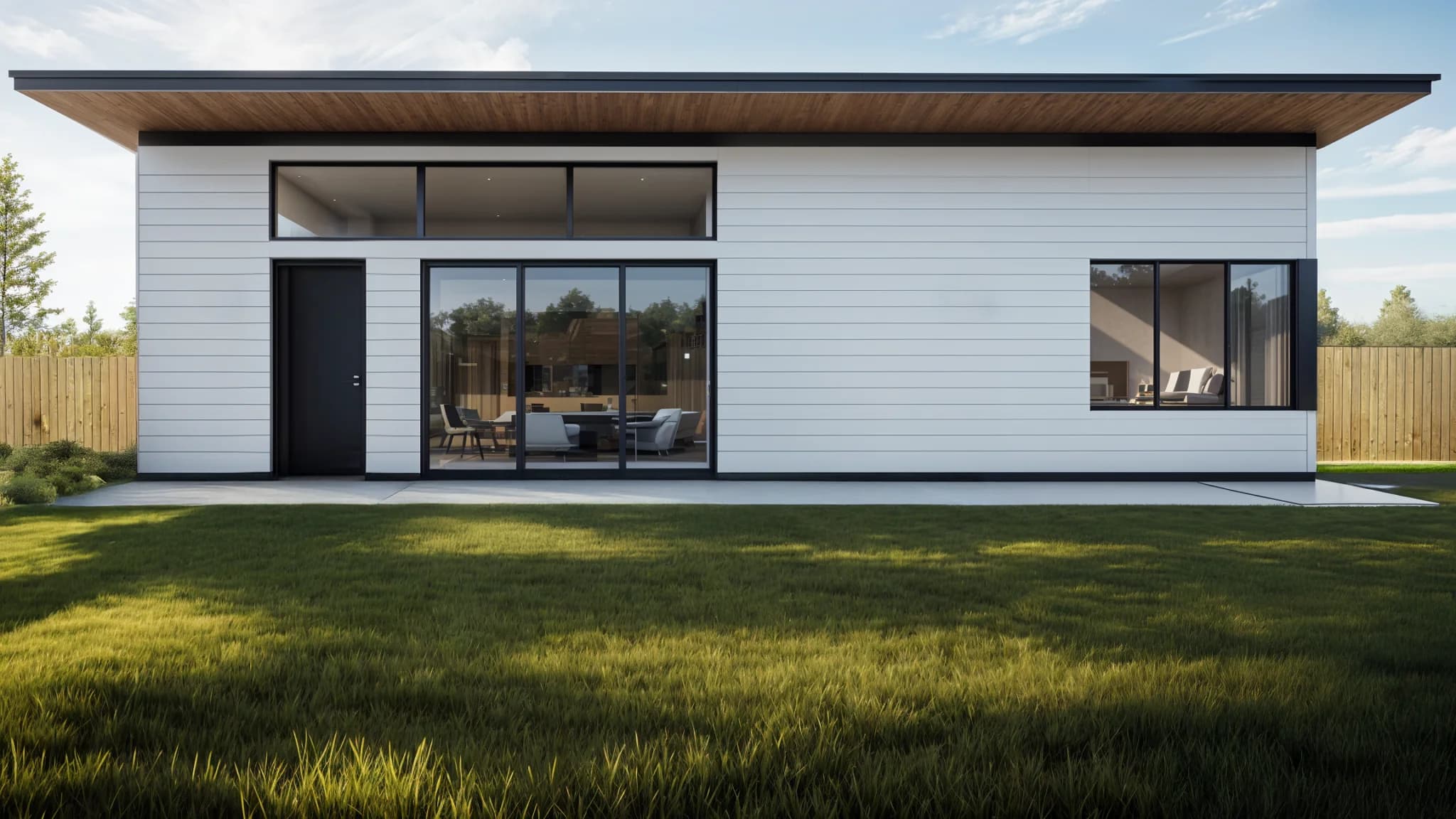
ADU vs JADU in California, in plain English: an ADU (Accessory Dwelling Unit) can be up to 1,200 sq ft, attached or detached from the main house, and typically costs $200K–$400K to build. A JADU (Junior ADU) is capped at 500 sq ft, must be carved out of the existing single-family home, and typically costs $40K–$120K because the shell already exists. Seven specific differences decide which fits your property — size cap, location of construction, cost, kitchen requirement, bathroom sharing rules, owner-occupancy under AB 1154 (2026 reform), and rental flexibility — laid out below.
California has two legally-protected accessory housing types: the Accessory Dwelling Unit (ADU) and the Junior Accessory Dwelling Unit (JADU). Both let homeowners add a rentable living unit to a single-family property without going through discretionary review — but they differ in almost every important dimension: size, cost, rental rules, parking, and owner-occupancy requirements.
After designing ADUs and JADUs across the Bay Area — Oakland, Moraga, San Francisco, and beyond — we've learned that most homeowners come in asking about "an ADU" when a JADU might actually serve them better, and vice versa. This guide lays out the tradeoffs in plain language so you can make the right call for your property and budget.
The 30-second answer
Build an ADU if: you want a fully independent rental unit, you have backyard space or a detached structure, you don't want owner-occupancy restrictions, and your budget can handle $150K–$400K+ of construction.
Build a JADU if: you want to add rental income from space you already have inside your home (a converted bedroom, garage attached to the house, or finished basement), you're comfortable living on the property long-term, and you want to spend $50K–$150K on a simpler conversion.
What is an ADU?
An Accessory Dwelling Unit is a fully independent second living unit on a single-family or multi-family lot. ADUs can be detached (standalone backyard unit), attached (built onto the existing home), or conversions (garage, basement, attic). Under California state law (AB 2221, SB 897, and related bills), ADUs are protected from most local obstruction — setbacks are capped at 4 feet, impact fees are waived for units under 750 sq ft, and most cities must approve compliant ADU applications ministerially within 60 days.
The biggest draw of an ADU is full independence. It has its own entrance, kitchen, and bathroom. It can be rented long-term (30-day minimum under state law — short-term vacation rental rules vary by city). The homeowner doesn't have to live on the property. And in most jurisdictions, you can build an ADU up to 1,200 sq ft regardless of local zoning maximums.
What is a JADU?
A Junior Accessory Dwelling Unit is a smaller, cheaper housing type carved out of the existing single-family home. JADUs are capped at 500 sq ft, must have their own exterior entrance, and must include a small kitchen (called an "efficiency kitchen" — sink, counter, and cooking appliance). They can share a bathroom with the main house, or have their own.
JADUs come with two significant strings attached that ADUs don't have: the homeowner must live on the property (either in the JADU or the primary residence), and JADUs cannot be sold separately from the main house. In exchange, JADUs are dramatically cheaper to build (no new foundation, no new roof, often no utility separation), faster to permit, and carry no parking requirement.
ADU vs JADU: Side-by-side comparison
- Maximum size: ADU — up to 1,200 sq ft. JADU — 500 sq ft.
- Location: ADU — detached, attached, or converted space. JADU — must be within the existing primary home's walls.
- Kitchen: ADU — full kitchen required. JADU — efficiency kitchen (sink + counter + cooking appliance) is sufficient.
- Bathroom: ADU — must have its own. JADU — can share with main home.
- Owner occupancy: ADU — not required. JADU — required (either in JADU or primary residence).
- Can be sold separately: ADU — yes, as a condo under recent state law. JADU — no.
- Parking: ADU — one space required if within half a mile of transit, else may be required. JADU — no parking required, ever.
- Impact fees: ADU under 750 sq ft — waived. ADU over 750 sq ft — proportional. JADU — waived.
- Utility connection fees: ADU — may apply (new sewer/water meter possible). JADU — cannot be charged.
- Permit timeline: ADU — 60 days (ministerial). JADU — typically faster, many cities approve in 30 days.
- Typical construction cost: ADU — $150K–$400K+ depending on size and type. JADU — $50K–$150K.
- Typical rental income: ADU (Bay Area) — $2,200–$4,500/mo. JADU — $1,400–$2,500/mo.
Cost breakdown: what you're actually paying for
ADU construction costs in the Bay Area typically run $300–$400 per square foot for a detached new build, $200–$300 for a garage conversion, and $250–$350 for an attached addition. On top of that, expect 10–18% in soft costs — architecture, engineering, Title 24 energy modeling, permits, and utility connection fees. A well-executed 750 sq ft detached ADU in Oakland or the East Bay typically lands in the $250K–$350K all-in range; the same unit in San Francisco can run $400K+ due to labor costs and complex permitting.
JADU construction costs are dramatically lower because you're not building new shell. A typical JADU conversion (master bedroom suite reconfigured into a 400 sq ft rental unit with efficiency kitchen and dedicated entrance) runs $50K–$100K. If you're adding a new bathroom or doing a garage-attached-to-house conversion, costs can climb to $120K–$180K. You avoid foundation, new roof, and new utility service in almost every JADU project.
Permit timeline: ADU vs JADU
California requires cities to approve compliant ADU applications ministerially within 60 days — no design review boards, no planning commission hearings, no discretionary approval. JADUs are often approved in 30 days because they're even simpler. In practice, Bay Area timelines vary: Oakland typically clears ADU permits in 4–6 weeks, San Francisco can take 8–12 weeks despite state law (DBI's workload is structurally overloaded), and East Bay cities like Moraga and Walnut Creek often approve in 3–4 weeks for straightforward designs.
The total project timeline — from first design meeting to certificate of occupancy — runs 8–14 months for a typical ADU (4 months design + permit, 4–8 months construction) and 4–8 months for a typical JADU. Hillside sites, historic districts, and custom architectural detailing extend these significantly.
Rental rules: what you can and can't do
California state law sets a minimum rental term of 30 days for both ADUs and JADUs — no short-term vacation rentals under 30 days are allowed on accessory units statewide. Individual cities may impose additional restrictions. San Francisco, Oakland, and Berkeley have rent control regimes that may apply to ADUs and JADUs depending on when they were built and their rental history.
JADUs must be owner-occupied: either the homeowner lives in the JADU and rents out the main house, or lives in the main house and rents the JADU. ADUs have no such requirement — you can move out of the primary residence, rent both the main house and the ADU, and treat the property as a duplex investment. This owner-occupancy distinction is often the deciding factor for property owners weighing the two options.
Which one is right for you?
Build an ADU if: you want maximum rental income, you're comfortable with a larger construction budget, you may eventually move out or use the property as a duplex investment, and your lot has space for a detached unit or you're willing to expand your footprint. ADUs make sense on larger lots with backyard space, and anywhere you want the flexibility of a fully-independent rentable unit.
Build a JADU if: you have existing underutilized space (guest bedroom, finished basement, attached garage), you're committed to staying on the property long-term, you want to minimize construction cost and timeline, and you're comfortable with the owner-occupancy requirement. JADUs are the fastest and cheapest path to adding rental income or multi-generational living to a home you already own and plan to keep.
Bay Area-specific considerations
Different Bay Area jurisdictions have meaningfully different ADU and JADU environments. Oakland has been one of the most proactive cities — streamlined ADU permit processes, pre-approved plan sets for some detached ADU types, and genuinely fast review timelines. San Francisco has state law compliance but slower review cycles (DBI capacity issues) and more complex historic-district overlays. East Bay cities like Moraga, Walnut Creek, and Berkeley each have their own process, with most clearing compliant ADU applications in 4–6 weeks.
For JADUs specifically, Oakland and Berkeley have been aggressive about reducing permit friction, while San Francisco's process is more cumbersome. In all cases, the state JADU law (Government Code 65852.22) preempts most local obstacles — but only if your design is fully compliant.
How YCD Studio can help
We design ADUs and JADUs across the Bay Area — from detached new-build ADUs in Moraga and Walnut Creek to JADU conversions in Oakland and San Francisco. Our typical ADU project is a 600–900 sq ft detached unit with a clean modern design language; our typical JADU is a 400–500 sq ft conversion of existing interior space with a separate entrance and efficiency kitchen.
We handle the full project: feasibility analysis (including whether ADU or JADU is right for your property), zoning and setback review, architectural design, Title 24 energy modeling, structural and MEP coordination, permit submittal, and construction administration. For most clients, the right starting point is a 45-minute conversation about your property, budget, and goals — from there we can tell you within a week whether the ADU or JADU pathway makes more sense for your situation.
Sources and authoritative references
Statute, code, and state agency sources for the ADU/JADU comparisons above: