
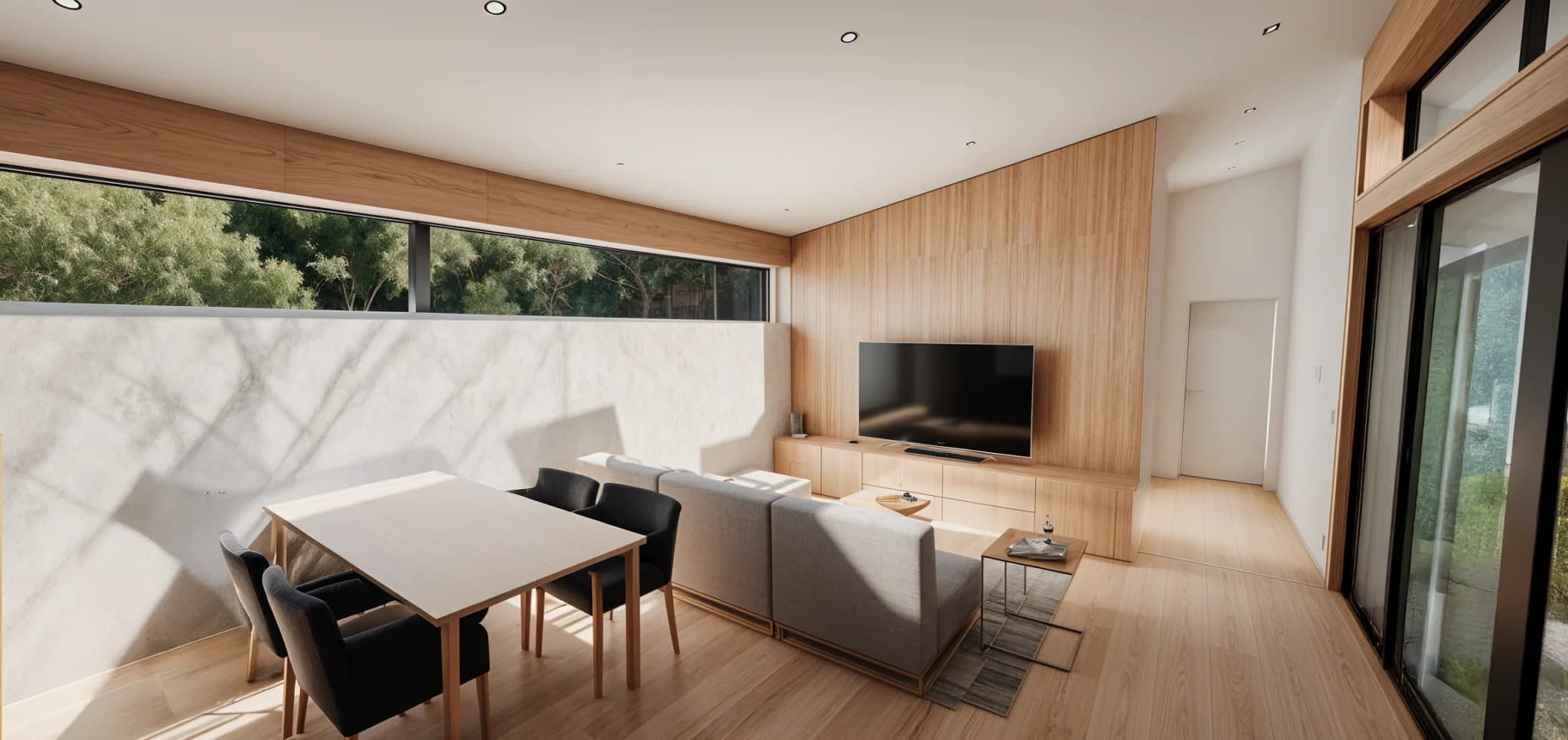
Most permitted Oakland ADUs land between roughly $200,000 and $450,000 all-in for 2026 — with interior JADUs and garage conversions at the low end and detached new-construction units in the hills running $350,000 to $600,000 or more. Where your lot sits matters more than almost anything else: flatland units (Fruitvale, East and West Oakland, Temescal flats) are the most affordable, while hillside units (Montclair, upper Rockridge, Skyline, Claremont) commonly run on the order of 20–30% more because soils reports, slope foundations, retaining walls, wildfire (WUI) construction, and access challenges stack on top of each other. The good news: Oakland is one of California's most ADU-friendly cities — it waives impact fees for units under 750 square feet, runs a pre-approved detached-plan library, and is bound by state law to approve compliant applications within 60 days (30 days with pre-approved plans). This guide breaks down what you'll actually pay, neighborhood by neighborhood and fee by fee.
Quick answer: typical 2026 Oakland ADU cost by type
| ADU type | Typical 2026 all-in range (Oakland) |
|---|---|
| JADU (interior conversion, ≤500 sq ft) | $125,000 – $225,000 |
| Garage conversion (existing structure) | $150,000 – $280,000 |
| Attached ADU | $250,000 – $450,000 |
| Detached new construction — flats | $275,000 – $450,000 |
| Detached new construction — hills | $350,000 – $600,000+ |
If you're comparing across cities, our Bay Area-wide ADU cost guide covers the regional baseline ($300–$400 per square foot hard construction for a typical detached unit, plus 12–18% soft costs). Oakland's flats sit comfortably inside those baselines — the hills push past them, for the specific reasons below.
Why per-square-foot budgeting is a trap
A full kitchen and bathroom cost roughly the same in a 400 sq ft unit as in an 800 sq ft unit, so small units always cost more per square foot — which makes "cost per sq ft" a misleading way to budget. UC Berkeley's Terner Center, in the first statewide ADU owner survey, found the median statewide construction cost was $150,000 (about $250/sq ft), with 37% of ADUs under $100,000 and 71% under $200,000 — but that data is from 2021 and skews statewide. Today's Bay Area builders publish ranges of roughly $400–$650 per square foot for full-service detached work. The honest answer is a range driven by project type and site — so anchor your budget to total project cost by type, not a single per-foot number.
Oakland ADU cost by neighborhood: flats vs. hills
This is the distinction that matters most in Oakland — and the one generic cost calculators and AI summaries miss entirely.
The flats (lower cost). Fruitvale, East Oakland, West Oakland, Temescal flats, parts of Laurel and Dimond. These are generally flat lots with straightforward street access, standard slab or stem-wall foundations, and no wildfire overlay. This is where garage conversions and pre-approved detached plans pencil out best — expect the lower-to-middle part of the ranges above.
The hills (higher cost — and here's exactly why). Montclair, upper Rockridge, the Oakland Hills, upper Crocker Highlands, Claremont, Skyline, and much of the S-9 zone. Hillside ADUs commonly run materially more than equivalent flatland units because the cost drivers stack:
- Geotechnical/soils reports — typically required on sloped lots. A flat-lot soils report runs roughly $1,000–$5,000; a hillside investigation can run $10,000–$20,000+.
- Slope foundations — instead of a simple slab, hills often require stepped foundations, grade beams, or drilled piers/caissons, among the most expensive single line items in any hillside build.
- Retaining walls — frequently needed, running hundreds of dollars per linear foot.
- WUI fire-zone construction — much of the Oakland Hills is a state-designated Very High Fire Hazard Severity Zone. As of January 1, 2026, California consolidated its wildfire construction standards (formerly CBC Chapter 7A) into the new California Wildland-Urban Interface Code, Title 24 Part 7. In practice that means Class A roofing, ember-resistant vents, fire-rated or tempered glazing, non-combustible siding, and a defensible-space plan — all of which add cost.
- Seismic design — the Hayward Fault runs along the base of the Oakland Hills, and structural design must account for it.
- Access and staging — narrow, winding hill streets make material delivery, crane access, and staging slower and more expensive.
The fire risk in the hills is not theoretical. The October 1991 Tunnel Fire destroyed 2,843 single-family homes and 437 apartment and condominium units — 3,280 structures — and killed 25 people, per the U.S. Fire Administration's report on the East Bay Hills Fire (USFA-TR-060). The WUI construction standards exist because of exactly this history.
Rule of thumb: in our experience and per multiple local builders, hillside ADUs commonly cost on the order of 20–30% more than comparable flatland units once these factors stack. Treat that as a planning estimate, not a guarantee — the only way to know your number is a soils report and contractor bids for your specific lot. (The same hillside logic applies across the Lamorinda hills — see our Moraga ADU page for how we handle WUI and slope conditions there.)
Construction (hard) cost breakdown
Hard costs — the actual building — run roughly 70–85% of an ADU budget. Approximate 2026 East Bay ranges by construction type:
| Construction type | Approx. 2026 cost/sq ft |
|---|---|
| Garage conversion | $150 – $250 |
| Attached ADU | $300 – $450 |
| Detached new construction (flats) | $300 – $500+ |
| Detached new construction (hills) | higher — add slope/WUI premium |
| Basement conversion | highly variable (excavation, egress, waterproofing) |
Soft costs: design, engineering, reports, permits
Soft costs typically run about 10–20% of the project. The line items we see most often:
| Soft cost | Typical range / note |
|---|---|
| Architecture / design | scales with scope and customization |
| Structural engineering | required for new detached units |
| Geotechnical / soils report | $1,000–$5,000 (flat); $10,000–$20,000+ (hillside) |
| Boundary / topographic survey | ~$1,000–$2,500 |
| Title 24 energy compliance | required; prepared by a CA-certified energy consultant |
| City of Oakland permit fees | see the fee table below |
Oakland permit fees: real numbers
Permit fees go to the City of Oakland and are separate from construction costs. A detailed line-item breakdown published by New Avenue Homes for a 500 sq ft Oakland ADU showed the city fee stack as:
| City of Oakland fee (500 sq ft ADU example) | Amount |
|---|---|
| Planning/Zoning (small-project design exemption, over-the-counter) | ~$482 |
| Building plan check | ~$2,104 |
| Building permit issuance (17 combined city taxes/fees) | ~$6,393 |
| Mechanical / Electrical / Plumbing | ~$1,800 |
| School fees (two combined) | ~$1,855 |
| Fire | ~$1,092 |
| Illustrative total | ~$13,700 |
The impact fee waiver for ADUs under 750 sq ft
This is one of Oakland's biggest savings levers. Under California state law — originating with SB 13 / AB 68 / AB 881 and now codified in the Government Code — local agencies cannot charge impact fees on an ADU smaller than 750 square feet. ADUs of 750 sq ft or more may only be charged impact fees proportional to the size of the primary dwelling. Oakland has applied the under-750 waiver since 2020.
Practical takeaway: designing a unit just under 750 sq ft can save thousands. Two caveats: school district fees under Education Code 17620 generally still apply to units over 500 sq ft, and EBMUD connection charges are legally not "impact fees" — they're handled separately, below.
Utility connection costs: EBMUD and PG&E
Here the conversion-vs-new-build distinction matters again. The EBMUD figures below are from the district's official FY2026 schedules, effective July 1, 2025, for Region 1 (which includes Oakland).
EBMUD water — System Capacity Charge (SCC). The SCC for a new single-family 3/4" service in Region 1 is $13,881. But EBMUD exempts qualifying single-family ADUs from capacity charges: a conversion of existing space (or a JADU) that adds no more than 150 sq ft for ingress/egress and shares the existing meter pays no SCC. Newly built or detached ADUs are non-exempt and pay on a per-unit basis: $6,940 for a unit 500 sq ft and under, or $8,767 for a unit over 500 sq ft. Installing a brand-new water service (1" and smaller) runs roughly $6,633 (unpaved) to $11,878 (paved).
EBMUD wastewater — Wastewater Capacity Fee (WCF). The FY2026 WCF is $1,712 for a dwelling 500 sq ft and under and $2,192 for a dwelling over 500 sq ft (the standard single-family WCF is $3,125). As with the SCC, qualifying conversion and JADU projects may be exempt.
Sewer lateral — the East Bay Regional Private Sewer Lateral (PSL) Ordinance. Building or remodeling over $100,000, selling the property, or upsizing your water meter triggers the requirement for a PSL Compliance Certificate — your lateral must pass a leak test witnessed by EBMUD, with repair or replacement if it fails. Many older Oakland homes have original clay laterals that fail, so budget for the possibility of a five-figure repair. A detached ADU also needs its own sewer lateral permit from the City.
PG&E electrical. Many ADUs trigger a service/panel upgrade on the main house (commonly to 200 amps) plus a new subpanel for the unit. All-electric ADUs are increasingly the Oakland standard and avoid running a new gas line entirely.
The pre-approved plan library: a genuine way to save
Under AB 1332 (Government Code 65852.27, effective January 1, 2025), every California jurisdiction must run a program to pre-approve ADU plans and decide detached-ADU applications using those plans within 30 days. Oakland offers off-the-shelf pre-approved studio, one-bedroom, and two-bedroom detached ADU plans through its Planning & Building Department — the City itself lists faster approval, reduced permit fees, and possible build cost savings as the benefits.
The catch: only the building shell is pre-approved. You still need a site plan, foundation and structural engineering for your specific lot, Title 24 documentation, and utility coordination. And the City notes pre-approved plans may not be an option in certain districts — hillside, creek, and S-9-zone parcels carry extra requirements, which is exactly where hill-country homeowners need site-specific design help.
What makes Oakland different — the four-line summary
- The hills — WUI fire construction (Title 24 Part 7 as of January 1, 2026), slope foundations, retaining walls.
- The Hayward Fault — seismic design along the base of the hills.
- Sewer laterals — the East Bay Regional PSL Ordinance and its $100K-remodel trigger.
- ADU-friendliness — impact fee waiver under 750 sq ft, a pre-approved plan library, and 60-day ministerial review.
Financing context, briefly
The CalHFA ADU Grant ($40,000 for predevelopment costs) is paused. CalHFA's own site states the latest round of funding has been fully allocated — and warns that anyone claiming they can get you an ADU grant is running a scam. As of mid-2026 there is no confirmed relaunch, so do not build it into your budget. Most Bay Area homeowners finance ADUs with a HELOC, cash-out refinance, or an ADU-specific construction loan.
On the value side: a permitted ADU is captured in appraisals (an unpermitted one usually is not). The FHFA's analysis of California properties found homes with ADUs appreciated about 9.34% annualized from 2013–2023 versus 7.65% without, reaching a median appraised value of $1,064,000 with an ADU versus $715,000 without — roughly a 49% premium, reflecting the whole property rather than the ADU alone. Bay Area one-bedroom ADUs commonly rent for $2,800–$3,500/month.
Timeline expectations
State law requires ministerial approval of a complete ADU application within 60 days — 30 days using pre-approved plans. In practice, Oakland typically clears straightforward ADU permits in about 4–6 weeks. From first design meeting to certificate of occupancy, plan on roughly 8–14 months for a typical ADU (about 4 months of design and permitting, 4–8 months of construction). Hillside, historic, and highly custom projects take longer. For the full four-phase permit walkthrough — entitlement, outside-agency approvals, zoning permit, building permit — see our Bay Area ADU permit process guide.
How to use these numbers — a three-stage plan
Stage 1 — before you spend on design: look up your parcel on Oakland's zoning map and check whether you're in a Very High Fire Hazard Severity Zone or an S-9/creek area. If you're in the hills, assume a soils report and WUI construction and budget toward the upper ranges. Then decide your primary goal — rental income, family housing, or resale value — because it determines whether a cheap conversion or a value-maximizing detached unit is the right move.
Stage 2 — lock in the cheap savings levers: design under 750 sq ft to capture the impact-fee waiver; convert existing space (garage or interior JADU) if your goal allows, to qualify for EBMUD capacity-charge exemptions and skip a new foundation; check Oakland's pre-approved plan library if your lot is eligible; and design all-electric to avoid a new gas line.
Stage 3 — de-risk before construction: on any hillside lot, commission the geotechnical report early — if it calls for piers or significant retaining, expect to move toward the $500,000–$600,000+ end and re-confirm financing before proceeding. Get a sewer lateral camera inspection early if your home predates roughly 1960 or you're crossing the $100K PSL threshold. Then collect multiple licensed-contractor bids against a complete, permit-ready set of drawings — that's the only way to convert the ranges in this article into a real number.
Frequently asked questions
How much does a 600 sq ft ADU cost in Oakland? For a detached 600 sq ft unit, plan on roughly $250,000–$400,000 in the flats and more in the hills, based on published East Bay ranges. Because it's under 750 sq ft, it qualifies for Oakland's impact-fee waiver. A garage conversion of similar size typically costs less.
Do I need an architect for an ADU in Oakland? Not legally for every project — but for a new detached or attached ADU, especially on a hillside or WUI lot, architect-prepared construction documents materially improve your odds of first-submittal approval and a buildable, code-compliant set. Pre-approved plans reduce but don't eliminate the need for site-specific design and engineering.
How long does an ADU permit take in Oakland? State law caps ministerial review at 60 days (30 days with pre-approved plans). Oakland often issues straightforward ADU permits in about 4–6 weeks once the application is complete.
Are ADUs under 750 sq ft really cheaper to permit? Yes — they're exempt from impact fees in Oakland, and EBMUD capacity fees scale with size. The savings can reach thousands of dollars.
What's the cheapest type of ADU in Oakland? Generally a garage conversion or an interior JADU, because the structure and foundation already exist and conversions often qualify for EBMUD utility-fee exemptions.
Why do Oakland Hills ADUs cost more than flatland ADUs? Soils reports, slope foundations (piers, caissons, grade beams), retaining walls, WUI fire-code construction (Class A roofing, ember-resistant vents, fire-rated glazing), Hayward Fault seismic design, and difficult street access all add cost — commonly on the order of 20–30% more than a comparable flatland unit.
Thinking about a specific Oakland lot?
If you're weighing a specific property, a short conversation about your lot, goals, and budget is the most useful first step. We can tell you early whether a conversion, a pre-approved plan, or a custom detached unit makes the most sense — and what your real cost drivers will be — before you spend money on design.