
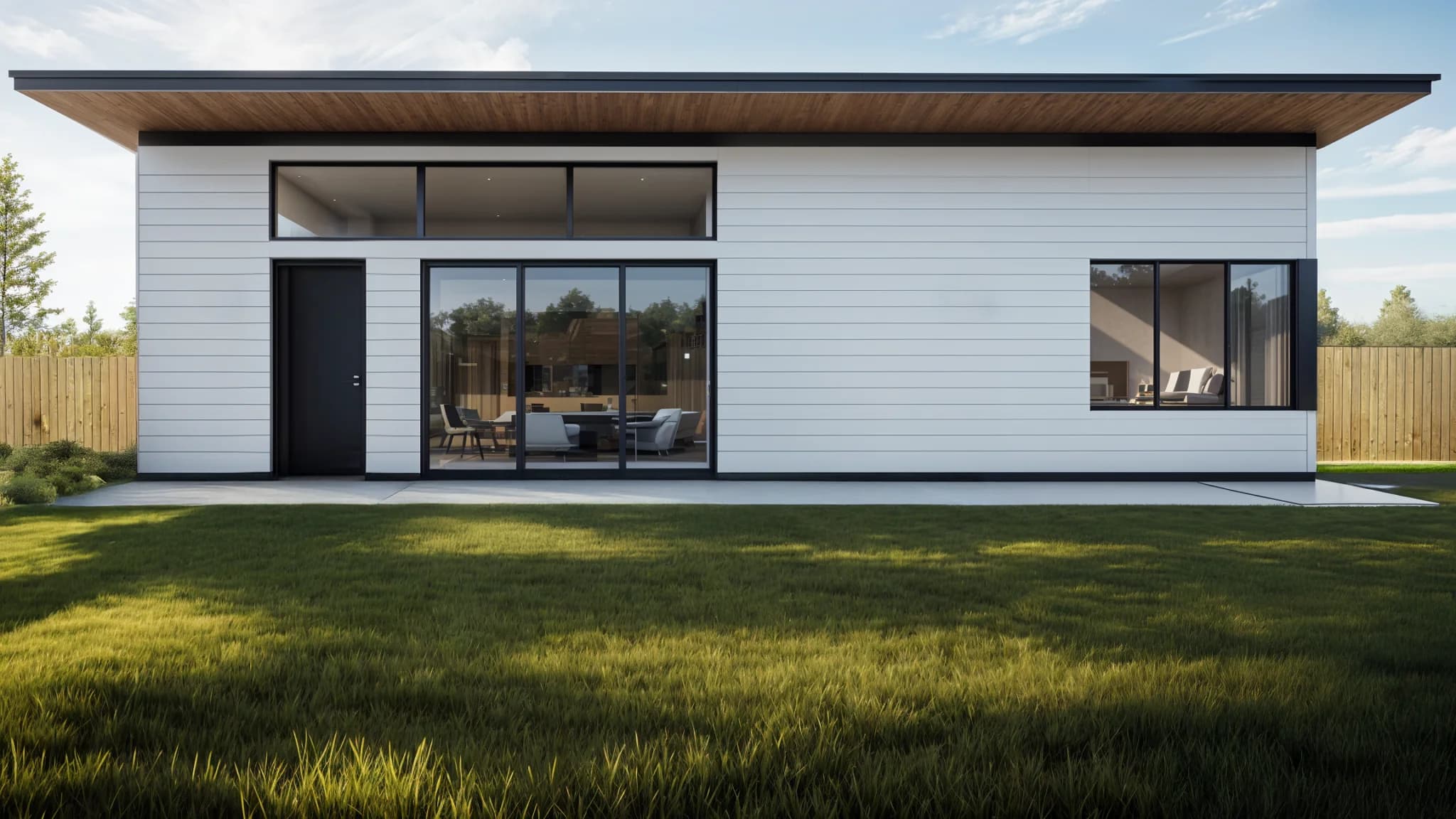
A Bay Area ADU gets permitted through four sequential phases: (1) Entitlement, where the city or county confirms your project is allowed under ADU law via a Ministerial Application; (2) Outside Agency Approvals, typically from the local sanitary district (Central San in much of the East Bay) and the fire district; (3) Zoning Permit Submission, where the full permit set, structural calculations, agency approvals, the Waste Management Plan acknowledgement, and the recorded ADU Deed Restriction are bundled together; and (4) Building Permit Submission to the County or City Building Division, including REV submittals as plan check comments come back. Most ADU guides skip phases 2 and 3 entirely. They are where projects actually get stuck.
Why this guide exists
If you Google "how to permit an ADU in California," you'll find a lot of generic articles that say things like "start by checking your zoning" and "work with a licensed architect." Those aren't wrong, but they are also useless. They miss the actual document-level reality of moving an ADU through the four agencies that have to sign off before the building department will accept your permit application.
This is a walkthrough of the real process, written from the seat of a working Bay Area architecture firm. We've moved ADUs through this process across Oakland, Moraga, Lafayette, the rest of Lamorinda, and the surrounding East Bay. The process is the same in outline almost everywhere; the agencies and exact paperwork shift by jurisdiction. We'll flag the variations as they come up.
Phase 1 — Entitlement
Entitlement is the first phase. It's the part where the city or county confirms that the ADU you're proposing is legally allowed on your property under California ADU law. Because California law makes ADUs ministerially approved (no discretionary review, no neighbor notice, no design review board), this phase is procedural rather than political — but it still requires specific documents.
The three things to know about entitlement:
- Ministerial Application — submitted to the Planning or Zoning Department. Confirms the project meets state ADU standards (size, setbacks, parking exemptions, height).
- ADU Zoning Permit Set — at minimum a site plan, floor plan, and elevations. Some jurisdictions require additional information at this phase.
- Indemnification Reimbursement Agreement — required in some jurisdictions before review begins. It's the homeowner's agreement to reimburse the city for any third-party challenge to the project. Standard form, but it has to be executed.
Entitlement is typically the fastest of the four phases. Most Bay Area cities issue an ADU entitlement letter or stamp within 30 to 60 days of a complete submittal — sometimes faster. Once you have it, you have a documented right to build, subject to the building permit phases that follow.
Phase 2 — Outside Agency Approvals
This is the phase that surprises homeowners. Even after the city says "yes, you can build this ADU," you typically need separate sign-offs from at least two outside agencies before the building department will accept your full permit submittal: the local sanitary district (sewer authority) and the fire district. Both have their own review processes, fees, and document requirements. Coordinating them in parallel — not sequentially — is what keeps projects moving.
2.1 — Sanitary District / Sewer Authority
Most of the Bay Area uses Central Contra Costa Sanitary District (Central San) for sewer permitting east of the hills, and EBMUD or the City of Oakland for sewer service to the west. Each has its own process, but the Central San process is representative.
For a Central San sewer permit on an ADU project:
- Submission is typically handled by the homeowner directly, with the design firm coordinating the documents and the contractor's information.
- Plan review must show the sewer line route clearly — from the new ADU plumbing through to the existing main lateral or a new connection.
- Fees are charged in two parts: an initial review fee and a final issuance fee. Both have to be paid for the permit to actually issue.
- Once rough plumbing has been approved by the County Building Department, the licensed contractor doing the sewer work submits for the final Sewer Permit Issuance.
- Special contractor licensing may be required — Central San in particular calls out the T1 Trenching Permit from CalOSHA for any work involving trench excavation.
Documents typically required at Central San include sewer routing plans, the contractor's contact and licensing information, fee payments (often via PayPal or check), and a final agency stamp on the approved plans for pickup once cleared.
2.2 — Fire District Approval
Fire districts in California review ADU plans for fire access, sprinkler requirements, hydrant proximity, and emergency egress. The exact requirements depend heavily on the fire district — Moraga-Orinda Fire District, San Ramon Valley Fire Protection District, Oakland Fire Department, and others each have their own forms and review priorities.
What the fire district approval flow typically looks like:
- Initial submittal is usually handled by the design firm — the architect submits drawings (commonly the same set used for entitlement, sometimes with a fire-specific cover sheet).
- Conditional approval is the most common first response — the district approves "subject to revisions," which means the drawings need targeted updates before final approval.
- Final approval is tracked with a stamped or signed letter, and the date and any REV (revision) numbers are logged so the building department knows which version of the drawings the fire district saw.
Common fire district pitfalls: failing to show the existing main residence sprinkler status (which determines whether the new ADU also needs sprinklers in some districts), insufficient access width for emergency vehicles, or missing turnaround radii on long driveways.
Phase 3 — Zoning Permit Submission
Phase 3 is where everything from phases 1 and 2 gets bundled together for the formal zoning approval that the building department requires. It's a paperwork phase. The work is making sure every document is in the package, signed where it needs to be signed, and recorded where it needs to be recorded.
A complete Zoning Permit Submission package usually includes:
- Final Permit Set — the full architectural drawings (plans, elevations, sections, schedules)
- Structural Calculations — prepared by a licensed structural engineer
- Outside Agency Approvals — copies of the sewer permit and fire district approval from Phase 2
- Waste Management Plan Acknowledgement — signed by the owner. Most California jurisdictions require homeowners to acknowledge how construction debris will be handled and recycled.
- ADU Entitlement Approval Letter — the document from Phase 1 that confirms entitlement, if it was issued separately
- ADU Deed Restriction — typically notarized and recorded against the property title
About that last one: the ADU Deed Restriction is the document most homeowners have never heard of and that quietly catches projects mid-permit. California Government Code §65852.2 allows local jurisdictions to require a recorded deed restriction stating that the ADU cannot be sold separately from the primary residence, that the unit will not be used as a short-term rental (under 30 days), and that the owner-occupancy or other state-law conditions will be honored. The restriction has to be notarized and recorded with the County Recorder before the permit will issue. Plan for the recording fee and the brief delay it adds.
Phase 4 — Building Permit Submission
The fourth and final phase is the building permit itself, submitted to the County or City Building Division — for example, Contra Costa County's Department of Conservation and Development for unincorporated parcels, or the relevant city building department for incorporated areas.
What gets submitted at the building permit phase:
- Initial submission of the complete permit set (architectural drawings)
- Structural calculations and the structural engineer's stamped plans
- Title 24 Energy Reports (NRCC for residential — submitted as part of the permit set)
- All Phase 3 documents (entitlement letter, sewer + fire approvals, waste management acknowledgement, recorded deed restriction)
The defining characteristic of Phase 4 is the REV submittal cycle. "REV" is shorthand for revision. After initial submission, the building department issues plan check comments — sometimes a few, sometimes a dozen — and the design firm responds with revised drawings labeled REV-1, REV-2, and so on. Tracking which REV is in which agency's hands is critical, especially when multiple agencies (sewer, fire, building) all hold separate copies of slightly different versions of the same drawings. A single misaligned REV can cost a week of cycle time.
Each project gets a Permit Record Number from the building department at first submittal. That number, along with the dates of every submission and resubmission, becomes the project's permit history — and it's what auditors and future appraisers will reference if questions ever come up about whether the work was permitted.
Common pitfalls — what actually derails ADU projects
A few patterns we've seen kill or significantly delay otherwise sound projects:
- Confusion about who submits what. Sewer permits in particular are often submitted by the homeowner — not the design firm — but coordinated by the design firm. If neither party knows it's their job, weeks pass.
- Skipping the deed restriction recording. Some homeowners try to avoid it. The permit will not issue without it.
- REV drift between agencies. The fire district has REV-2, the building department has REV-3, and the sewer authority is reviewing REV-1. Resolving this takes time and can compound delays.
- Sprinkler scope discovered late. Whether your ADU needs fire sprinklers depends on the existing main-house sprinkler status and the local fire district's policy. This should be confirmed in Phase 2, not at the final building permit hearing.
- Title 24 energy non-compliance. The most common late surprise — typically discovered when the energy report is submitted and the proposed insulation, glazing, or HVAC equipment doesn't meet 2022 Title 24 baselines.
ADU permit document checklist
If you're preparing to submit an ADU, this is the consolidated document list across all four phases:
- ADU Ministerial Application (Phase 1)
- ADU Zoning Permit Set — site plan, floor plan, elevations (Phase 1)
- Indemnification Reimbursement Agreement (Phase 1, where required)
- Sanitary District (Sewer) Permit application + sewer routing plans (Phase 2)
- Sanitary District contractor licensing documentation, including T1 Trenching where applicable (Phase 2)
- Fire District submittal package + revised drawings if conditional approval issued (Phase 2)
- Final Permit Set — full architectural drawings (Phase 3)
- Structural Calculations + structural engineer stamp (Phase 3 / Phase 4)
- Waste Management Plan Acknowledgement, signed by owner (Phase 3)
- ADU Entitlement Approval Letter (Phase 3, if separately issued)
- ADU Deed Restriction — notarized and recorded with County Recorder (Phase 3)
- Title 24 Energy Reports — NRCC documentation (Phase 4)
- Building Permit Application + Permit Record Number tracking (Phase 4)
- REV submittals with version numbers and dates as plan check comments arrive (Phase 4)
Sources and authoritative references
Statute, agency, and code references underlying the process described above:
Related reading from our blog
Working with us on a Bay Area ADU
We design custom ADUs across the Bay Area — detached, attached, garage conversions, and JADUs — and walk our clients through every one of the four phases above. If you're considering an ADU on your property and want a real conversation about what the process will look like for your specific site and jurisdiction, we offer a free 30-minute feasibility call.