
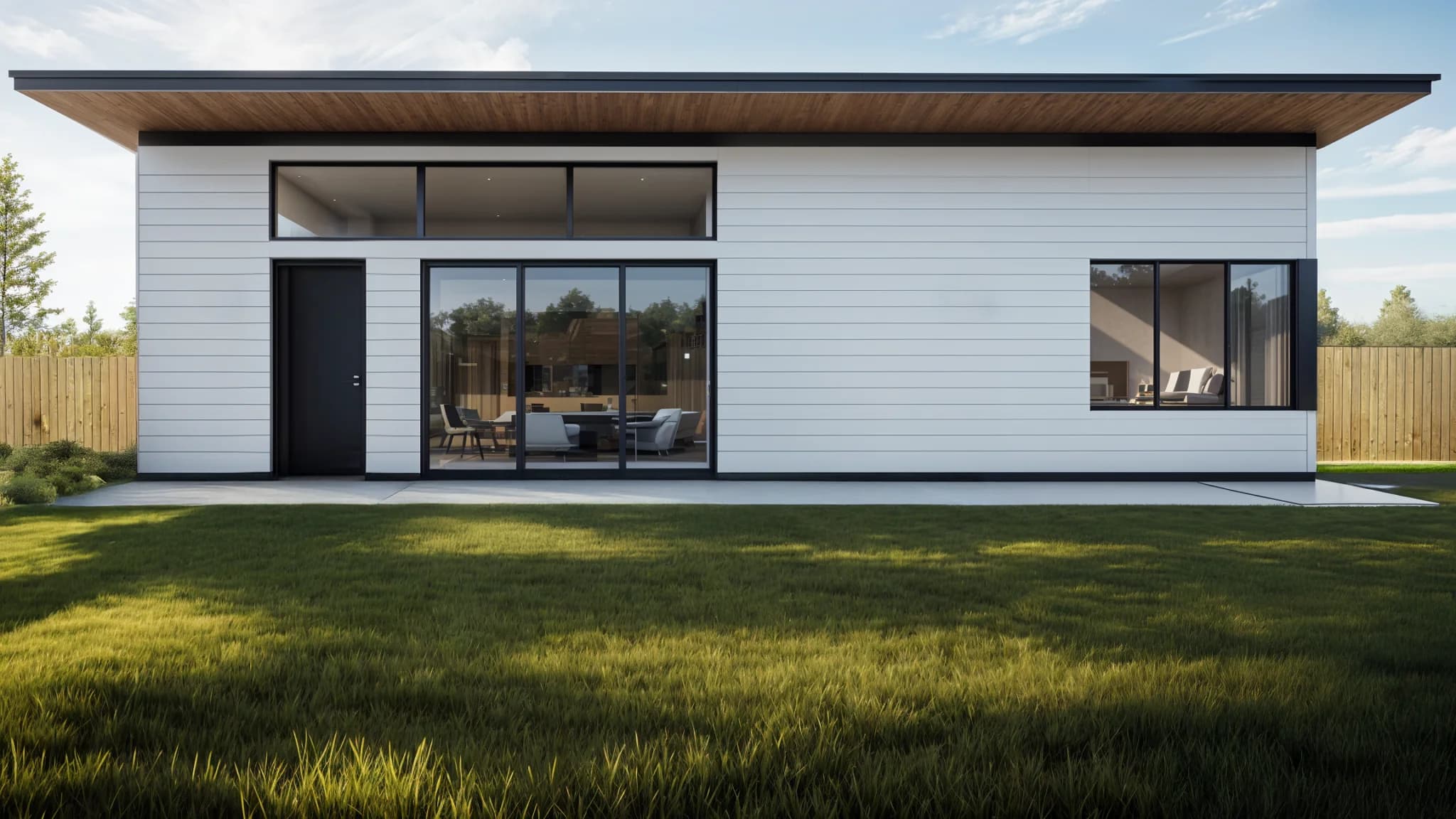
San Francisco operates two parallel ADU programs codified in the Planning Code at §§207.1 (Local) and 207.2 (State-Mandated). The State program implements California Government Code §§66313–66342 (renumbered by SB 477 in March 2024). The Local program adds enhancements above the state floor — most importantly the unlimited-ADU bonus tied to seismic retrofits under §207.1(c)(1). Most San Francisco homeowners should default to the State program. It carries a ministerial 60-day approval shot clock under SF Building Code §106A.1.19 (silence equals approval), impact-fee exemptions for ADUs under 750 square feet, and effective exemption from §311 neighborhood notification by virtue of state ministerial preemption. The Local program is the right call only when a Local-program-specific concession applies — most commonly the seismic-retrofit unlimited-ADU bonus, or specific Zoning Administrator waivers available for ADUs constructed within an existing building. This guide explains how each program works, when to choose which, what the 2024–2026 state legislation actually changed for SF, and the practical workflow for an SF ADU project in 2026.
The decision in one sentence
Default to the State program (PC §207.2 / Gov. Code §§66313–66342) unless you have a specific reason to invoke the Local program (PC §207.1) — and the reason is almost always one of three things: the seismic-retrofit unlimited-ADU bonus, the Zoning Administrator waivers available for in-building ADUs under §307(l), or a JADU-specific consideration that the Local program treats differently.
How the State program works
The State program is the ministerial path. Under California Government Code §§66313–66342 and SF's local implementation at PC §207.2, DBI must approve or deny a complete ADU application within 60 days of receipt. If DBI does not act within 60 days, the application is deemed approved by operation of law — "silence equals approval" under SF Building Code §106A.1.19. This is materially different from a discretionary approval, where DBI can extend review or require additional analysis.
Impact-fee exposure on State-program ADUs is governed by PC §207.2(j): no impact fees on ADUs less than 750 square feet, no impact fees on any ADU or JADU on a lot with three or fewer existing units, and proportionate fees only for larger ADUs based on the ADU's gross floor area divided by the primary dwelling's GFA. Under SB 543 (chaptered October 10, 2025), ADUs and JADUs no greater than 500 square feet are also exempt from school impact fees statewide.
Demolition of a detached garage to be replaced by an ADU no longer requires posted or written notice unless the property is a designated historic resource — see PC §106A.1.19.2. The cumulative effect of state ministerial preemption is that compliant State-program ADUs are effectively exempted from PC §311 neighborhood notification, eliminating the historic 30-day mailed notice and Discretionary Review exposure that used to threaten ADU timelines.
How the Local program works
The Local program at PC §207.1 is the discretionary path under SF's own ordinances. It exists primarily to provide concessions above the state floor — concessions that are only available if the homeowner is willing to use the Local program rather than the State program. The most valuable Local-program concession in 2026:
- Unlimited ADUs in connection with a mandatory or voluntary seismic retrofit. PC §207.1(c)(1) allows homeowners to add an unlimited number of ADUs to a property in conjunction with a Mandatory Soft-Story Retrofit Program project (Ordinance 66-13 / SF Existing Building Code Chapter 4D / SFBC Chapter 34B) or a voluntary AB-094 seismic retrofit. This is the most powerful provision in SF's ADU code for multifamily property owners with retrofit obligations or retrofit potential.
- Zoning Administrator waivers for in-building ADUs. PC §307(l) gives the Zoning Administrator authority to waive density limits, rear yard, exposure, open space, and bicycle-parking requirements for ADUs constructed within an existing building. This is most valuable for converting basements, attics, or unused interior space into ADUs where the zoning baseline would otherwise constrain the conversion.
- Local-program-specific JADU treatment. While AB 1154 (chaptered October 10, 2025) narrowed JADU owner-occupancy requirements to JADUs sharing sanitation facilities with the main dwelling, the Local program retains certain JADU provisions that may be useful in specific configurations.
When the Local program applies, work with SF Planning early to confirm which provisions you're invoking and what the workflow looks like — Local-program ADUs do not enjoy the same automatic ministerial 60-day shot clock as State-program ADUs.
Side-by-side — when each program is the right call
A practical comparison of the two pathways for an SF homeowner:
- Shot clock — State program: ministerial 60-day approval (silence = approval). Local program: discretionary review, no ministerial guarantee.
- Impact fees — State program: §207.2(j) exemptions (no fees under 750 sf or on lots with ≤3 units). Local program: variable; consult current Planning fee schedule.
- Section 311 notification — State program: effectively exempted by ministerial preemption. Local program: §311 may still apply depending on scope.
- Discretionary Review exposure — State program: effectively none for compliant ADUs. Local program: possible.
- Density limits — State program: state-default rules apply. Local program: ZA waivers available under §307(l) for in-building ADUs.
- Seismic-retrofit bonus — State program: not available. Local program: §207.1(c)(1) unlimited-ADU bonus in connection with mandatory or voluntary retrofits.
- Pre-Approved ADU Plans Program eligibility — Available regardless of program selection; see below.
The Pre-Approved ADU Plans Program ($1,519 flat fee)
Under AB 1332 (effective January 1, 2025), every California city must maintain a library of pre-approved ADU plans. San Francisco's Pre-Approved ADU Plans Program charges a flat $1,519 plan-review fee for designer plans that have been pre-approved for re-use on 25-foot-wide lots. Pre-approval is valid for one code cycle and is renewable. The program is excluded in specific zones: slope protection areas, slope and seismic hazard zones, landslide and liquefaction zones, Maher (soil-disturbance) zones, and flood zones.
For homeowners with a standard 25-foot-wide lot outside the excluded zones, the Pre-Approved Plans Program is the fastest path from contract-to-permit available in SF. The trade-off: less design flexibility than a custom plan, but materially faster review and a known fee. For architects and design firms, registering a strong standard detached-ADU design under the program is a productized offering worth considering — the firm captures the design fee but bypasses repeat plan-check cycles.
The 2024–2026 state legislation that reshaped SF ADU rules
An unusual amount of California ADU law changed in 2024–2026. The most important items for an SF homeowner:
- SB 9 (2021) and SB 450 (effective January 1, 2025) — allow ministerial duplex creation and one-time urban lot splits in RH-1, RH-1(D), and RH-1(S) zones. Parcel must be at least 2,400 sf; resulting lots must be 40–60% of original and at least 1,200 sf each. Use Planning's "Housing (SB-9) Streamlined" supplemental application. Excludes tenant-occupied properties under 3-year lookback, 15-year Ellis Act lookback, rent-controlled buildings, and properties in designated historic districts.
- SB 1211 (effective January 1, 2025) — raises the cap on detached ADUs at existing multifamily lots from 2 to 8 (not exceeding the number of primary units on the lot). Bans replacement-parking requirements for any demolished or removed parking. Proposed (not yet existing) multifamily remains capped at 2 detached ADUs.
- AB 2533 (effective January 1, 2025) — moves the unpermitted-ADU amnesty cutoff from January 1, 2018 to January 1, 2020, and narrows the grounds a city may invoke to deny legalization.
- AB 1332 (effective January 1, 2025) — requires cities to maintain a Pre-Approved ADU Plans library. SF's program charges a flat $1,519 plan-review fee for 25-foot-wide lots (see above).
- October 2025 package — SB 543 confirms ADU size references mean "interior livable space," extends 15-business-day completeness review and 60-day approval shot clocks to JADUs, and exempts ADUs/JADUs ≤500 sf from school impact fees. AB 462 (urgency, October 2025) adds 60-day Coastal Development Permit shot clocks for ADUs. AB 1154 narrows JADU owner-occupancy to JADUs that share sanitation facilities with the main dwelling. The 2025 SB 9 voids local ADU ordinances that fail to timely submit to HCD or respond to HCD findings.
- SB 1077 — Coastal Zone ADU guidance, effective July 1, 2026.
SF's four 2024–2025 alignment ordinances
SF's Planning Code was amended four times in 2024–2025 to align local controls with the cascade of state law changes:
- Ordinance 62-24 (effective April 28, 2024)
- Ordinance 297-24 (effective January 19, 2025)
- Ordinance 113-25 (effective August 11, 2025)
- Ordinance 222-25 (effective December 22, 2025) — part of Mayor Lurie's September 2025 PermitSF "dumb rules" package, which re-aligned local ADU controls to state defaults
For any ADU project with edge-case configurations, pull the current Planning Director Bulletins and Local ADU Chart at the time of application — the October 2025 package and Ordinance 222-25 may not yet be fully reflected in all bulletins and charts.
Unpermitted ADU legalization (AB 2533 amnesty)
If you own an ADU that was built without permits before January 1, 2020, AB 2533's amnesty extension makes legalization significantly easier — and narrows the grounds a city may invoke to deny legalization. SF's Accessory Building Establishment (ABE) program under Ordinance 22-15 and subsequent amendments provides a complementary path for legalizing detached accessory buildings. Planning waives building-permit fees related to legalizing qualifying existing dwelling units built without permits before January 1, 2020.
For any owner who has discovered an unpermitted ADU in their property's history — through a title review, an insurance question, or a sale-process disclosure — the amnesty window is currently open. The legalization workflow involves verifying the construction date, demonstrating compliance with health and safety provisions of the code, and submitting through Planning's ABE or AB 2533 pathway. An architect can help triage which path applies to your specific situation.
Practical workflow for an SF ADU project in 2026
The triage sequence for an SF homeowner considering an ADU:
- 1. Confirm the parcel zoning, building age, and any slope, hazard, historic, or coastal overlays in the Property Information Map (PIM). Pre-1981 buildings require historic-resource screening; Category A* properties have specific Planning Preservation pathways.
- 2. Confirm State Program vs. Local Program based on goals. State Program is the default; Local Program is the right call if you have a seismic retrofit opportunity, an in-building ADU configuration where §307(l) waivers add value, or a specific JADU consideration.
- 3. Calculate impact-fee exposure under PC §207.2(j). ADUs under 750 sf are exempt; ADUs on lots with three or fewer existing units are exempt; larger ADUs pay proportionate fees.
- 4. If seismic-retrofit potential exists on a multifamily building, evaluate the Local Program §207.1(c)(1) unlimited-ADU bonus. This is one of the highest-leverage provisions in SF's ADU code for the right property.
- 5. If a multifamily lot, confirm SB 1211 detached-ADU count (up to 8, not exceeding existing primary unit count) and the parking-replacement exemption.
- 6. If an unpermitted ADU exists, evaluate AB 2533 amnesty eligibility (cutoff January 1, 2020).
- 7. If the lot is 25 feet wide and outside the excluded zones, evaluate Pre-Approved ADU Plans Program eligibility ($1,519 flat plan-review fee, one code-cycle validity).
- 8. Plan for the 60-day approval shot clock from complete-application receipt — under State Program ministerial review, this is the binding timeline.
Common mistakes to avoid
Three patterns we see often enough to call out:
- Choosing the Local program when the State program would have been ministerial. Local-program processing loses the 60-day shot-clock guarantee. Unless a specific Local-program concession applies, default to State.
- Missing the seismic-retrofit ADU bonus when it applied. Multifamily owners with mandatory soft-story retrofit obligations or voluntary AB-094 retrofit potential have access to §207.1(c)(1)'s unlimited-ADU provision. This is the single largest value-add in SF's local ADU code for the right property — and it's often overlooked because the retrofit and ADU workstreams are typically managed by different consultants.
- Triggering an excluded-zone constraint on the Pre-Approved Plans Program. The program is excluded in slope protection areas, slope/seismic hazard zones, landslide and liquefaction zones, Maher zones, and flood zones. Check PIM for these overlays before assuming eligibility.
How ADUs interact with SF's broader permitting system
State-program ADUs effectively bypass §311 neighborhood notification by ministerial preemption, which removes one of the largest historic timeline risks on SF residential projects. The 60-day shot clock under SFBC §106A.1.19 gives a hard ceiling on review time — DBI's parallel inter-agency review under Bluebeam Studio (100% Electronic Plan Review since January 1, 2024) compresses the actual review timeline meaningfully inside that 60 days.
The Pre-Approved Plans Program collapses the standard plan-check cycle for qualifying lots, making it the fastest path from contract to building permit available in SF for ADUs. For projects that go through the standard ADU permit process rather than Pre-Approved Plans, the actual time from complete application to issued permit in 2025 averaged well under the 60-day ceiling on most projects we've worked on — though configuration-specific factors (basement conversions, in-building ADUs, complex egress) can extend review.