
Retail & Office
Tenant Improvement
We design, document, and permit office build-outs, retail storefronts, coworking spaces, medical clinics, and showrooms across the San Francisco Bay Area. From space planning to final inspection — your commercial interior, handled.
Project Types
Every kind of retail and office build-out.
Each commercial space has unique requirements. We specialize in all of them — from a single-room office to a multi-suite medical clinic.
Office Build-Outs
Open-plan layouts, private offices, conference rooms, reception areas, and server/IT rooms. We design workspaces that balance collaboration with focus — and pass plan check on the first submission.
Storefront Refreshes
New facades, signage zones, display areas, fitting rooms, and customer flow optimization. Whether you're taking over an existing retail shell or refreshing a dated storefront, we design spaces that draw people in and keep them moving through your merchandise.
Coworking & Flex Spaces
Hot desks, dedicated desks, phone booths, meeting rooms, kitchenettes, and event areas. Coworking spaces need flexible infrastructure — power, data, HVAC zoning — and layouts that can adapt as membership grows.
Medical & Dental Clinics
Exam rooms, treatment areas, sterilization zones, waiting rooms, and specialized MEP. Healthcare spaces have strict ventilation, plumbing, and accessibility requirements that go beyond standard commercial code. We coordinate with your equipment vendors from day one.
Showrooms & Galleries
Display walls, flexible lighting tracks, storage, and customer circulation paths. Showrooms are about presenting your product at its best while keeping the back-of-house functional and code-compliant.
Scope of Work
What’s included in a retail or office TI.
A typical project touches architecture, MEP, accessibility, and code compliance. Here's what we coordinate on every build-out.
Space Planning & Programming
We start with your headcount, workflow, and growth plan — then translate that into a layout that maximizes every square foot of your lease. Space plans include furniture zones, circulation paths, and adjacency diagrams.
ADA Path-of-Travel Upgrades
California's 20% rule triggers ADA upgrades on most commercial renovations. We design compliant paths of travel, accessible restrooms, door hardware, signage, and ramps — built into the project from day one, not as a plan-check surprise.
MEP Coordination
Mechanical, electrical, and plumbing drawings coordinated with our engineering consultants. Power and data for workstations, HVAC zoning for private offices vs. open areas, plumbing for kitchenettes and restrooms.
Signage & Wayfinding
Exterior signage zones designed within city code and landlord guidelines. Interior wayfinding, ADA-compliant room signs, and branded environmental graphics — all documented in the permit set.
Storefront & Facade Modifications
New storefronts, window replacements, awnings, and entry door upgrades. Exterior work often triggers additional reviews — planning department, design review boards, and sometimes historic preservation. We manage the full approval process.
Fire & Life Safety
Occupancy load calculations, exit path planning, fire-rated assemblies, and fire sprinkler coordination. We ensure your space meets fire code before the fire marshal reviews it — not after.
Permit Process
Simpler than restaurant TI — but still required.
Retail and office projects skip the health department and exhaust reviews that slow down restaurant permits. Here's how the process works for commercial build-outs.
Retail / Office TI
- Building department review only
- No health department approval needed
- No kitchen exhaust or grease trap review
- 4–8 week typical plan check
- 1 round of corrections typical
- Over-the-counter possible for minor work
Restaurant TI (for comparison)
- Building dept. + health dept. + fire dept.
- Health department plan review required
- Type I/II hood and grease interceptor review
- 8–16 week typical plan check
- 2–3 rounds of corrections typical
- Over-the-counter rarely available
Pre-Application Research
We verify zoning, existing permits, and any conditions of approval on the space. For retail and office projects, most locations are already zoned for commercial use — which eliminates the lengthy use-permit process that restaurants face.
Construction Documents
Architectural drawings, reflected ceiling plans, finish schedules, and MEP plans — all prepared to the specific requirements of your city's building department. Retail and office sets are typically simpler than food-service projects because there's no kitchen exhaust, grease interceptor, or health department review.
Plan Check Submittal
We submit to the building department and track the review. Most Bay Area cities review standard retail/office TI in 4 to 8 weeks — significantly faster than the 8 to 16 weeks typical for restaurant projects.
Corrections & Permit Issuance
We respond to plan-check comments (typically one round for retail/office), coordinate any required corrections, and pick up the approved permit. Our 98% first-pass approval rate means fewer delays and faster construction starts.
Budget Planning
What does a retail or office build-out cost?
Bay Area costs for retail and office TI are generally lower than restaurant projects because there's no commercial kitchen. Here are realistic ranges.
New paint, flooring, lighting fixtures, minor electrical. No wall moves or plumbing changes. Typical for retail refreshes and office cosmetic updates.
New partition walls, ceilings, MEP modifications, ADA upgrades, new finishes. The most common scope for office build-outs and retail conversions.
Complete interior demolition, new layout, full MEP systems, specialty spaces (server rooms, medical exam rooms), storefront replacement. For ground-up commercial interiors.
Ranges reflect Bay Area projects as of 2025 and include architectural design and permit fees. Actual construction costs vary by contractor, materials, building condition, and city. Medical/dental projects typically fall in the upper range due to specialized MEP requirements. We provide project-specific cost guidance during design.
Featured Project
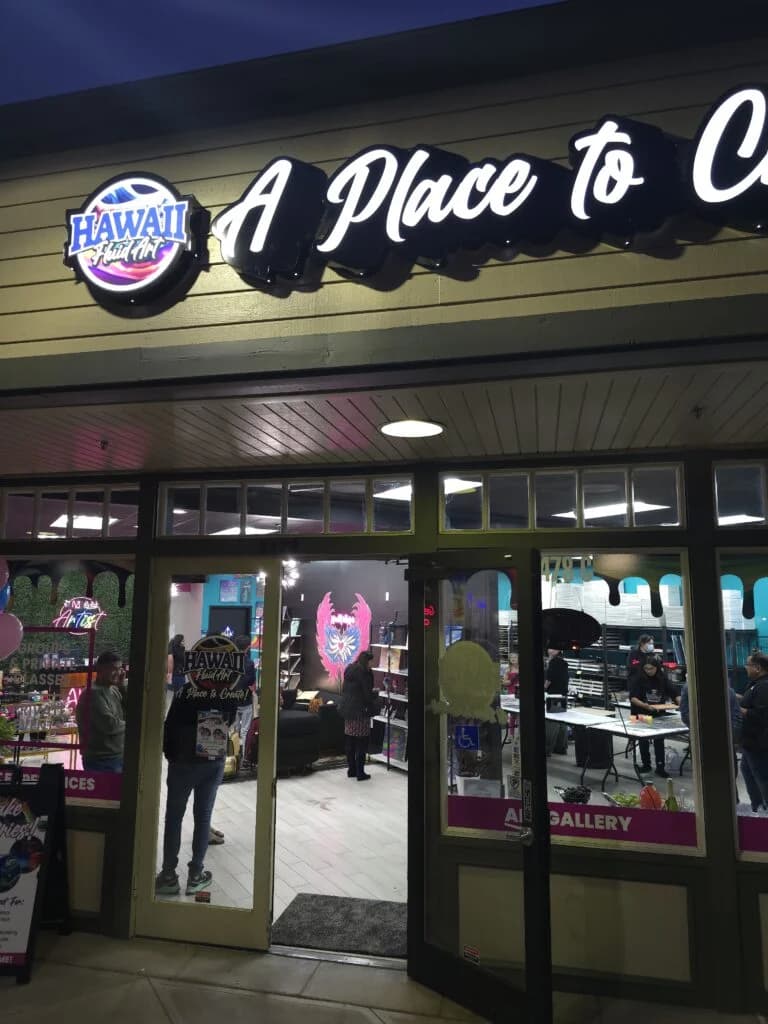
Hawaii Fluid Art — Bay Area
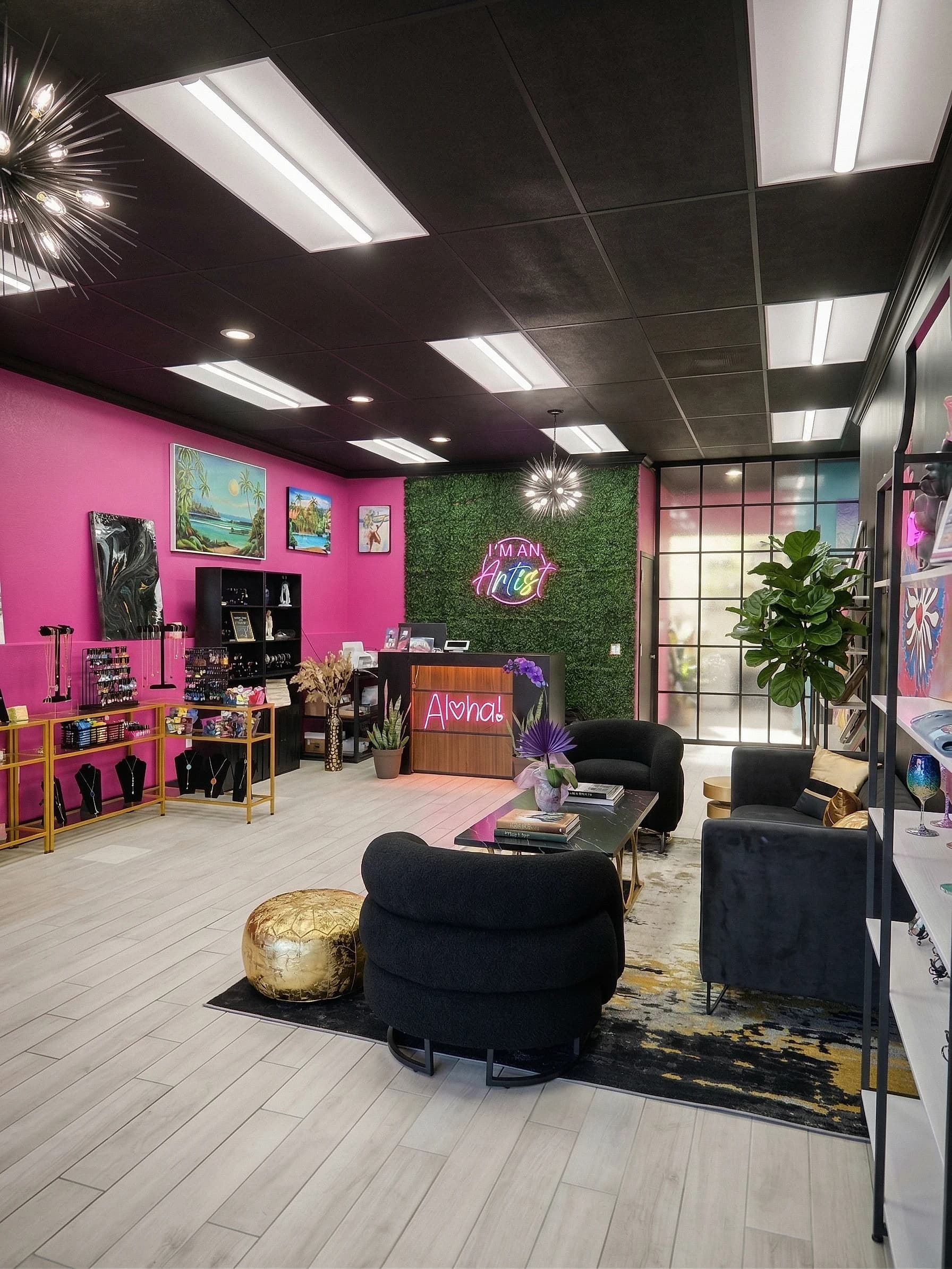
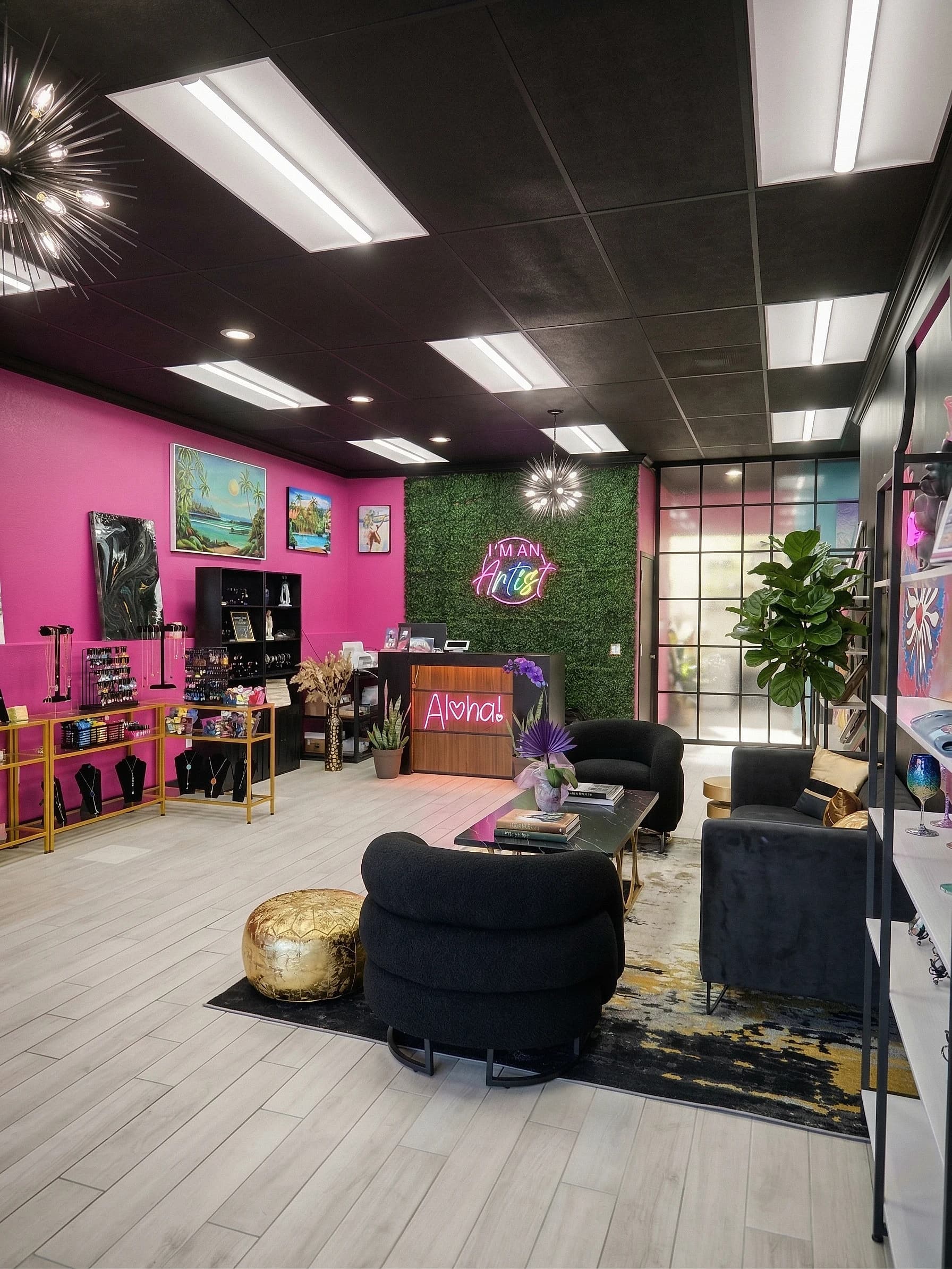
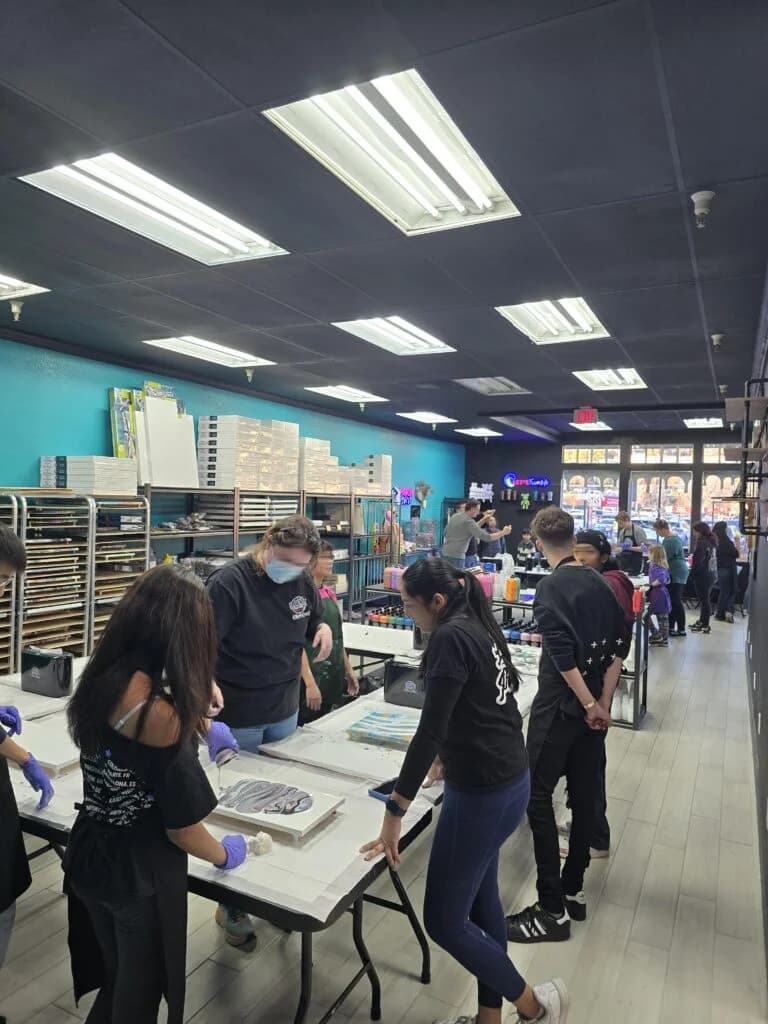
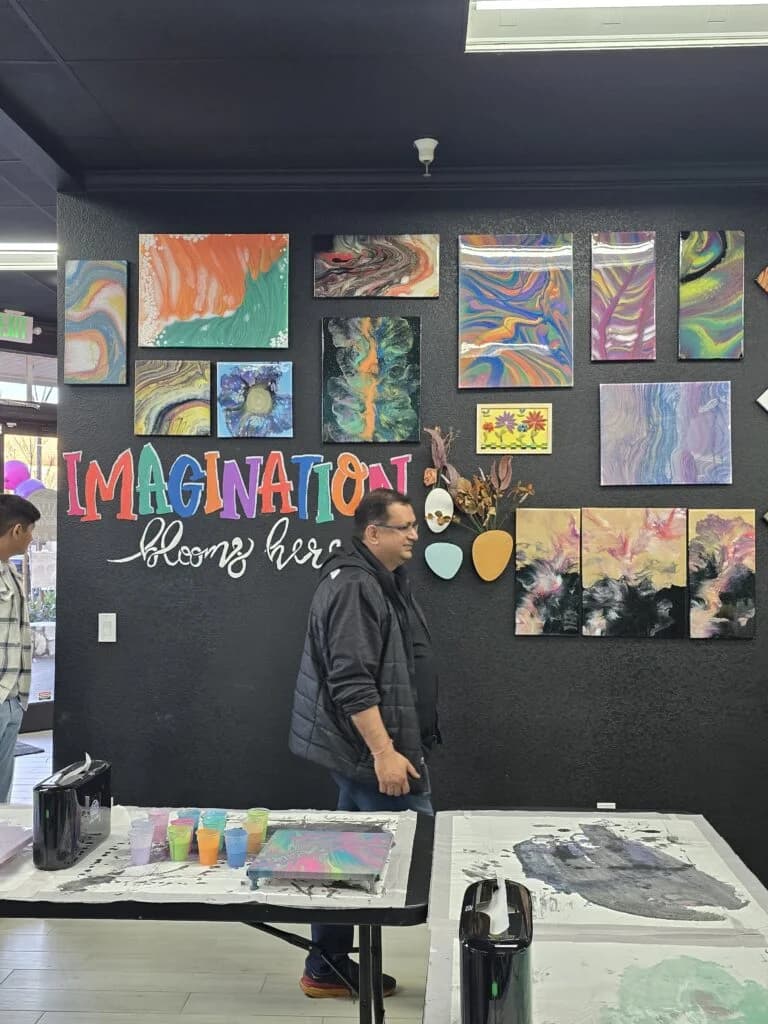
A 1,800 SF retail-to-art-studio tenant improvement for the Hawaii Fluid Art franchise — combining a workshop for pour-painting classes, a retail shop for art supplies, and a gallery for completed works in one compact, vibrant footprint.
What we delivered
- Multi-zone layout: workshop, retail, and gallery in one footprint
- Workshop tables with sight lines to gallery and retail areas
- Storefront design with window graphics and illuminated signage
- Reception, dessert/display case, and retail counter design
- Brand-standard finishes: hot pink walls, teal workshop zones, mural-ready feature walls
- Flexible lighting — workshop task light + ambient gallery viewing
- ADA path-of-travel upgrades and accessible restroom
- Permit drawings and plan-check response. Stamped by the project’s licensed architect of record.
Code & Compliance
Common code requirements for commercial spaces.
Understanding these requirements early prevents costly redesigns during plan check. We build compliance into every project from the start.
Occupancy Classification
Most retail spaces are Group M (mercantile) and offices are Group B (business). Medical offices may classify as Group B or I-2 depending on procedures performed. Correct classification determines exiting, fire protection, and ventilation requirements.
Exiting & Egress
Two exits are required when occupant load exceeds 49 (Group B) or the travel distance exceeds code maximums. We calculate occupant loads early in design to avoid costly exit additions late in the project.
ADA & CBC Accessibility
California Building Code (CBC) Chapter 11B applies to all commercial spaces. Requirements include accessible entrances, paths of travel, restrooms, service counters (34" max height), and signage. The 20% disproportionate-cost rule caps required upgrades relative to renovation cost.
Energy Code (Title 24)
All commercial TI projects must comply with California's Title 24 energy code. This covers lighting power density, HVAC efficiency, envelope insulation (for storefront work), and commissioning requirements for systems over certain thresholds.
Fire Sprinklers
Existing sprinkler systems must be modified when partition layouts change. New tenant separations and ceiling changes typically trigger sprinkler head relocation. We coordinate with fire sprinkler contractors during the design phase.
Ventilation & Indoor Air Quality
ASHRAE 62.1 and Title 24 set minimum ventilation rates per occupant and per square foot. Open offices, conference rooms, and medical spaces each have different requirements. Proper HVAC zoning prevents hot/cold complaints after move-in.
Note: Code requirements vary by jurisdiction. San Francisco, Oakland, Berkeley, and other Bay Area cities each have local amendments to the California Building Code. We stay current with local requirements across every city we work in.
Ready to start your retail or office build-out?
Send us your lease details, space photos, and timeline. We'll respond within 24 hours with a realistic scope assessment and next steps — no obligation.