YCD Studio
Civic / Cultural

Catalyst

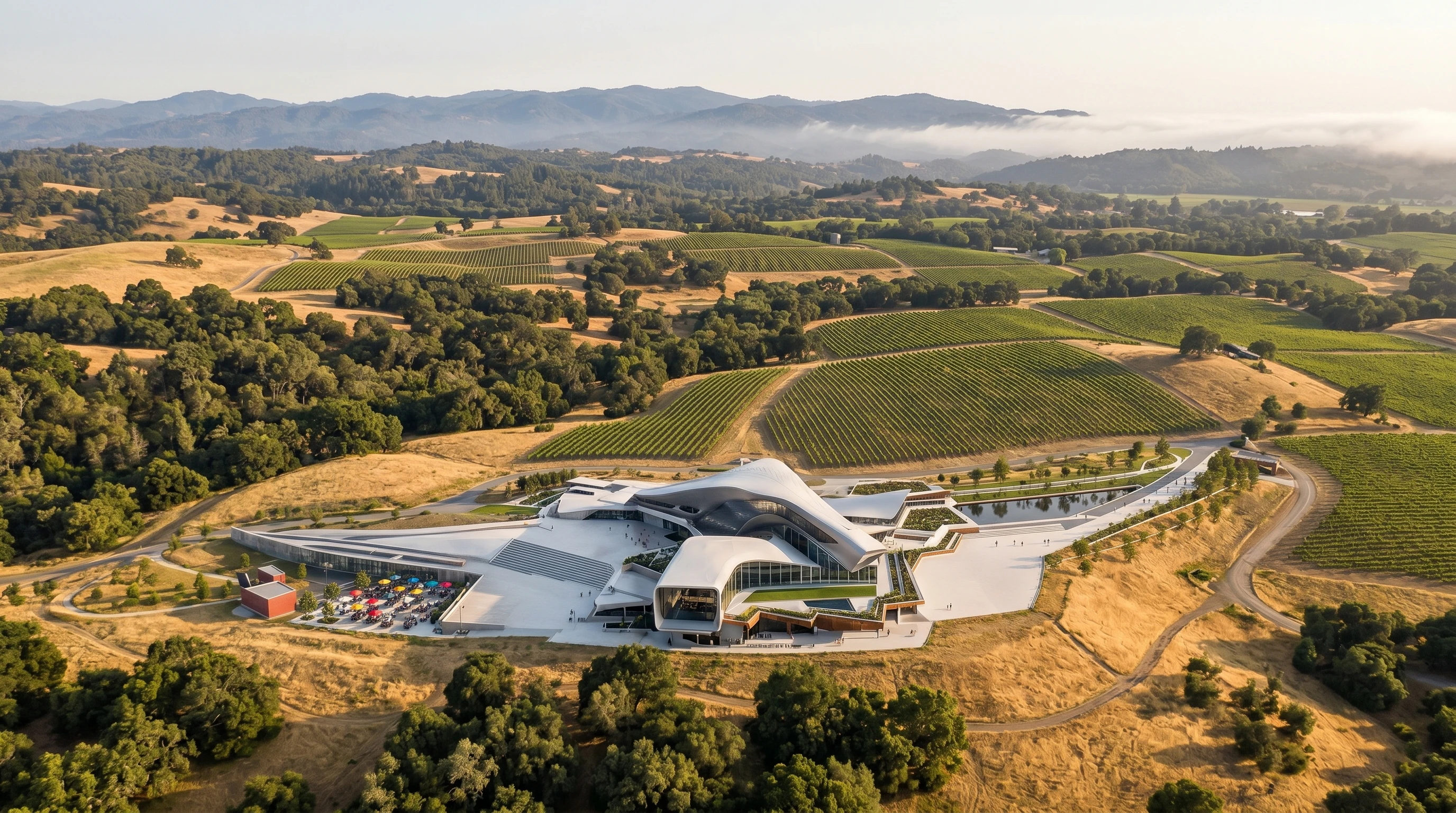
A concept study for a responsive civic building shaped by climate, circulation, program, and public life. Catalyst explores architecture as adaptive framework rather than fixed object — kinetic envelope, parametric form, five-layer program gradient, and Grasshopper-driven systems feedback.
LocationNorthern California (Conceptual)
Year2024
StatusConcept Study
Catalyst
AreaSpeculative — five-level civic cultural hybrid
DurationMulti-year design research
ScopeAdaptive civic cultural building — concept study
ClientSelf-initiated design research
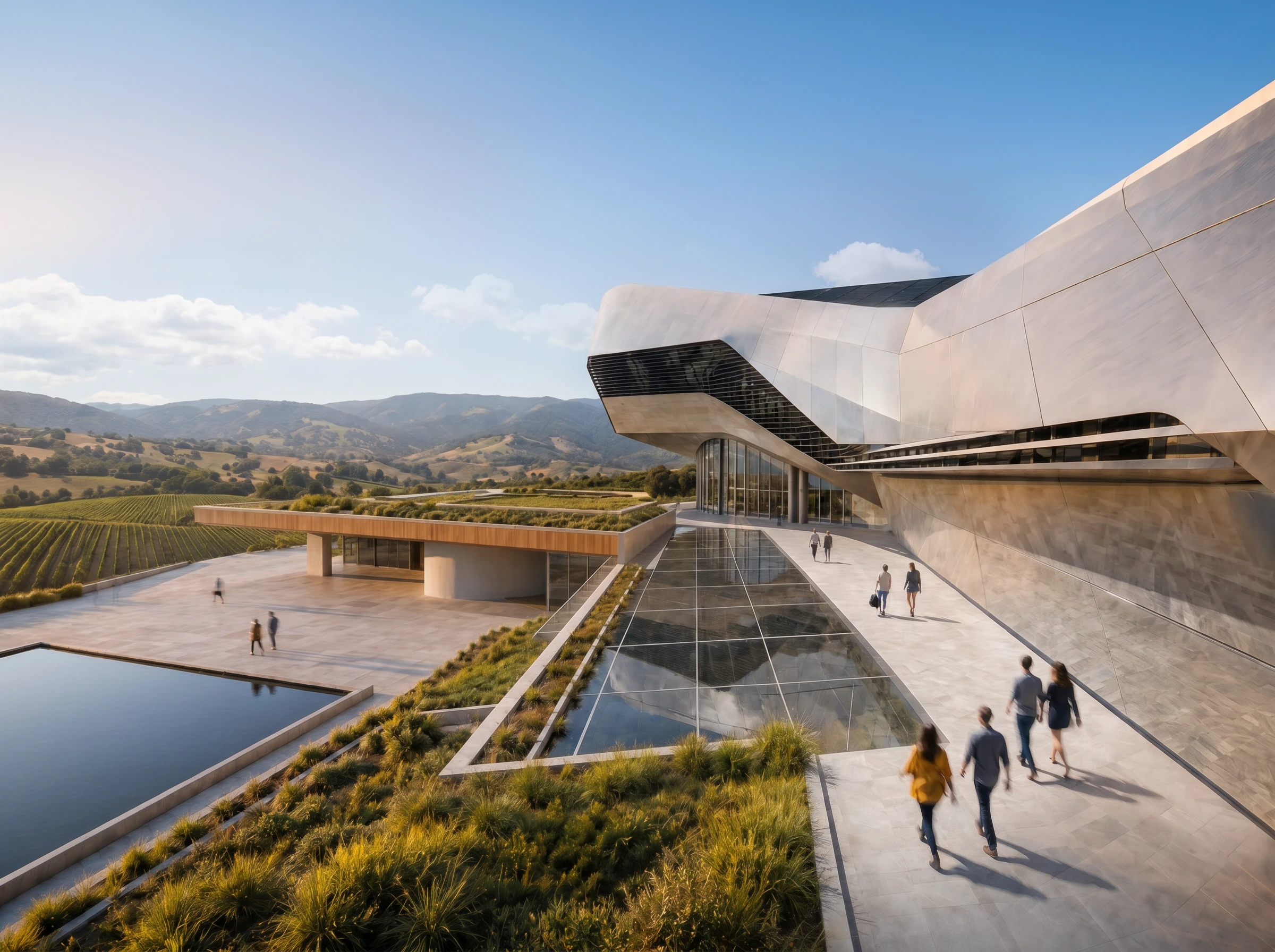
Plaza approach — eye-level view with reflecting pool and green roof
Arrival

The arrival sequence brings visitors across a level plaza with reflecting pool, past planted green roofs that step down with the topography, and under cantilevered metallic volumes that frame the wine country view. The Public Realm diagram resolves five activation zones: arrival plaza, main entry, outdoor gathering, view terraces, and event spill-out.
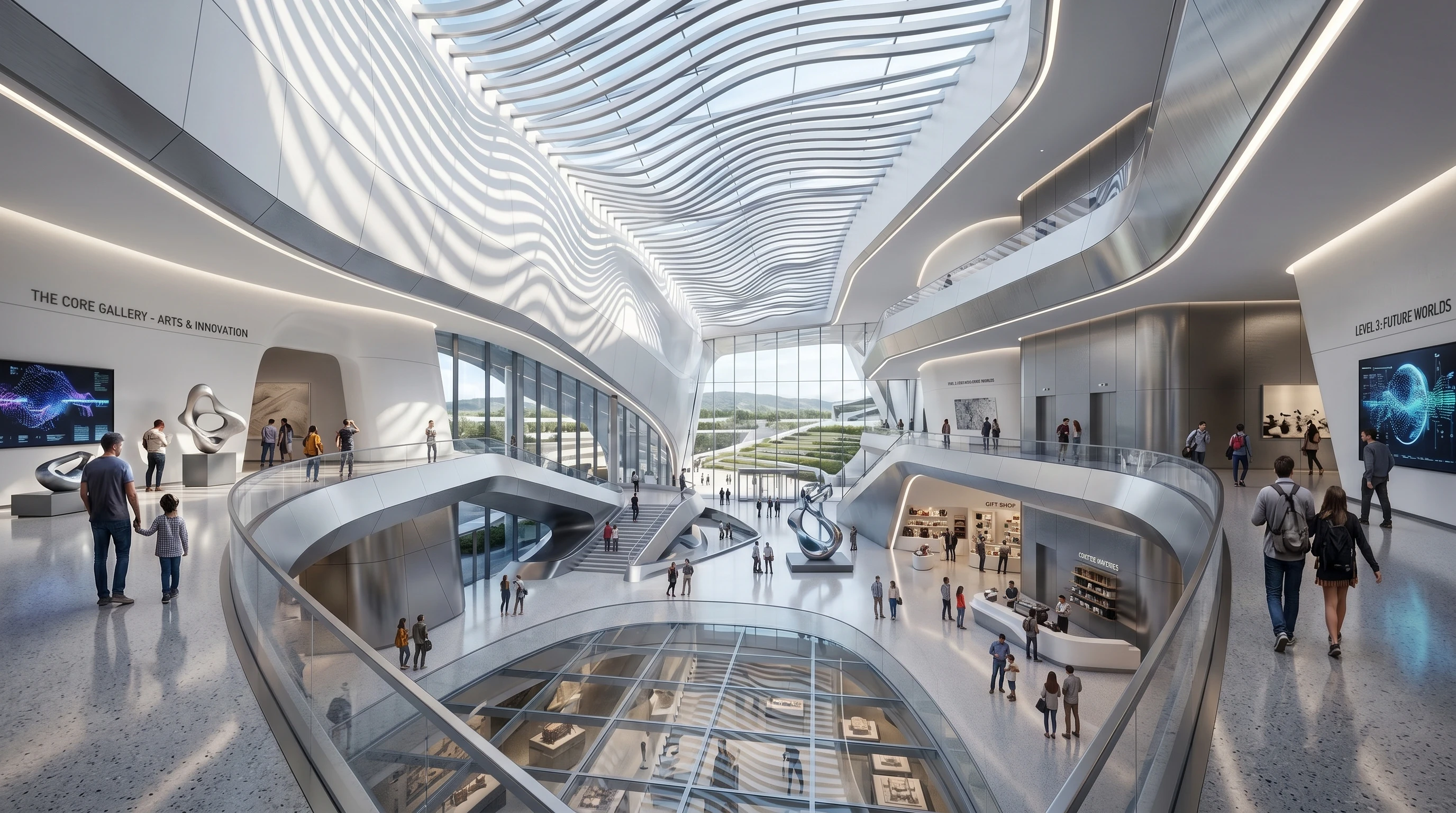
The Core Gallery — Arts & Innovation interior
Program

The Core Gallery brings the Exhibition and Arts & Innovation programs together under the kinetic roof. Multi-level public circulation, embedded screens, and sculptural objects activate a central atrium that orbits a sunken vitrine of changing displays. The cascading metallic ceiling continues the exterior sculptural language inward.
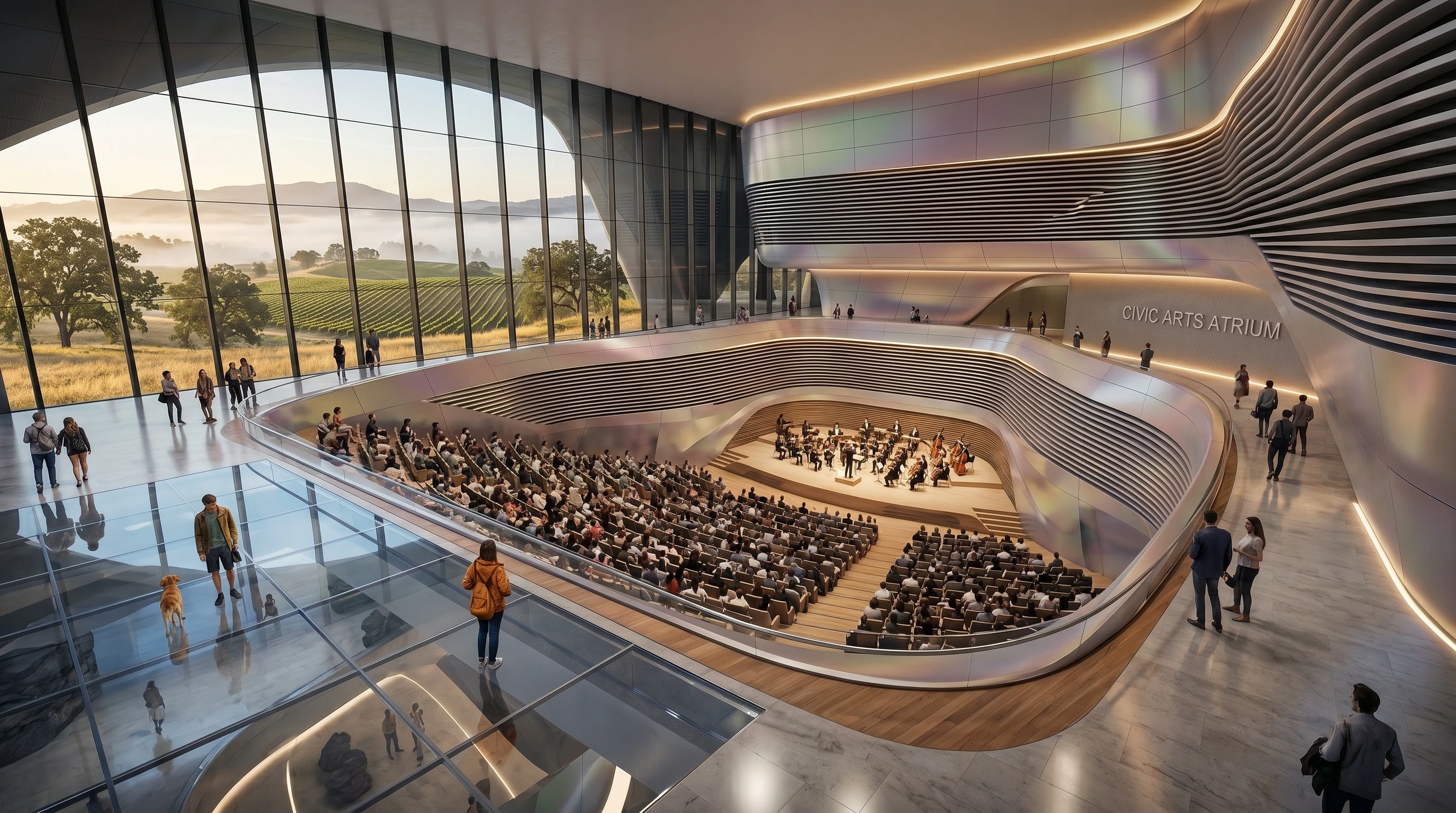
Civic Arts Atrium — performance hall with wine country views
Performance

The Civic Arts Atrium hosts orchestral performance, civic gathering, and cultural events. Floor-to-ceiling glazing on one side frames the wine country landscape with a marine-layer morning view; the curved metallic walls continue the building's sculptural language and tune the acoustic envelope around the audience and stage.
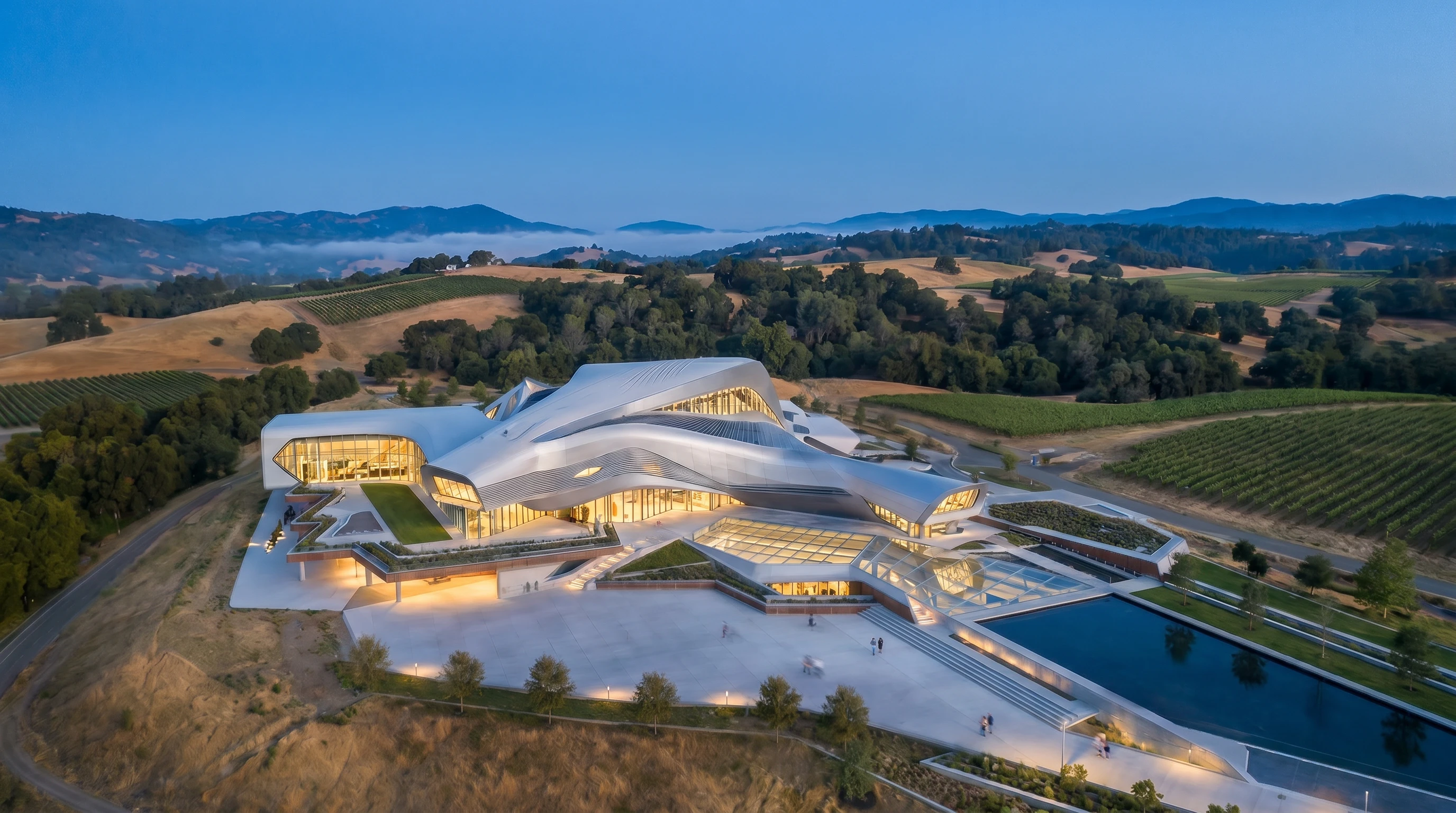
Night view — building as lantern in the landscape at twilight
Lantern

At twilight the kinetic envelope opens to release interior light. The building reads as a lantern in the landscape — warm program light spilling through the curved roof's openings and the floor-to-ceiling glass walls, reflecting pool catching the sky and the building's underside as the marine layer rolls over the vineyards beyond.
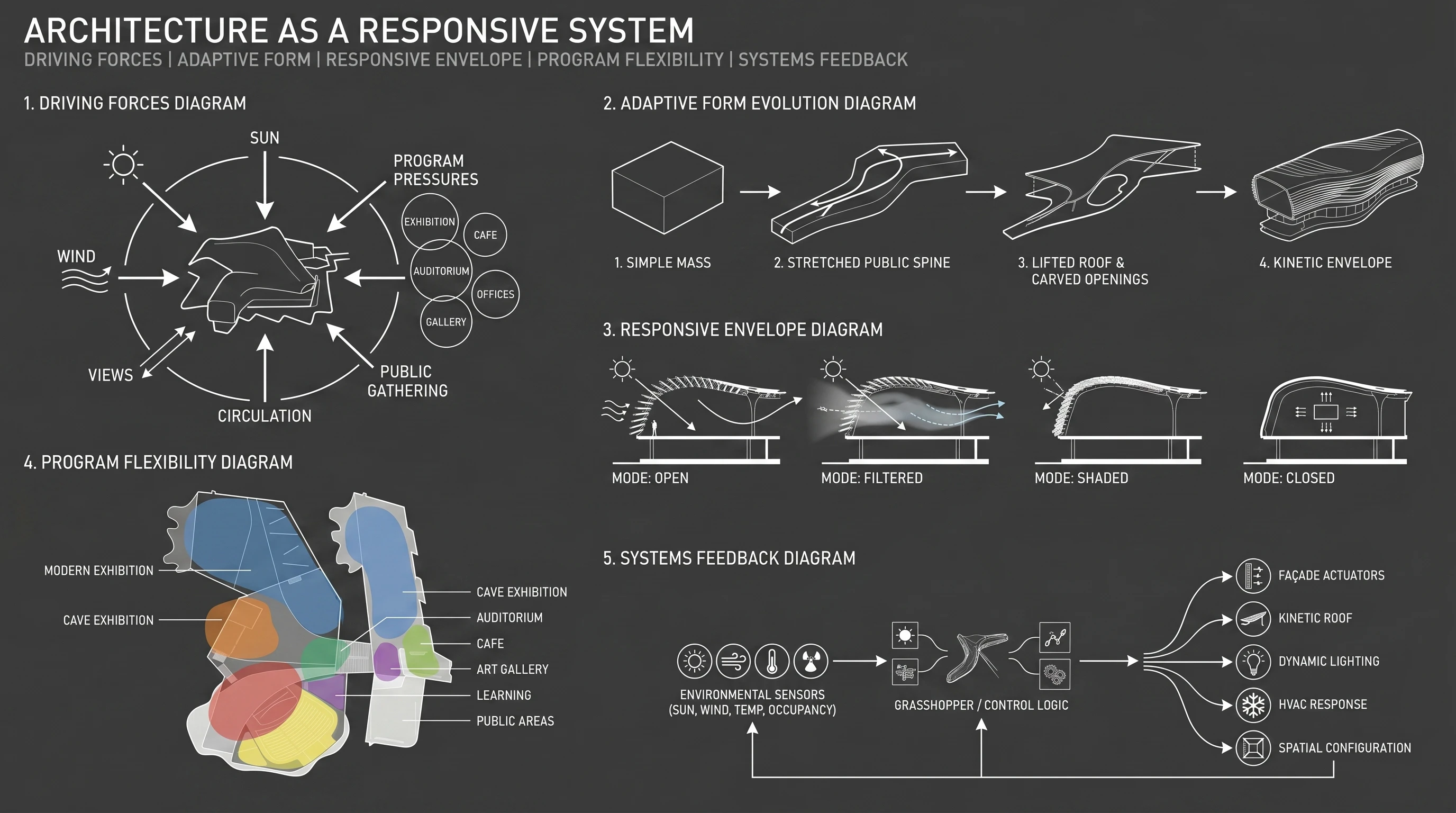
Architecture as a Responsive System — five-system master diagram
Framework

The project resolves into five integrated diagrammatic systems: Driving Forces, Adaptive Form Evolution, Responsive Envelope, Program Flexibility, and Systems Feedback. Each system answers a layer of the central question — how does a civic cultural building become adaptive rather than fixed?
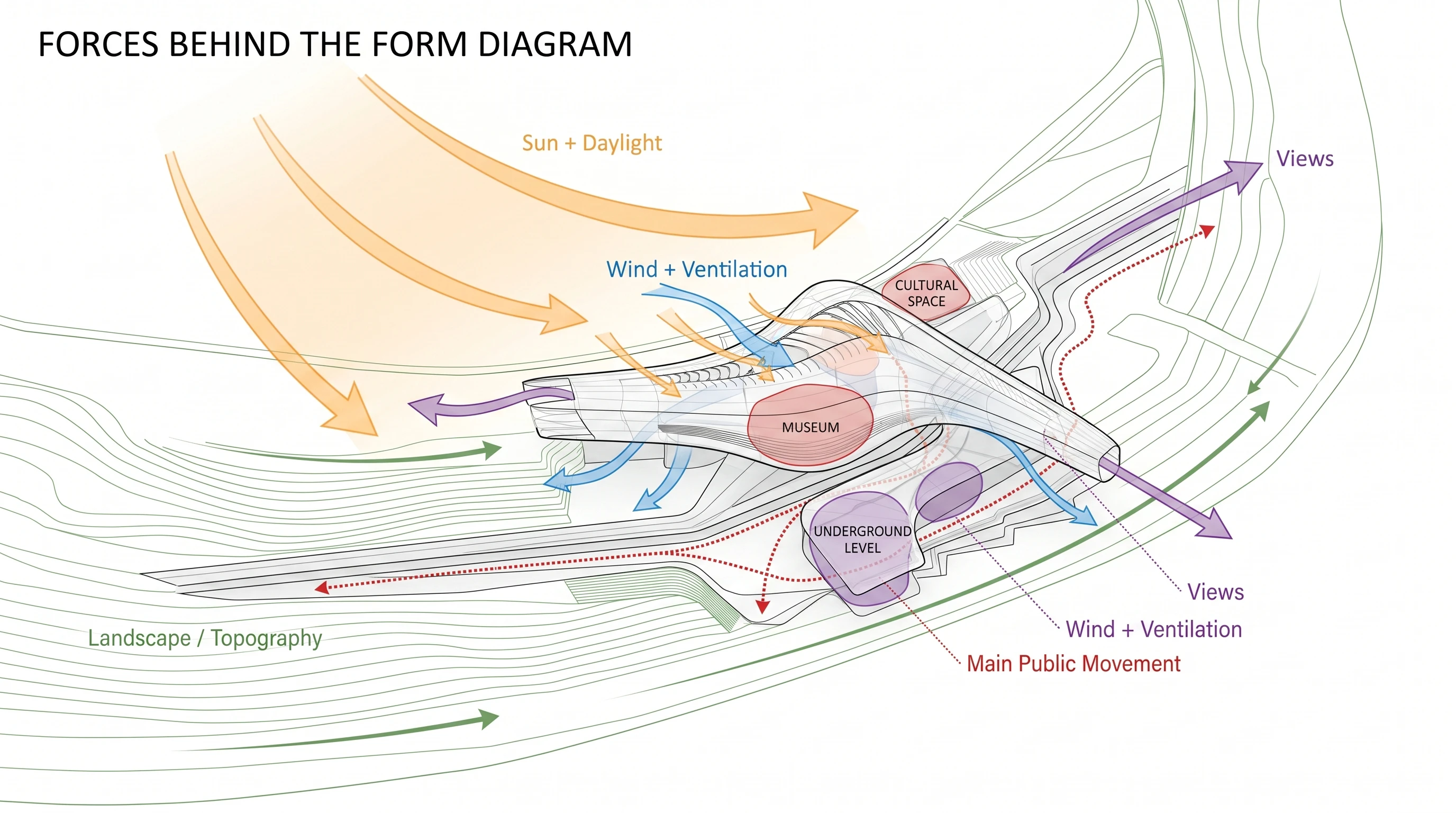
Forces Behind the Form — sun, wind, views, circulation, topography
Forces

Sun and daylight (orange) drive the building's solar response. Wind and ventilation (blue) shape the section. Views (purple) anchor the public-facing programs. Main public movement (red) threads the circulation loops. Landscape and topography ground the building in its site.
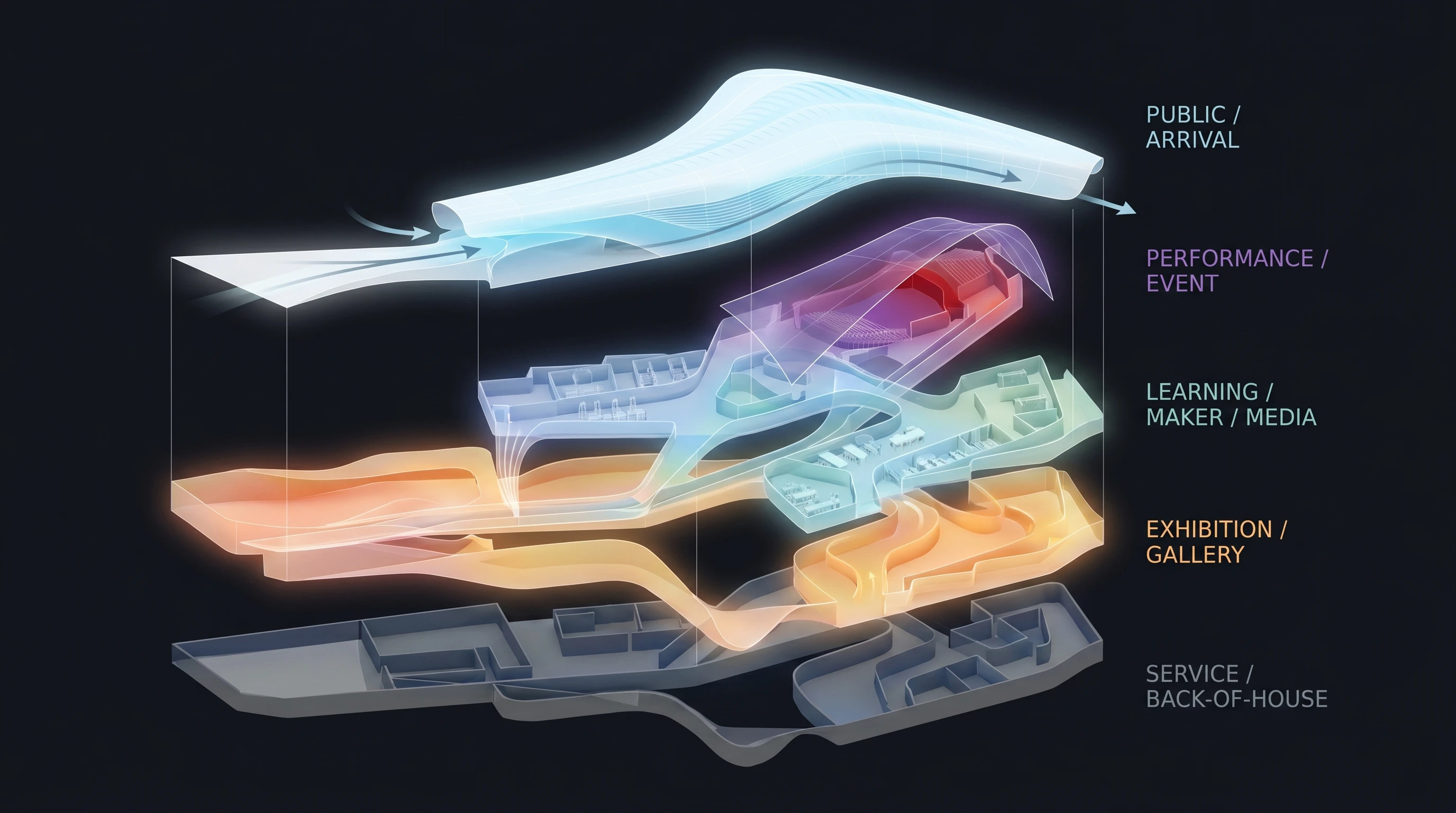
Program Gradient — five horizons of public to back-of-house
Program

Rather than separated zones, the program is organized as five overlapping horizons: Public/Arrival at the top, then Performance/Event, Learning/Maker/Media, Exhibition/Gallery, and Service/Back-of-House at the base. Adjacencies are designed to bleed into each other — a civic building as gradient, not partition.
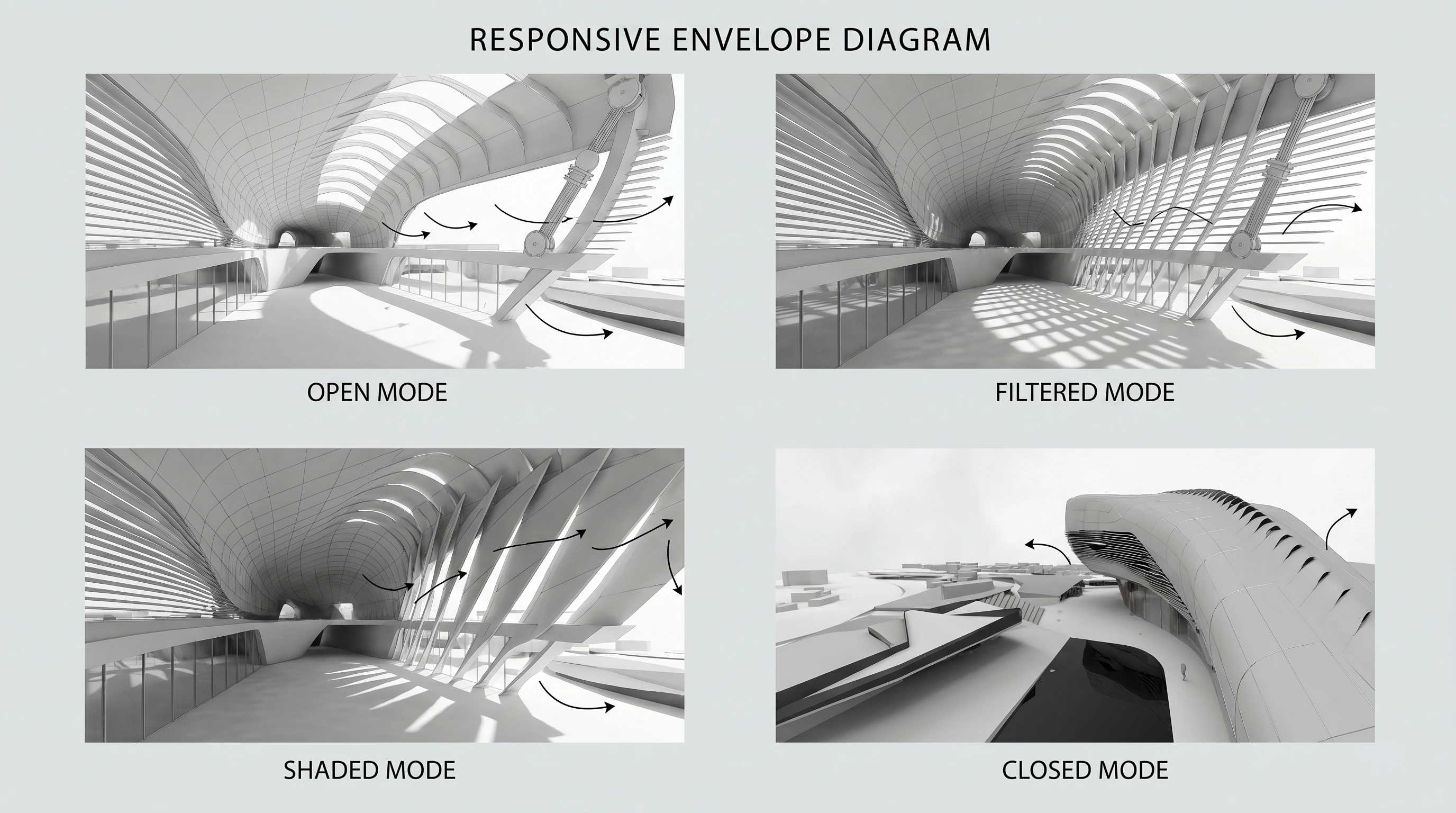
Responsive Envelope — four operating modes (Open, Filtered, Shaded, Closed)
Envelope

The envelope operates in four modes that tune the building's relationship to the environment in real time. Open: full daylight, full view, full ventilation. Filtered: dappled light, partial view. Shaded: tempered light, reduced gain. Closed: insulated, controlled, performance-ready. The kinetic roof and façade shaders shift between modes under sensor-driven control.
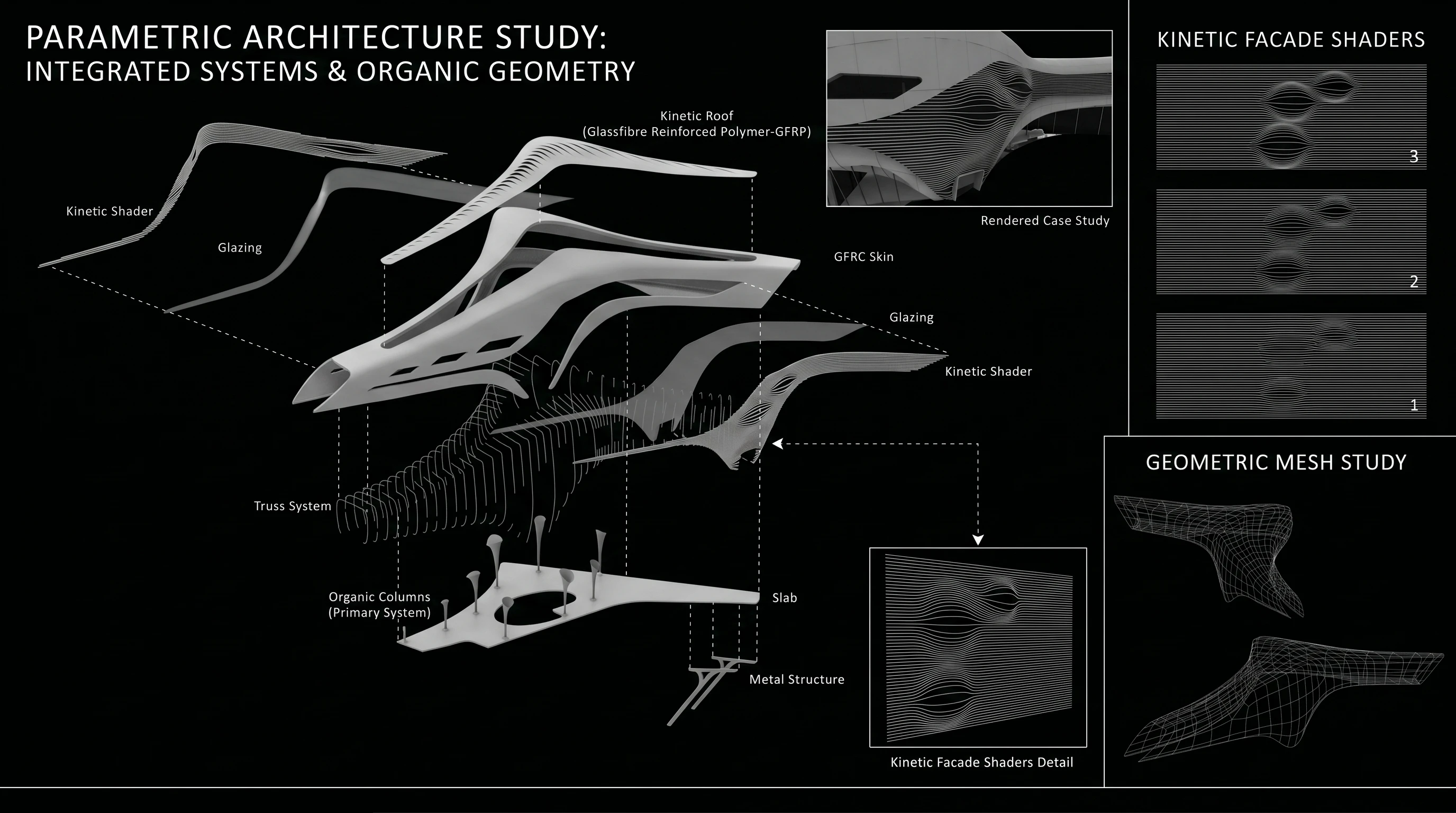
Parametric Architecture Study — integrated systems and organic geometry
Systems

The building is resolved as a layered assembly: GFRP kinetic roof at the top, glazing, GFRC skin, kinetic shaders, truss framing, organic primary columns. Each layer was studied parametrically through Grasshopper, with geometric mesh studies tuning the curvature against structural performance, environmental response, and visual continuity.
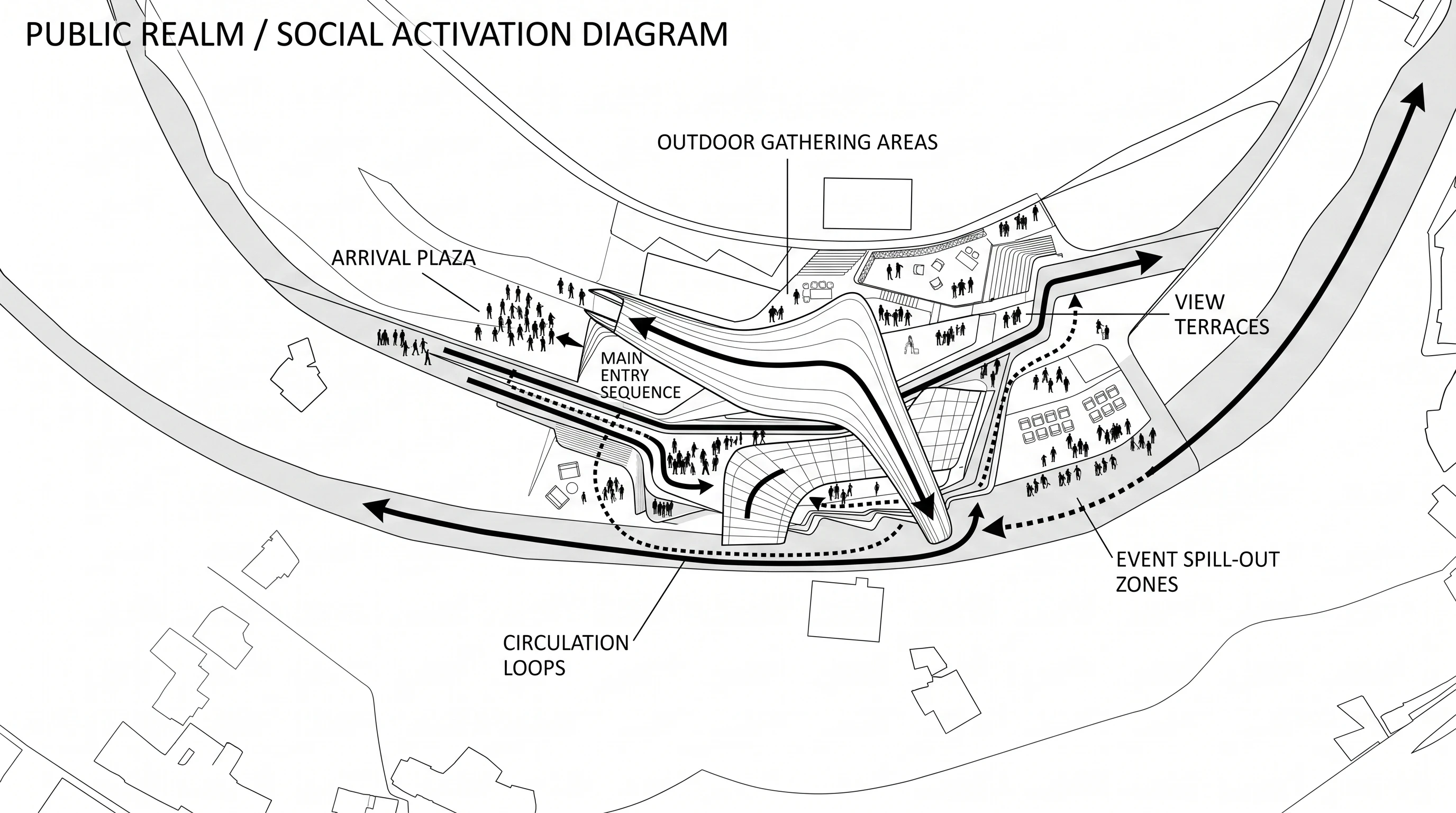
Public Realm / Social Activation — arrival, gathering, view terraces, circulation loops
Public Life

The ground plane is treated as civic infrastructure: arrival plaza, main entry sequence, outdoor gathering areas, view terraces overlooking the landscape, event spill-out zones, and circulation loops that thread around and through the building. The architecture is the framework; the public realm is the performance.
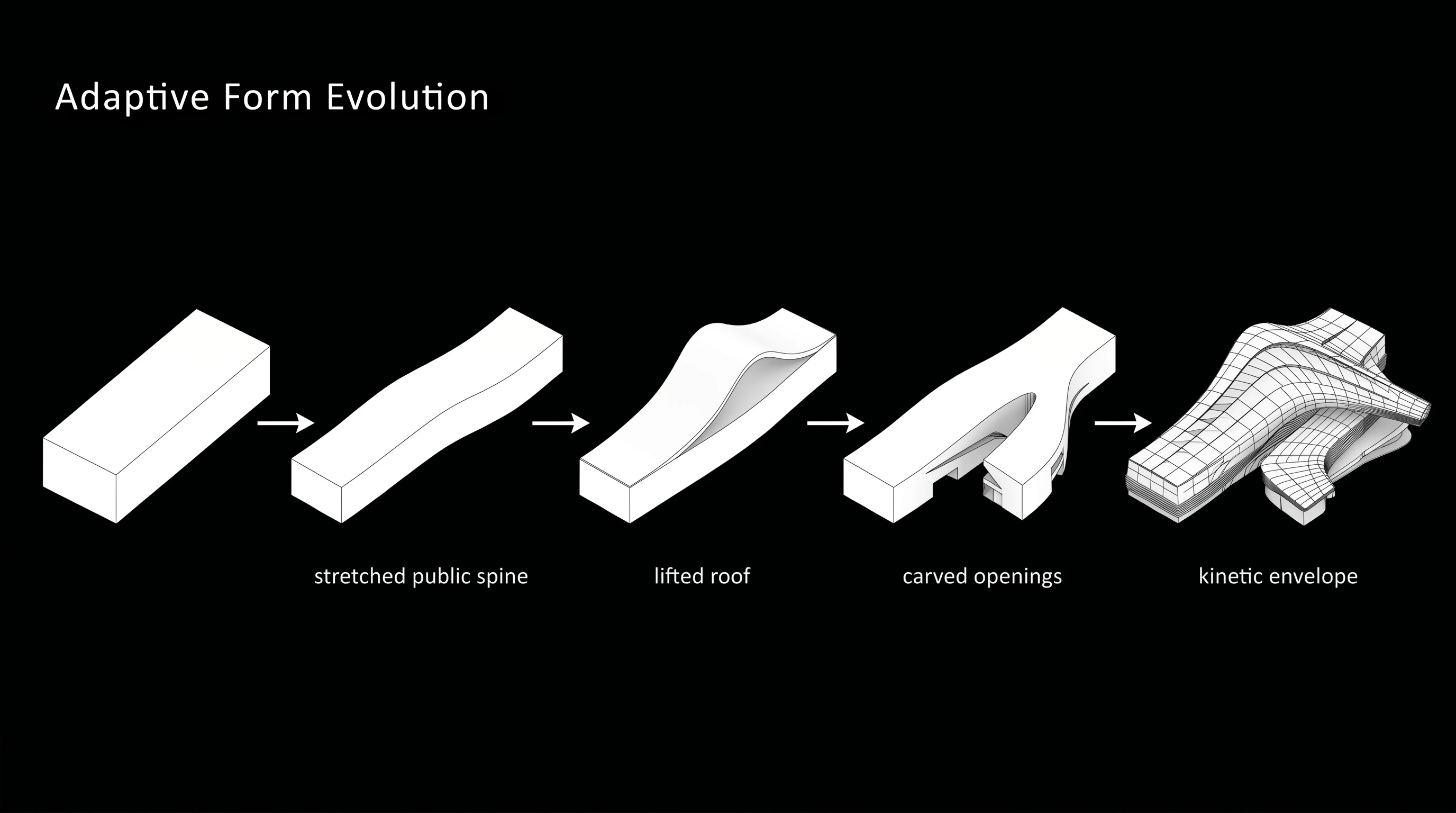
Adaptive Form Evolution — from simple mass to kinetic envelopeAdaptive Form Evolution — from simple mass to kinetic envelope
Plaza approach — eye-level view with reflecting pool and green roof

The arrival sequence brings visitors across a level plaza with reflecting pool, past planted green roofs that step down with the topography, and under cantilevered metallic volumes that frame the wine country view. The Public Realm diagram resolves five activation zones: arrival plaza, main entry, outdoor gathering, view terraces, and event spill-out.

The Core Gallery — Arts & Innovation interior

The Core Gallery brings the Exhibition and Arts & Innovation programs together under the kinetic roof. Multi-level public circulation, embedded screens, and sculptural objects activate a central atrium that orbits a sunken vitrine of changing displays. The cascading metallic ceiling continues the exterior sculptural language inward.

Civic Arts Atrium — performance hall with wine country views

The Civic Arts Atrium hosts orchestral performance, civic gathering, and cultural events. Floor-to-ceiling glazing on one side frames the wine country landscape with a marine-layer morning view; the curved metallic walls continue the building's sculptural language and tune the acoustic envelope around the audience and stage.

Night view — building as lantern in the landscape at twilight

At twilight the kinetic envelope opens to release interior light. The building reads as a lantern in the landscape — warm program light spilling through the curved roof's openings and the floor-to-ceiling glass walls, reflecting pool catching the sky and the building's underside as the marine layer rolls over the vineyards beyond.

Architecture as a Responsive System — five-system master diagram

The project resolves into five integrated diagrammatic systems: Driving Forces, Adaptive Form Evolution, Responsive Envelope, Program Flexibility, and Systems Feedback. Each system answers a layer of the central question — how does a civic cultural building become adaptive rather than fixed?

Forces Behind the Form — sun, wind, views, circulation, topography

Sun and daylight (orange) drive the building's solar response. Wind and ventilation (blue) shape the section. Views (purple) anchor the public-facing programs. Main public movement (red) threads the circulation loops. Landscape and topography ground the building in its site.

Program Gradient — five horizons of public to back-of-house

Rather than separated zones, the program is organized as five overlapping horizons: Public/Arrival at the top, then Performance/Event, Learning/Maker/Media, Exhibition/Gallery, and Service/Back-of-House at the base. Adjacencies are designed to bleed into each other — a civic building as gradient, not partition.

Responsive Envelope — four operating modes (Open, Filtered, Shaded, Closed)

The envelope operates in four modes that tune the building's relationship to the environment in real time. Open: full daylight, full view, full ventilation. Filtered: dappled light, partial view. Shaded: tempered light, reduced gain. Closed: insulated, controlled, performance-ready. The kinetic roof and façade shaders shift between modes under sensor-driven control.

Parametric Architecture Study — integrated systems and organic geometry

The building is resolved as a layered assembly: GFRP kinetic roof at the top, glazing, GFRC skin, kinetic shaders, truss framing, organic primary columns. Each layer was studied parametrically through Grasshopper, with geometric mesh studies tuning the curvature against structural performance, environmental response, and visual continuity.

Public Realm / Social Activation — arrival, gathering, view terraces, circulation loops

The ground plane is treated as civic infrastructure: arrival plaza, main entry sequence, outdoor gathering areas, view terraces overlooking the landscape, event spill-out zones, and circulation loops that thread around and through the building. The architecture is the framework; the public realm is the performance.

Adaptive Form Evolution — from simple mass to kinetic envelopeAdaptive Form Evolution — from simple mass to kinetic envelope

Like what you see?

Every project starts with a conversation. We'd love to hear about yours.