
Introduction
In the competitive Bay Area real estate market, tenant improvement (TI) projects are often the difference between a vacant space and a thriving business. Whether you’re opening a new restaurant, rolling out a franchise location, or converting a retail bay into a medical clinic, understanding the latest TI trends and permit requirements can save time, money and stress. This 2025 guide explores what’s driving TI demand across San Francisco, Oakland/East Bay, and the South Bay, explains how permitting works, and highlights design considerations for restaurants, retail, healthcare and more.
Pro-Tip: If you are currently negotiating a lease, don’t miss our comprehensive checklist of Commercial Tenant Improvements: 10 Questions for Your Lease.
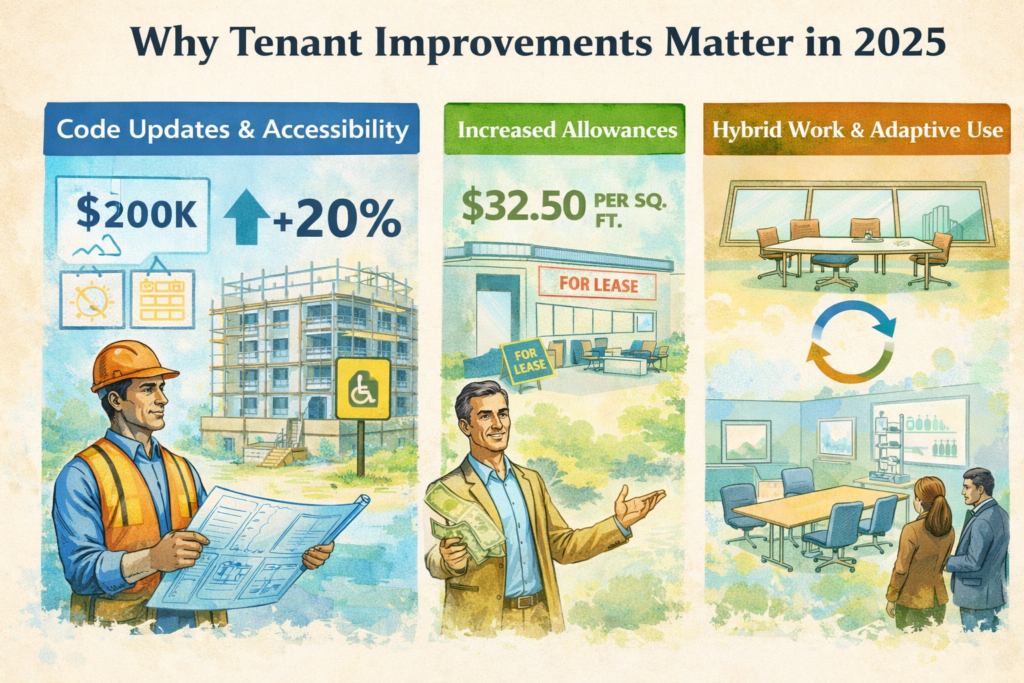
Why Tenant Improvements Matter in 2025
Code Updates & Accessibility: California’s building codes continue to tighten. Construction projects exceeding the annual threshold (around $200k) must invest at least 20% in accessibility improvements. A change of occupancy or more than a 10% increase in occupant load can trigger seismic upgrades.
Increased Allowances: With commercial vacancies lingering since 2020, landlords are offering large TI allowances. San Francisco landlords have increased contributions to around $32.50 per square foot on average. This creates opportunities for tenants to modernize spaces.
Hybrid Work & Adaptive Use: Companies are reconfiguring offices for hybrid teams, splitting large spaces into smaller suites or converting them to labs. Flexible TI design is essential to handle evolving occupancy needs.
In the competitive Bay Area real estate market, tenant improvement (TI) projects are often the difference between a vacant space and a thriving business. Whether you’re opening a new restaurant, rolling out a franchise location, or converting a retail bay into a medical clinic, understanding the latest TI trends and permit requirements can save time, money and stress. This 2025 guide explores what’s driving TI demand across San Francisco, Oakland/East Bay, and the South Bay, explains how permitting works, and highlights design considerations for restaurants, retail, healthcare and more.
Why Tenant Improvement in Bay Area Matter in 2025
- Increased Allowances: With commercial vacancies lingering since 2020, landlords are offering large TI allowances. San Francisco landlords have increased contributions to around $32.50 per square foot on average. This creates opportunities for tenants to modernize spaces.
- Hybrid Work & Adaptive Use: Companies are reconfiguring offices for hybrid teams, splitting large spaces into smaller suites or converting them to labs. Flexible TI design is essential to handle evolving occupancy needs.
- Code Updates & Accessibility: California’s building codes continue to tighten. Construction projects exceeding the annual threshold (around $200k) must invest at least 20% in accessibility improvements. A change of occupancy or more than a 10% increase in occupant load can trigger seismic upgrades.
Planning Triggers & Timelines in Bay Area Tenant Improvement Projects
For most TI projects, permitting milestones fall into predictable phases:
- Lease & Feasibility: Before signing, verify the “Change of Use” requirements. If you are moving from retail to a fitness studio, you may trigger massive parking or plumbing upgrades.
- Design & Drawings: Work with an architect to ensure your Path of Travel is compliant. In California, if your primary area is remodeled, you must ensure the “path” from the sidewalk to your counter is accessible.
- Permit Submission & Review: * The “OTC” Shortcut: For simple projects (no structural changes), ask for an Over-the-Counter (OTC) permit at SF DBI or Oakland Planning. This can turn an 8-week wait into a 1-day approval.
- Formal Review: Larger projects take 4–12 weeks. Use the SF DBI 30-Day Review if you are a qualifying small business.
- Construction & Inspections: Once the permit is issued, you must schedule “rough-in” inspections (plumbing/electrical) before closing your walls.

Permitting Realities by City
- San Francisco: Expect multiple agency reviews. Projects that increase occupant load by more than 10% or change use must comply with seismic and fire sprinklers. Restaurant projects require health department approval and grease duct inspections.
- Oakland & East Bay: Oakland actively supports small business TIs with grants but expects adherence to ADA and seismic triggers. East Bay cities like Berkeley, Walnut Creek and Dublin can have different review queues; early coordination helps avoid delays.
- South Bay & Silicon Valley: Cities like San José and Sunnyvale process thousands of TI permits each year. Tech campuses often require quick submittals for interior reconfiguration. Life science conversions may need specialized ventilation and fume hoods.
Design Considerations by Sector: Avoiding “The Big Gotchas”
Restaurants & Food Service – Bay Area Tenant Improvement
- The Grease Trap Trap: Don’t just plan for a kitchen; plan for the Grease Interceptor. In San Francisco and Oakland, these often must be placed in the ground, which can require expensive sidewalk or slab excavation.
- Type I Hoods: If you are frying or grilling, the venting (Type I Hood) must often reach the roof. Check your lease to ensure you have “air rights” to run a duct through upper floors.
Healthcare & Clinics
- Medical Gas & Lead Lining: Dental and X-ray clinics require specialized wall shielding and plumbing that must meet OSHPD standards.
- The “Sink” Rule: Most clinics require a hand-washing sink in every exam room—this drastically changes your plumbing budget.
Fitness & Wellness Studios
- Occupancy Load: Changing a space to “Assembly” (like a yoga class) increases your occupant load. This may trigger a requirement for additional exits or a second ADA-compliant restroom.
- Acoustics: If your studio is under an office, expect the city to require a “Sound Transmission Class” (STC) rating for your ceiling to prevent noise complaints.
Retail & Franchise Rollouts
- Brand vs. Code: Franchises often have “standard” designs, but California Title 24 Energy & Access codes almost always require local modifications to lighting and entries.
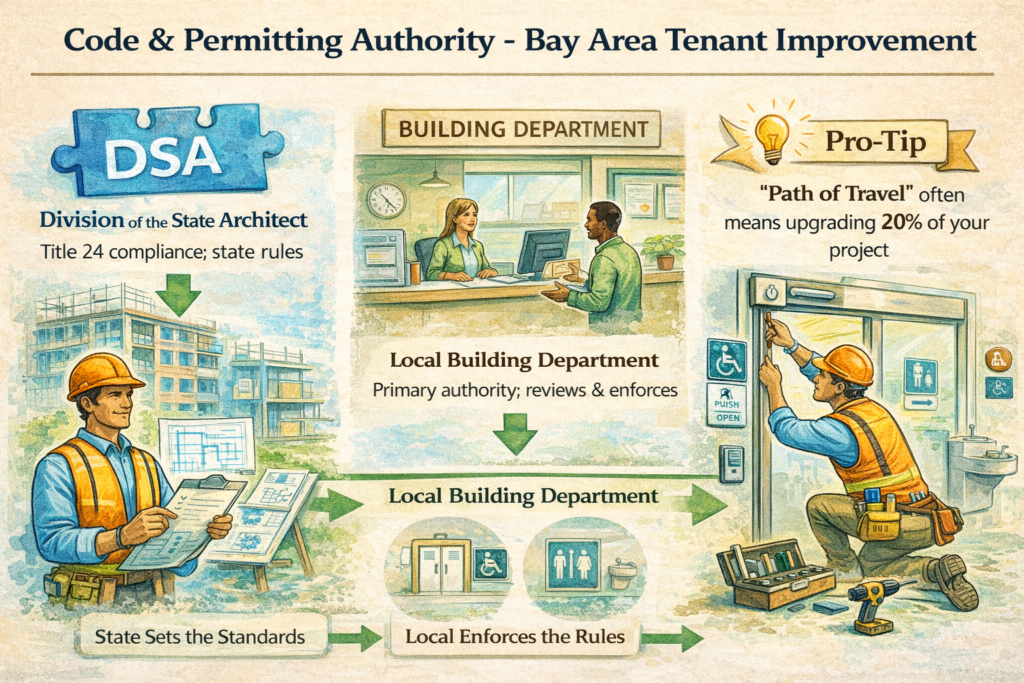
Code & Permitting Authority – Bay Area Tenant Improvement
Tenant improvement (TI) projects in California must comply with strict state accessibility requirements defined in Title 24 of the California Building Code. These standards are developed by the Division of the State Architect (DSA) to ensure all commercial spaces are accessible “to, through, and within” the building.
While the state sets the rules, your local building department acts as the primary authority for review and enforcement. If you are renovating a space in the Bay Area, you will work directly with these agencies to secure permits and clear inspections:
- San Francisco: The SF Department of Building Inspection (DBI) manages all construction permits. Small business owners should look into their 30-day permit review program for faster processing.
- Oakland: The Oakland Planning & Building Department provides a dedicated step-by-step guide for commercial tenant improvements, including the mandatory Accessibility Checklist required for your application.
Pro-Tip: In California, TI projects often trigger a “Path of Travel” requirement. This may require you to spend up to an additional 20% of your construction budget to upgrade existing restrooms, entrances, or drinking fountains to meet current codes.
Emerging Bay Area Tenant Improvement Trends for 2025
- Flexible Interiors: Moveable walls, modular furniture and plug-and-play utilities let spaces adapt to changing needs without major construction.
- Sustainability: Energy-efficient lighting, low-flow fixtures and sustainable materials reduce operating costs and appeal to eco-conscious clients.
- Technology Integration: Smart lighting, HVAC controls and mobile ordering platforms improve customer experience, particularly in restaurants and cafes.
- Community & Wellness: Tenants value natural light, biophilic elements and communal areas that foster collaboration and well-being.
Conclusion & Next Steps
Tenant improvement projects are one of the most effective ways to transform a leased shell into a high-performance space tailored to your brand’s needs. However, as outlined above, the path from a floor plan to a grand opening is filled with complex code triggers, shifting city timelines, and strict state accessibility requirements.
Whether you are launching a flagship restaurant in Oakland or expanding a specialized clinic in San José, success depends on staying ahead of these regulatory hurdles before they become costly delays.
At YCD Studio, we deal with these Bay Area complexities every single day. Our team specializes in managing the intricate design and permitting requirements for restaurant, retail, and commercial TI projects. We don’t just draw plans; we navigate the specific nuances of local departments like SF DBI and Oakland Planning to keep your project on schedule and on budget.
Ready to discuss your project? Contact us today to schedule a free consultation call. Let’s discuss your vision and create a clear roadmap for your next commercial space.
Visit our Tenant Improvement Architect hub page for more insights.