The Bay Area Neighborhood Commons is a mixed-use housing and retail concept exploring how mid-scale urban buildings can contribute meaningfully to street life, environmental performance, and neighborhood identity. Rather than maximizing density alone, the project prioritizes daylight, material warmth, and human-scaled public space at the ground level.
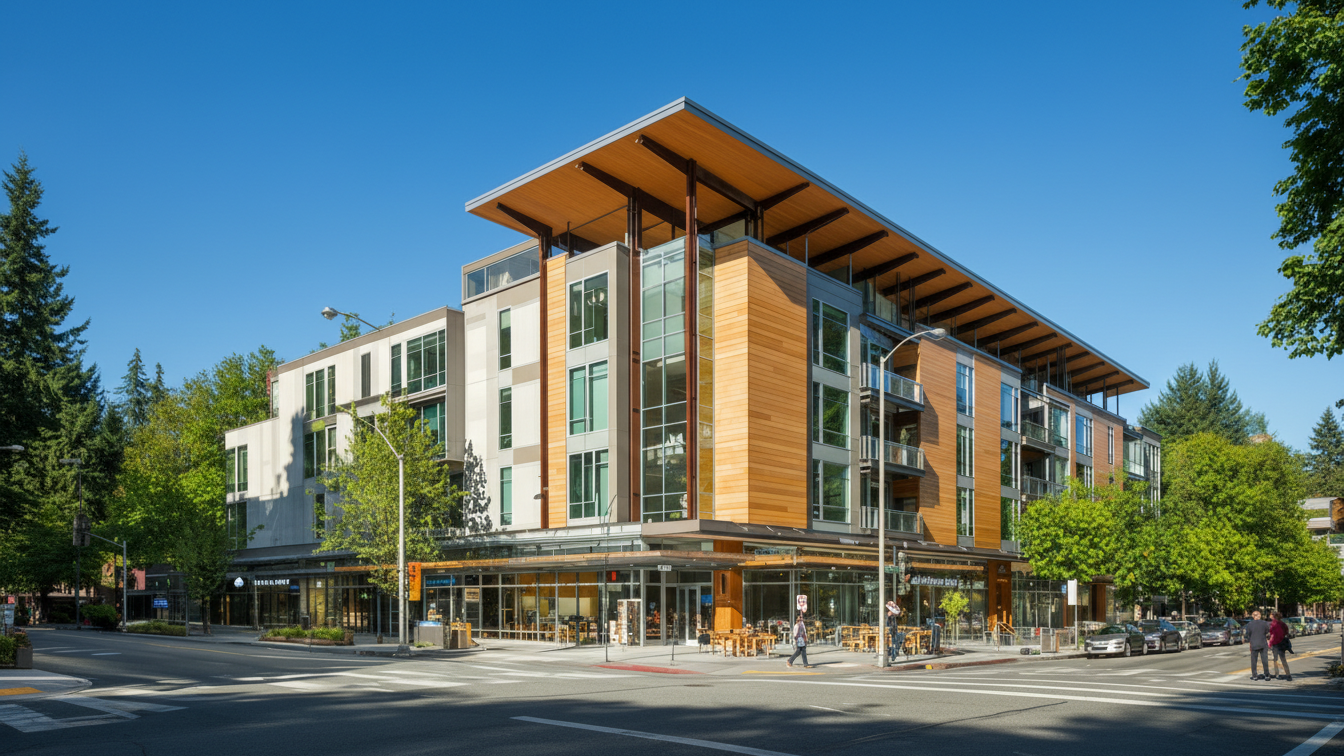
Residential units are organized above a transparent retail and café base, reinforcing active street edges and daily community interaction. Deep roof overhangs, exterior balconies, and a carefully articulated façade respond to the Bay Area’s temperate climate, balancing solar control, natural light, and indoor-outdoor living.
The use of wood cladding and exposed structure introduces warmth and tactility within an urban context, while the building’s massing steps and modulates to reduce visual bulk. The project positions housing not as an isolated object, but as part of a larger neighborhood ecosystem — supporting walkability, local business, and everyday social exchange.
Mixed-use neighborhood building with ground-floor retail and upper-level housing, designed to support walkability, climate responsiveness, and community life.
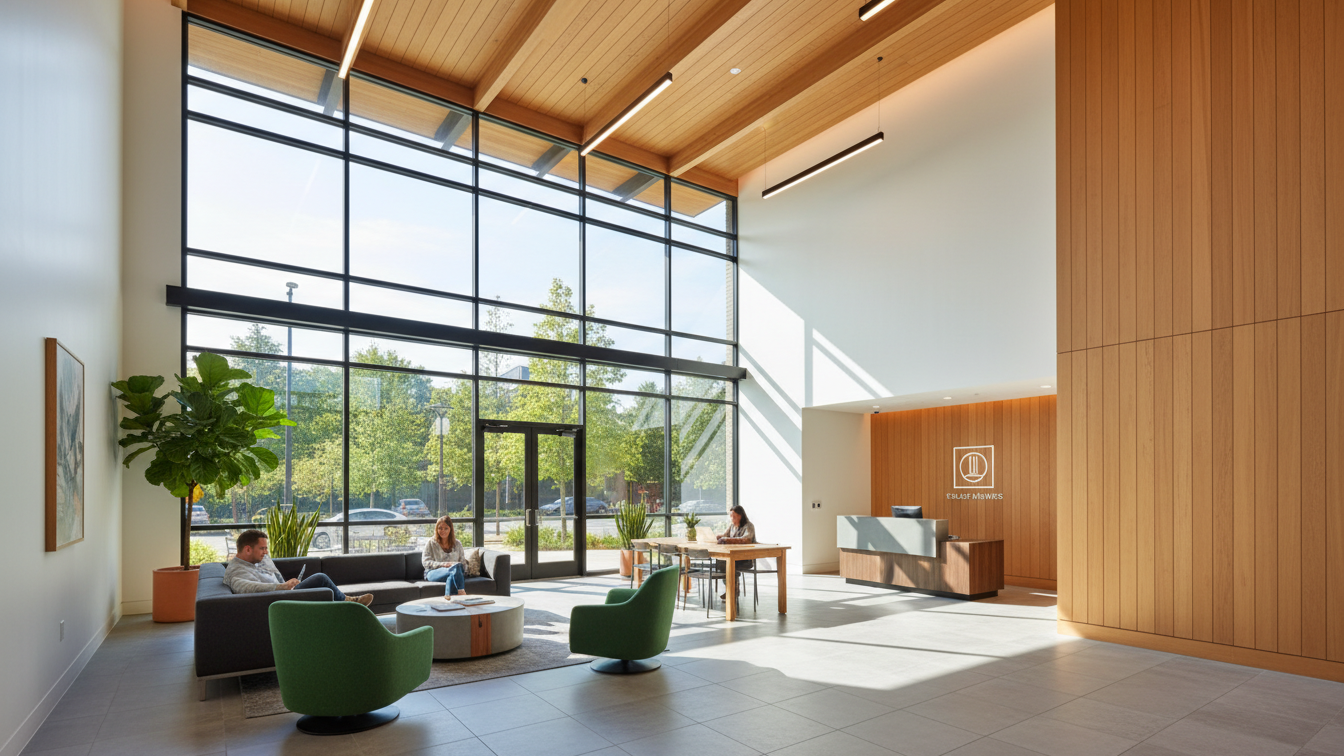
Double-height shared lobby and community workspace designed to extend the public realm into the building through daylight, material warmth, and visual connection to the street.
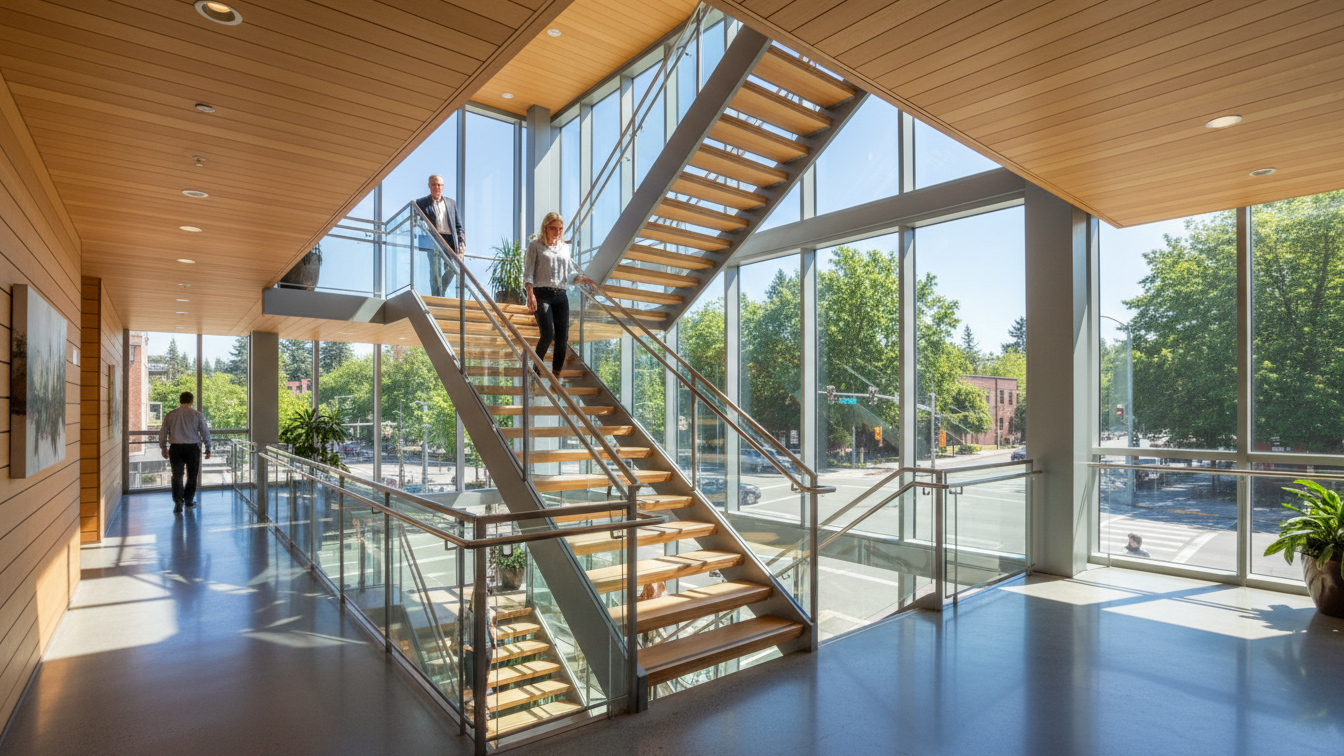
Daylit circulation core with open stair and bridge connections, reinforcing movement, visibility, and shared spatial experience throughout the building.
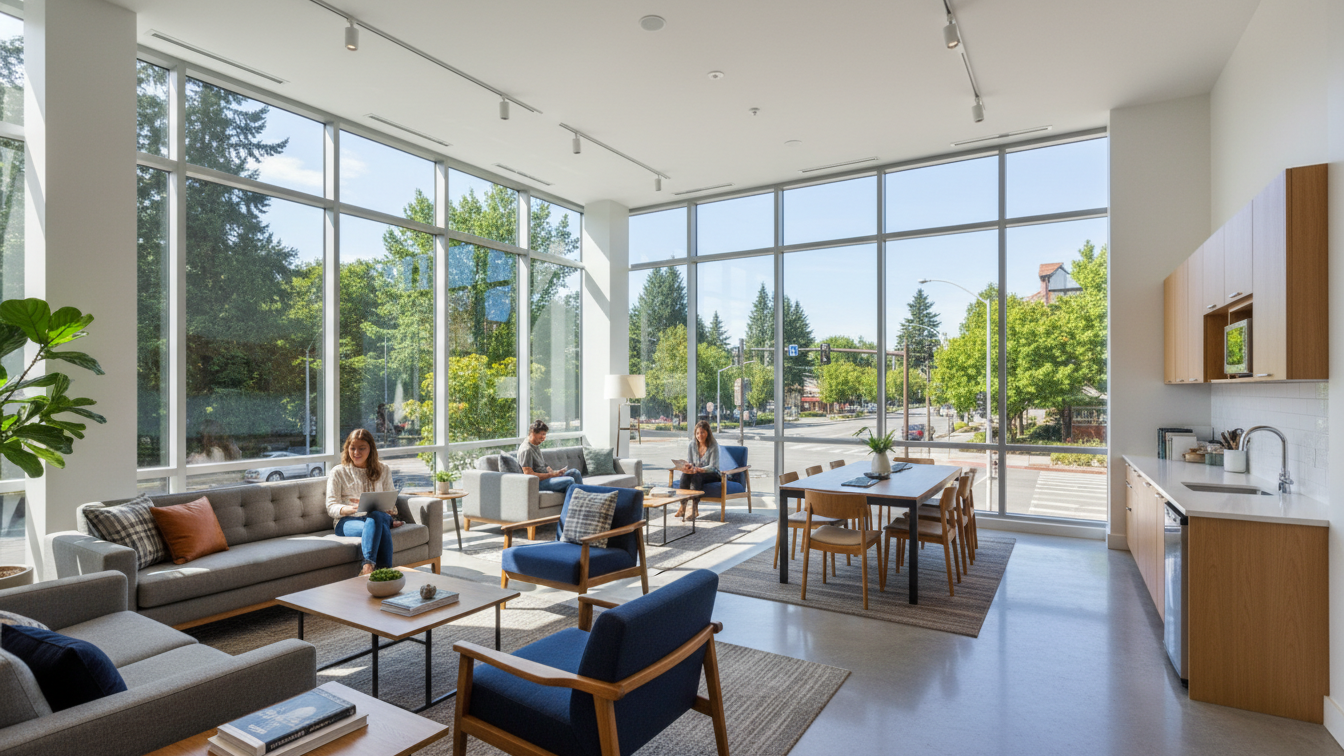
Shared common room designed for informal gathering, remote work, and everyday use, organized around generous daylight and visual connection to the neighborhood.
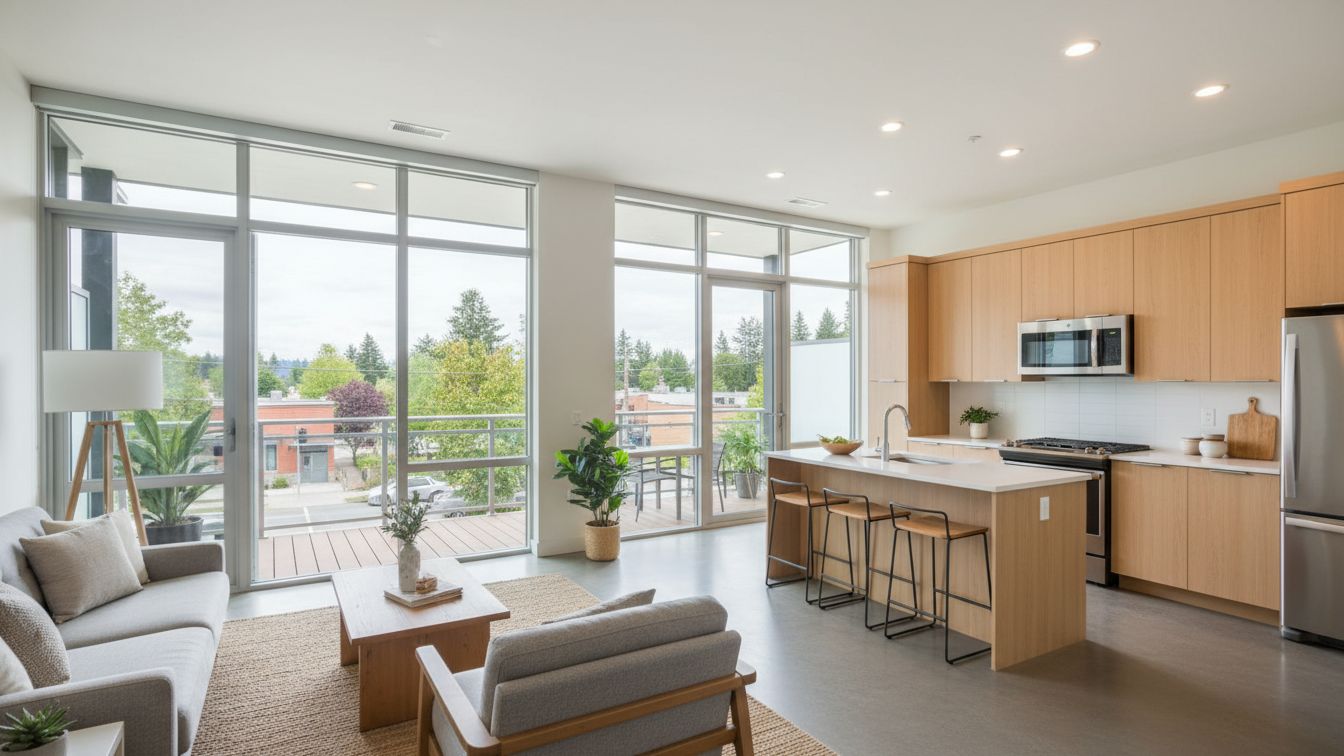
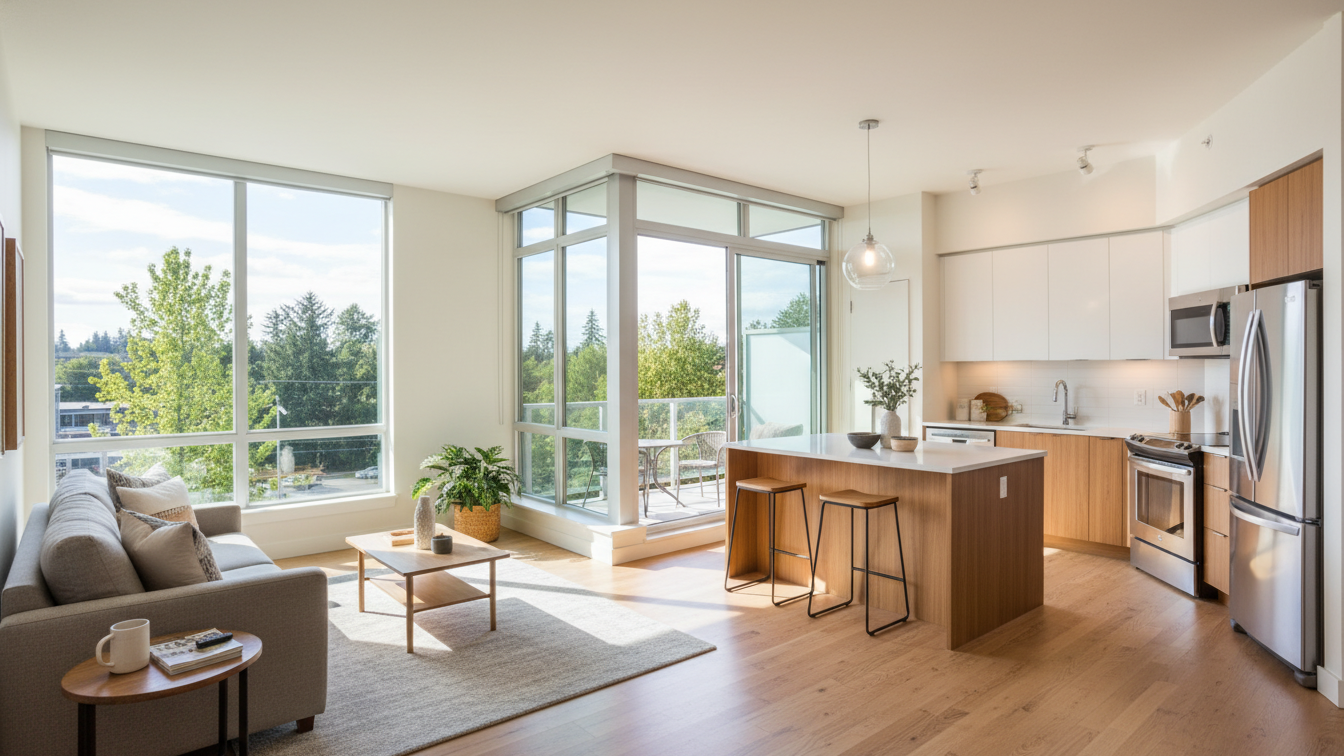
Typical residential unit organized around daylight, outdoor access, and flexible living space.
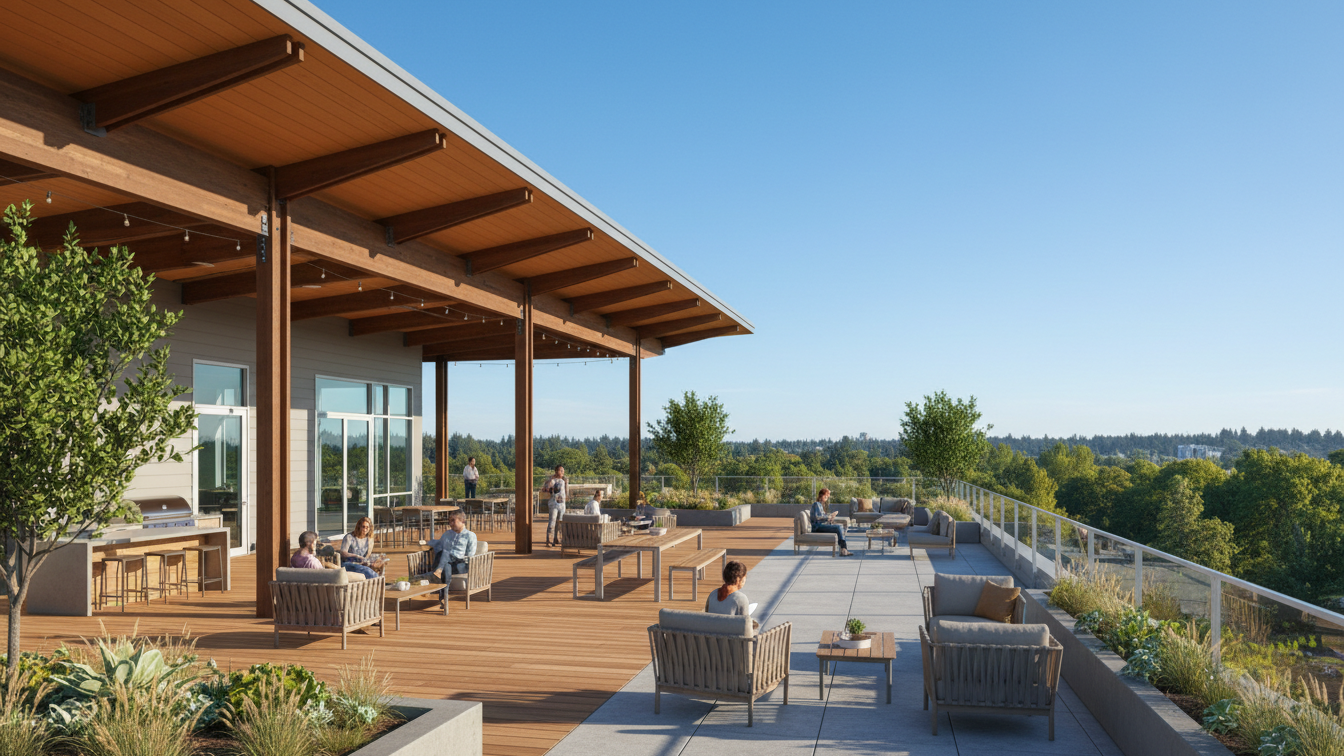
Outdoor spaces are treated as essential extensions of the building rather than secondary amenities. Shaded terraces and planted edges provide comfortable, flexible gathering areas that support everyday use while reinforcing passive environmental strategies through orientation, overhangs, and material continuity.